Car Rental in Cartagena (Colombia): A Practical Guide
Renting a car in Cartagena, Colombia allows you to explore the Caribbean coast at your own pace beyond the historic walled city.
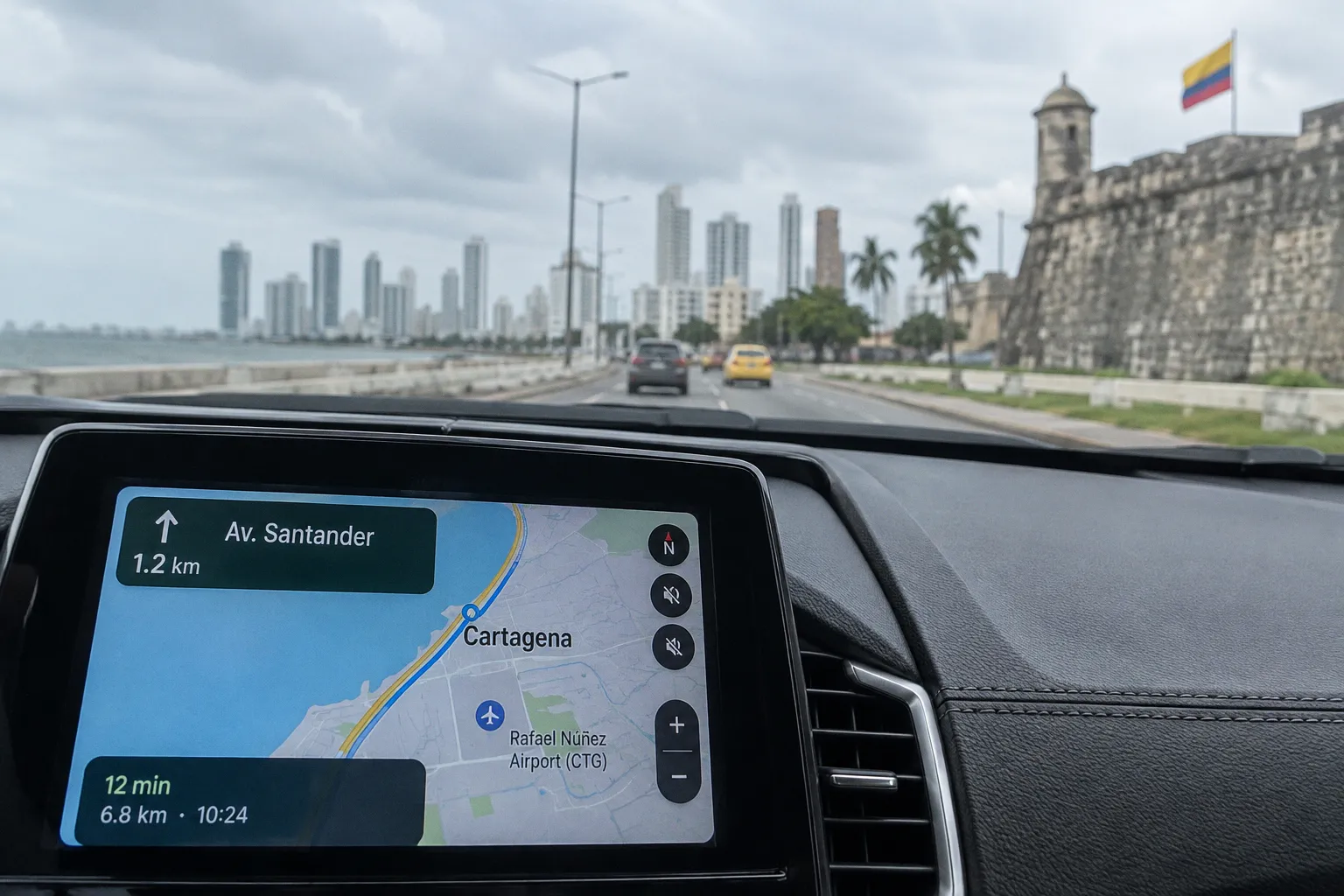
Reliable vehicle pickup points are centered at Rafael Núñez International Airport (CTG) and downtown districts.
Compare car rental deals in Cartagena
from €38/day · Prices checked on September 01, 2026
Pick-up: airport (CTG) · downtown
Pick-up points: Cartagena (all locations), Colombia · Cartagena Downtown, Cartagena, Colombia · Rafael Núñez Airport, Cartagena (CTG), Cartagena, Colombia
Partner link — DiscoverCars comparisonGood to know
Driving: on the right.
Local currency: COP.
Emergency number: 123.
| City population | About 914,552 residents |
| Main airport code | Rafael Núñez International (CTG) |
| Primary pickup hubs | Rafael Núñez Airport (CTG), Downtown Cartagena |
| Required driving documents | Passport, Driver's License, International Driving Permit (IDP) |
| Legal alcohol limit | 0.02% BAC (near-zero tolerance policy) |
| General emergency service | 123 (Police, Ambulance, Fire, Traffic) |
Cartagena is a major coastal hub of roughly 914,552 residents, serving as the gateway to northern Colombia. While you do not need a vehicle to explore the compact, pedestrian-friendly streets of the Walled City or Getsemaní, renting a car is the most practical choice for taking regional day trips and coastal drives. Pickup counters operate at Rafael Núñez International Airport (CTG) as well as downtown locations, with aggregators like DiscoverCars providing comparison across available fleets. Before taking the wheel, drivers must hold an International Driving Permit (IDP) alongside their national license and passport, and remain aware of Colombia's strict 0.02% BAC near-zero tolerance policy for driving under the influence. This guide covers pickup logistics, essential local regulations, and recommended self-drive itineraries from Cartagena.
Essential Driving Rules and Requirements
Driving in Colombia requires strict adherence to mandatory document regulations and national road laws. Foreign drivers must always carry three physical documents: a valid national driver's license, an International Driving Permit (IDP), and an original passport.
- Alcohol Regulations: Colombia enforces a near-zero tolerance policy for driving under the influence, setting the legal limit at 0.02% BAC. Violations carry severe administrative and legal penalties.
- Emergency Assistance: In case of traffic accidents, medical emergencies, or police assistance anywhere in the department of Bolívar or nationwide, dial 123.
- City Driving vs. Highways: Traffic in Cartagena's central neighborhoods can be congested and slow. Driving inside the historic center is generally discouraged due to narrow streets and pedestrian traffic, making a rental car best suited for outward highway travel.
Rental Costs and Advance Booking
Car rental pricing in Cartagena fluctuates based on seasonal tourism demand, particularly during peak travel windows, holidays, and dry-season months. Reserving your vehicle online in advance through comparison platforms such as DiscoverCars ensures access to available inventory and locks in clear insurance terms.
Most rental agreements require a valid credit card in the primary driver's name for the security deposit. Always review the included coverage for third-party liability and collision damage waiver before confirming your reservation. Inspect the vehicle thoroughly at pickup, document any pre-existing scratches or tire wear with photos, and verify that the mandatory emergency kit is present in the trunk.
Pickup Locations: CTG Airport vs. Downtown
You can pick up a rental car at two primary hubs across Cartagena:
1. Rafael Núñez International Airport (CTG): Located in the Crespo neighborhood, roughly 5 km northeast of the historic center. Picking up your car here is the smoothest option if you plan to hit the highway directly after landing without dealing with inner-city congestion.
2. Cartagena Downtown: Urban branches serve travelers who spend their first few days exploring the historic center on foot before collecting a car for coastal excursions.
When returning your vehicle to CTG Airport, allow extra buffer time during evening peak hours, as access roads connecting Crespo and central Cartagena can experience heavy traffic.
Driving Advice for Regional Road Trips
Main toll highways along the Caribbean corridor are paved and connect Cartagena smoothly to neighboring departments. However, regional driving requires alertness:
- Tolls & Payment: Major highways feature toll booths (peajes); keep local cash handy for toll fees.
- Road Conditions: While coastal routes are generally standard, mountain passes and routes further inland (such as the coffee region) can experience periodic closures due to seismic or weather events. Check real-time road status via official channels like Invías before undertaking long cross-country journeys.
- Night Driving: Stick to daylight hours for intercity road trips to avoid unlit obstacles, sudden speed bumps, and livestock on rural roads.
Where to go by car
| Destination | Distance | Time | Tolls (est.) | Why go |
|---|---|---|---|---|
| Barú Peninsula (Playa Blanca) | ~40 km | ~1 h 00 | — | Accessible via the coastal bridge for white-sand beaches and day resorts. |
| Totumo Mud Volcano (Volcán de Lodo El Totumo) | ~55 km | ~1 h 10 | — | A unique roadside attraction offering mineral mud baths along the highway to Barranquilla. |
| Barranquilla | ~120 km | ~2 h 15 | — | A direct drive via Route 90A (Vía al Mar) along the Caribbean coastline to Colombia's major port city. |
| Santa Marta & Tayrona Foothills | ~225 km | ~4 h 30 | — | A scenic multi-city road trip connecting Cartagena with Colombia's oldest colonial city and national parks. |
Tolls: rates vary by country and route segment — check current pricing before you go.