GEA Expands North American Access to AWP Industrial Valve Series
According to RefIndustry, GEA Systems North America has rolled out the GEA AWP portfolio of industrial valves and components for heating and refrigeration, with local sales, application and service…
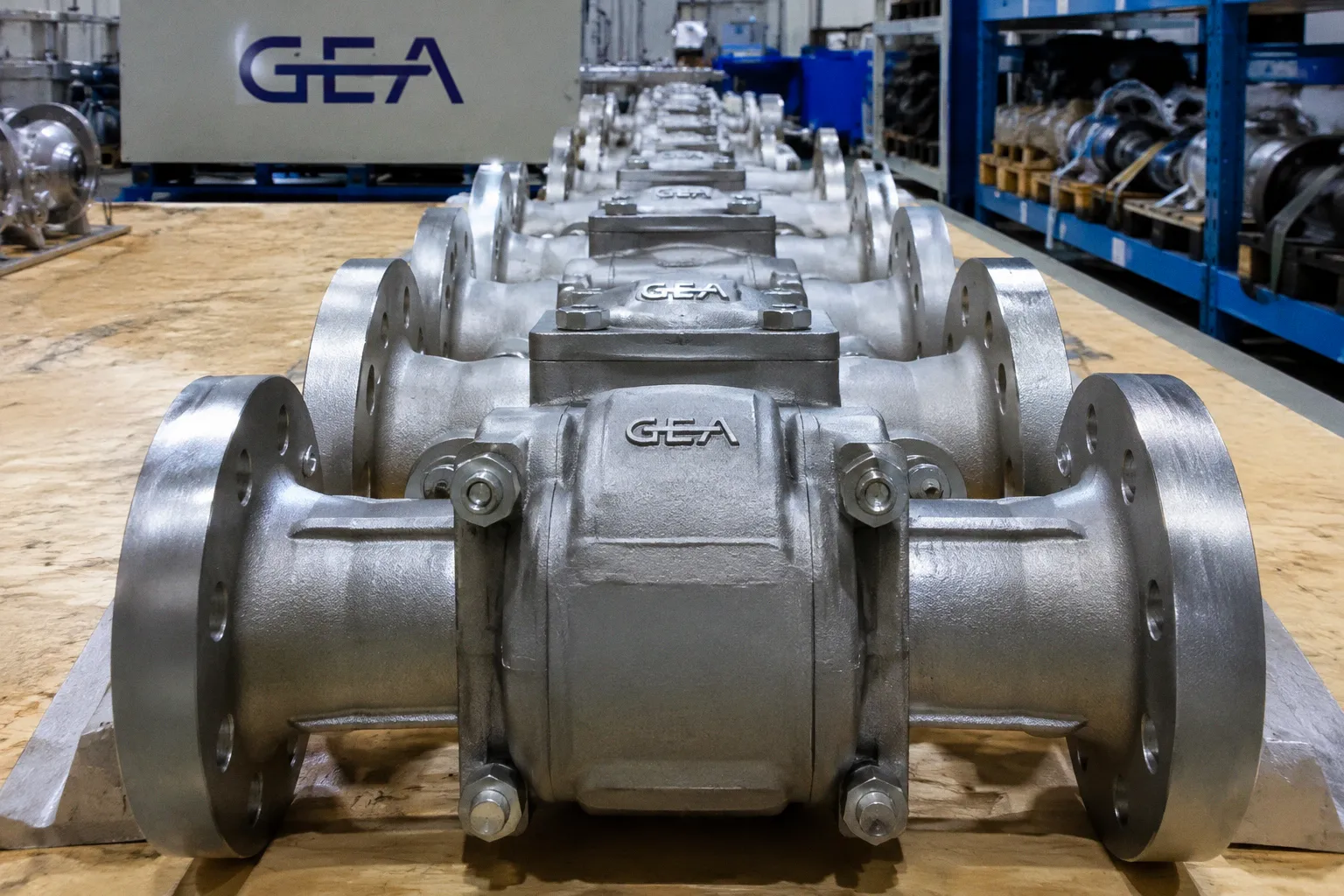
Picture the maintenance walk-around at the start of second shift: an operator at a cold-storage plant pulls a service log, sees three valve replacements due, and starts wondering whether the right parts are even going to arrive before the freezer alarm goes red. That small, everyday moment of friction — the wait, the guesswork, the mismatch between what the job needs and what is sitting on the shelf — is exactly the gap GEA is trying to close with its newly expanded valve offering on this side of the Atlantic. According to RefIndustry, GEA Systems North America has rolled out the GEA AWP portfolio of industrial valves and components for heating and refrigeration, with local sales, application and service support now routed through the company's North American network.
What actually arrived on the ground
The numbers behind the launch tell you what kind of work these components are built for. We are talking about a portfolio covering sizes from 1/8 to 20 inches (roughly 3.2 to 508 mm), pressure ratings up to 2,320 psi (about 160 bar), and operating temperatures from -76°F to +392°F (-60°C to +200°C). Materials include stainless steel, carbon steel and low-temperature carbon steel — meaning the same product family can move with you from a low-temperature chemical skid into a high-pressure steam or refrigerant line without forcing you to learn a whole new supplier's logic. Manufacturing stays anchored at GEA AWP's factory in Prenzlau, Germany, while the customer-facing support moves to the regional team.
For a buyer or specifier reading this, the practical hook is the breadth. If your facility runs food and beverage, cold storage, chemical, concrete cooling, oil and gas, marine, ice rink or indoor ski systems, this is the same valve family being positioned across all of those arenas. If your plant is a mixed-temperature operation — ammonia refrigeration at one end, glycol heating at the other — the temperature window alone removes a lot of the usual "which line do we order from" debate.
A tool to cut the spec-to-shelf wait
The piece that operators and engineers will probably feel first is the ValveCalc sizing tool. You enter your operating conditions, and it points you toward a valve sized for your actual duty rather than a guess pulled from a catalog tab. That matters on the ground: every valve that arrives wrong is an hour the mechanic is not doing planned work, every delayed rebuild is a maintenance window the shift leader cannot recover.
If a stock configuration does not fit, GEA is offering customized builds — specified dimensions, connections, flanges, outlets, pressure and temperature ranges, installation lengths and packing materials — and will combine multiple valves into a single factory-tested and validated assembly before shipping. For teams that used to receive a kit of loose components and assemble them in the field, that single, pre-validated bundle is the kind of design choice that quietly reduces operator fatigue, leaks at startup, and those last-minute trips to the parts crib that eat into a shift.
The broader backdrop, as RefIndustry notes, is rising North American demand for industrial refrigeration and heating components, especially in higher-pressure and higher-temperature ranges. For the people specifying, installing and maintaining that equipment, the practical takeaway is straightforward: a wider size and pressure envelope, regional support, a sizing tool to reduce spec errors, and the option to receive multi-valve assemblies that have already been bench-tested before they ever reach your plant floor — which is about as close as a catalog launch gets to making a real working day a little easier.