Sagrada Familia Ticket Booking: A Step-by-Step Route
Every minute the Sagrada Família holds a slot it has not sold, that slot is lost forever. Capacity routing does not queue.
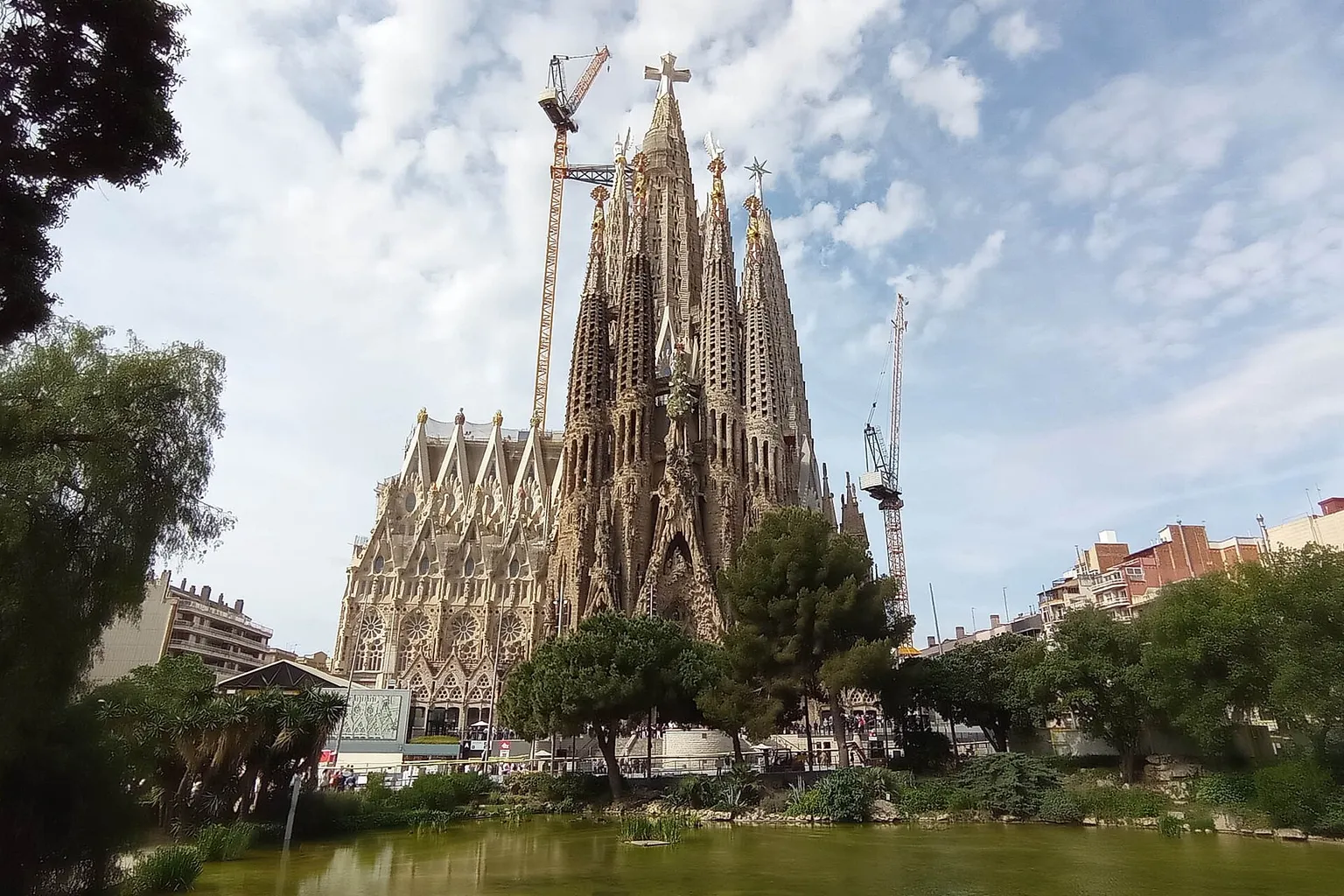
The basilica streams visitors through timed entries, and the allocation system has no physical fallback — no on-site desk, no walk-up counter, no same-day buffer. The booking failure rate for unprepared visitors is effectively 100 percent. This is not a tourist inconvenience. It is a closed-loop routing system masquerading as a heritage site.
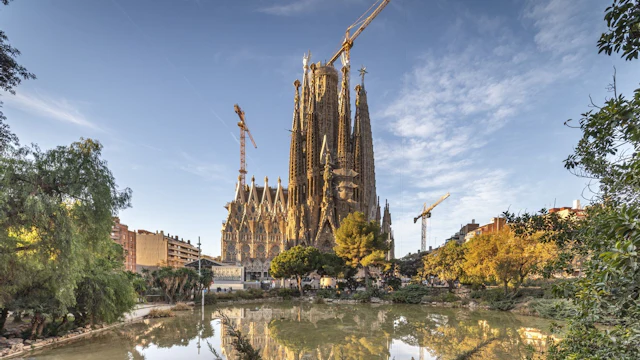
Sagrada Familia
- Skip-the-line ticket · Guided tourskip-the-linefrom€109
- Skip-the-line ticket · Tower accessskip-the-linefrom€62
Prices checked on August 14, 2026 · current price on the partner page.
Next availability: August 29, 2026.
Official website — sagradafamilia.org
- Time to spend: 2–3 h
- Best time to visit: early morning
Prices are indicative and may change — confirm the price and availability on the partner page.
Partner link — GetYourGuide ticketsThe route through it follows a fixed sequence: select a platform, respect the 60-day window, choose the correct ticket class, observe the per-transaction cap, and bring the right hardware. Each step has a known failure mode. Each failure mode has a known workaround.
The Shift to Digital-Only Access
Physical ticket offices at the Sagrada Família no longer exist. The transition completed before the current booking cycle began, and there is no reinstatement on the roadmap. Every admission pass — standard entry, tower access, guided tour — is issued electronically, either through the official website or through authorized third-party platforms carrying real-time availability.
The operational consequence is total. A visitor who arrives at the Carrer de Mallorca gates without a pre-issued timed entry has no fallback path. Staff at the entrance scan QR codes. There is no kiosk to scan a credit card, no staff terminal to issue a courtesy ticket, no overflow channel. The system has been engineered to remove ambiguity at the gate, and the cost of that engineering is borne entirely by the visitor who failed to pre-book.
This is a textbook capacity-control pattern. The operator minimizes gate-side latency by pushing all transactional latency upstream — into the booking window, the payment flow, the email confirmation step. The visitor trades flexibility for throughput. The operator trades on-site staffing overhead for a predictable arrival curve.
The Sagrada Família operates as a closed-loop system. There is no on-site overflow. The queue at the door is not a queue — it is an error state.
Navigating the 60-Day Booking Window
Official tickets release approximately 60 days before each visit date. The window is a rolling one, not a fixed quarterly release. Each morning, a new tranche of slots opens for the date 60 days out. High-traffic slots — morning entries, weekend entries, dates aligned with the Gaudí centenary programming — clear within hours, often within the first business day of release.
The decision complexity for the visitor is low but time-sensitive. Three variables govern availability: the visit date, the time slot, and the ticket class. Visitors who fix all three on day one of the 60-day window typically secure their preferred slot. Visitors who wait until the final week accept whatever remains — which on peak dates means afternoon slots only, or no availability at all.
Authorized third-party platforms carry the same underlying inventory but on a different presentation layer. Their availability is real-time and continuously updated; their pricing is independent of the official site and may carry a service margin. For visitors locked out of the official release window, the third-party route is the only viable path. Both layers draw from the same timed-entry counter, so booking through either channel consumes the same slot.
Pricing Tiers and What Each Tier Actually Contains
The Sagrada Família ticket structure is stratified by access, not by sentiment. There are three primary tiers, and the boundary between them is the difference between looking at the basilica and moving through it.
| Tier | Access scope | Use case |
|---|---|---|
| Standard entry | Interior nave, museum, ongoing exhibition | Visitors who want the building without the climb |
| Tower access | Standard entry plus one of two towers (Nativity or Passion) | Visitors who want the elevation view from the spires |
| Guided tour | Standard entry with a human docent on a 50-minute route | Visitors who want interpretive context |
Age-based sub-tiers exist within each access tier. Children under 11 enter free. Students and visitors under 30 carry a reduced class. Visitors aged 65 and above carry a separate reduced class. The official site and authorized third-party platforms carry the same age-tier structure, though reseller pricing differs from the official rate.
The audio guide, included with standard entry on the official platform, is delivered as a smartphone app rather than a physical handset. The decision to retire the handheld units mirrors the rest of the digital-only architecture — it removes a hardware distribution layer and pushes the cost, and the responsibility, onto the visitor's own device. The app covers the standard interior route; an express version trims the audio content to roughly 25 minutes against the standard 45-minute runtime.
Transaction Limits and Group Routing
The 9-ticket cap is the single most common error state in the booking flow. A family of 10 attempting to purchase online at the standard checkout will be blocked at the 10th ticket. The system does not suggest the workaround. It simply refuses the order. The cart will not progress beyond 9.
The correct path is the group reservation channel. For parties of 10 or more, the operator requires a direct contact with the group department via phone or email. This is not a courtesy option. It is a routing rule, and the group department operates on a different lead time, typically longer than the standard 60-day rolling window. Attempting to bypass the rule through multiple back-to-back transactions of 9 does not constitute a valid group booking. Each transaction produces its own timed slot, and the two slots cannot be merged into a single entry.
The 48-hour cutoff is the second most common error state. No exchanges and no refunds are granted within 48 hours of the scheduled visit. The only exception is documented proof of inability to visit — a medical certificate, a flight cancellation, a similar verifiable record — and even then, the modification request must be submitted through the customer service email channel rather than through the standard booking interface. Any change requested inside the 48-hour window without supporting documentation is rejected at intake.
Tower access carries its own secondary constraint. Tower slots are limited by elevator capacity and platform geometry, not by overall basilica throughput. The Nativity tower and the Passion tower each have a different climb profile — the Nativity tower descends via a spiral staircase, the Passion tower is reached by a more demanding set of steps. The routing is one-way on the descent leg. Visitors with mobility constraints must verify the correct tower before committing, since the booking system does not surface this constraint at the cart stage.
The Hardware You Must Bring
The audio guide model has a specific hardware requirement: a fully charged smartphone and a pair of earphones. The official Sagrada Família app delivers the audio content in 19 languages and is the only authorized delivery mechanism for the standard and express audio guide tracks.
The decision to push audio delivery to the visitor's device has three practical consequences. First, battery life becomes a constraint. A standard 45-minute audio session consumes a meaningful slice of a typical phone's battery, and recharging mid-visit is not a realistic option inside the basilica. Second, earphones are non-optional. The audio content is not broadcast on speakers; playing it without earphones in a reverberant stone interior creates a noise floor that interferes with other visitors. Third, the app must be downloaded before arrival. The basilica's interior network is not designed for high-volume app downloads, and the storefront does not offer on-site device lending. The under-10 age tier should not be routed onto the standard audio guide content — the commentary is not adapted for that audience.
For guided tour visitors, the hardware requirement is reduced — the human docent provides the audio content live on a 50-minute route — but the smartphone still functions as the entry credential. The QR code on the booking confirmation is the only form of entry. A printed paper confirmation is not honored as a substitute for the scanned code at the gate.
The Variables the Booking Interface Does Not Surface
The booking interface exposes date, time, and ticket class. It does not expose the slot's occupancy rate, the queue density at the gate during that slot, or the current wait time at the security screening. These variables are invisible to the booker and determined by aggregate site capacity.
The practical implication is that two slots at the same access tier — say, 10:00 and 14:00 on the same day — are not equivalent in the field. Morning slots historically carry lower interior density. Afternoon slots carry higher density but better natural light through the stained glass. The booking system does not encode this trade-off. The visitor must infer it from prior visit patterns or accept it as a fixed constraint.
The 2026 calendar carries a specific marker: the centenary of Antoni Gaudí's death, alongside structural milestone programming for the central tower. Visitor throughput is expected to run elevated throughout the year. Slots during this period clear faster than the standard 60-day release pace. Visitors targeting this window should treat the booking action as a day-one operation, not a week-before convenience.
Booking Heuristics
The following sequence minimizes booking failure rate for a first-time visitor to the Sagrada Família.
- Treat the 60-day window as a deadline, not a launch. Slots on peak dates clear within hours of release. Set a calendar trigger for the morning a target date opens.
- Fix date, time, and ticket class before opening the booking page. Decision latency at the cart stage is the primary driver of lost slots during competitive windows.
- Stay at or below 9 tickets per transaction. Any party of 10 or more routes through the group reservation channel by phone or email — not through multiple stacked standard orders.
- Bring a fully charged smartphone and earphones. The audio guide is delivered exclusively via the official app. No on-site device lending is available.
- Download the audio guide app before entering the perimeter. Interior network capacity is not designed for high-volume downloads, and the under-10 commentary is not adapted for that age group.
- For tower access, verify the correct tower for mobility constraints. The Nativity and Passion towers have different descent profiles, and the routing is one-way.
- Submit any modification request more than 48 hours before the scheduled visit. Requests inside the 48-hour window are rejected unless accompanied by verifiable documentation.
- Confirm the QR code is scannable at the gate. A printed paper confirmation is not a substitute for the digital entry credential.
The Sagrada Família is an old building with a new booking architecture. The architecture is rigid, the window is narrow, and the failure modes are well-documented. Visitors who route through the system in the order it expects — online, in advance, within the transaction cap, with the right hardware — clear the entry path without incident. Visitors who attempt to route around it encounter the system at its most inflexible.
Practical info
Currency: EUR
Driving: on the right
Emergency number: 112
Key facts
Built: 1882
Architect: Antoni Gaudí
Height: 172.5 m
Heritage status: bien de interés cultural
Official website: sagradafamilia.org
FAQ
Can I buy tickets at the Sagrada Família entrance?
How far in advance can I book Sagrada Família tickets?
What should I do if I have a group of 10 or more people?
Do I need to bring my own device for the audio guide?
Can I show a printed paper confirmation at the gate?
Are there any mobility restrictions for tower access?
Photo: Canaan / CC BY-SA 4.0 — Wikimedia Commons