100 Mile House Upgrades Aging Booster Station Infrastructure
The 100 Mile Free Press reports that the District of 100 Mile House has directly awarded Bree Contracting Ltd.
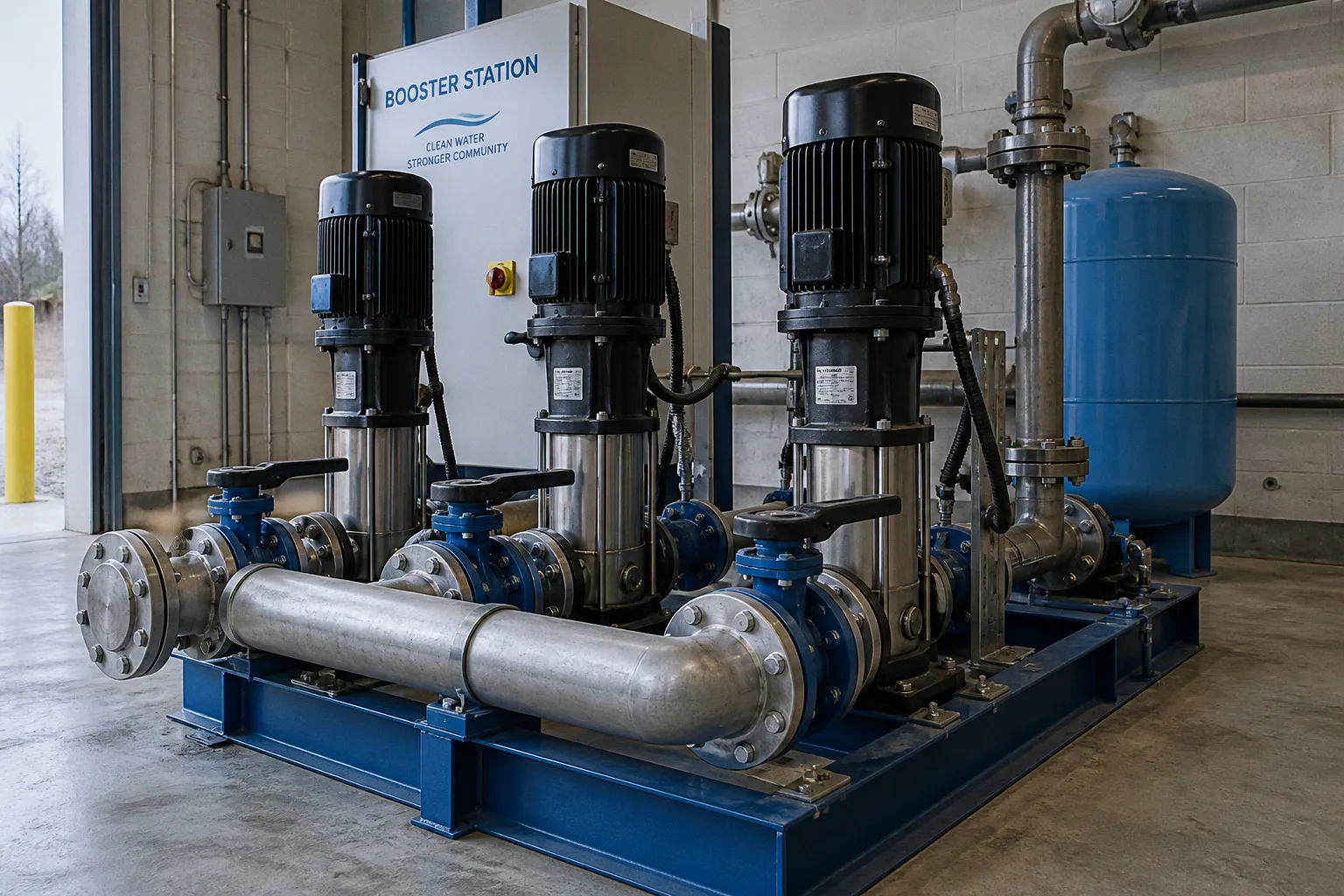
a $540,785 contract to replace failing booster station pumps with a new three-pump distribution skid — a move worth paying close attention to, because booster pump failure is exactly the kind of slow-burn reliability problem that wears down both equipment and the crews who keep it alive.
What the new skid actually does on the ground
At its core, this is a municipal water infrastructure upgrade: a new three-pump distribution skid, upgraded piping, automated emergency switching, and a new flow meter, all aimed at stabilizing reservoir drinking water supplies. If you've ever stood next to an aging booster station, you know the telltale signs — the pump that groans a little louder every shift, the manual transfer switch someone forgets to flip, the flow reading that drifts by a few percent each month because the old meter has simply had enough.
For the operators who walk past this room every morning, the design choices here matter more than the contract value printed on the award notice. A three-pump skid typically runs in a duty/standby/standby rotation, which spreads wear across the rotating elements and gives maintenance a real window to pull a unit without dropping system pressure. Automated emergency switching removes the "did someone actually throw the breaker?" anxiety during a power blip. And a new flow meter finally turns a fuzzy trend line into trustworthy data — the kind you can defend in a meeting when someone asks why last quarter's consumption looked strange.
Why this is worth watching for our spec sheet conversations
We tend to talk about pump replacements in abstract terms — efficiency curves, lifecycle cost, capital budget lines — but the real story is almost always the same: someone on shift was getting paged at 3 a.m., or a reservoir level was drifting because a single pump couldn't keep up with demand. When we sit down to specify a skid for a client, this is the kind of project that pushes us to ask the harder questions. How does the control panel actually signal a transfer? What does the operator feel in their hands when they flip to manual override? Does the flow meter give them a number they trust, or one they have to cross-check against a clamp-on gauge on every visit?
There's also a quieter lesson buried in a direct award like this. When a district skips the open tender and goes straight to a contracting partner, it usually means the failure mode was already understood — the team knew which pump was failing, why it was failing, and what the replacement envelope had to look like. That's the same instinct we want to bring to a retrofit: don't redesign the whole station, just remove the friction the crew has been living with for years.
Projects like the 100 Mile House replacement remind us that "new pumps" is rarely just about the pumps. It's about giving the people who run them a quieter shift, a cleaner panel, and one fewer thing to worry about at the end of a long day on the floor.