Modernizing North Middlesex: The $9.35 Million Overhaul of William's Street Pumping Station
If you've ever stood next to a sanitary pump station that's been running longer than the career of the operator standing next to you, you know exactly what "aging infrastructure" feels like before anyone has to explain it.
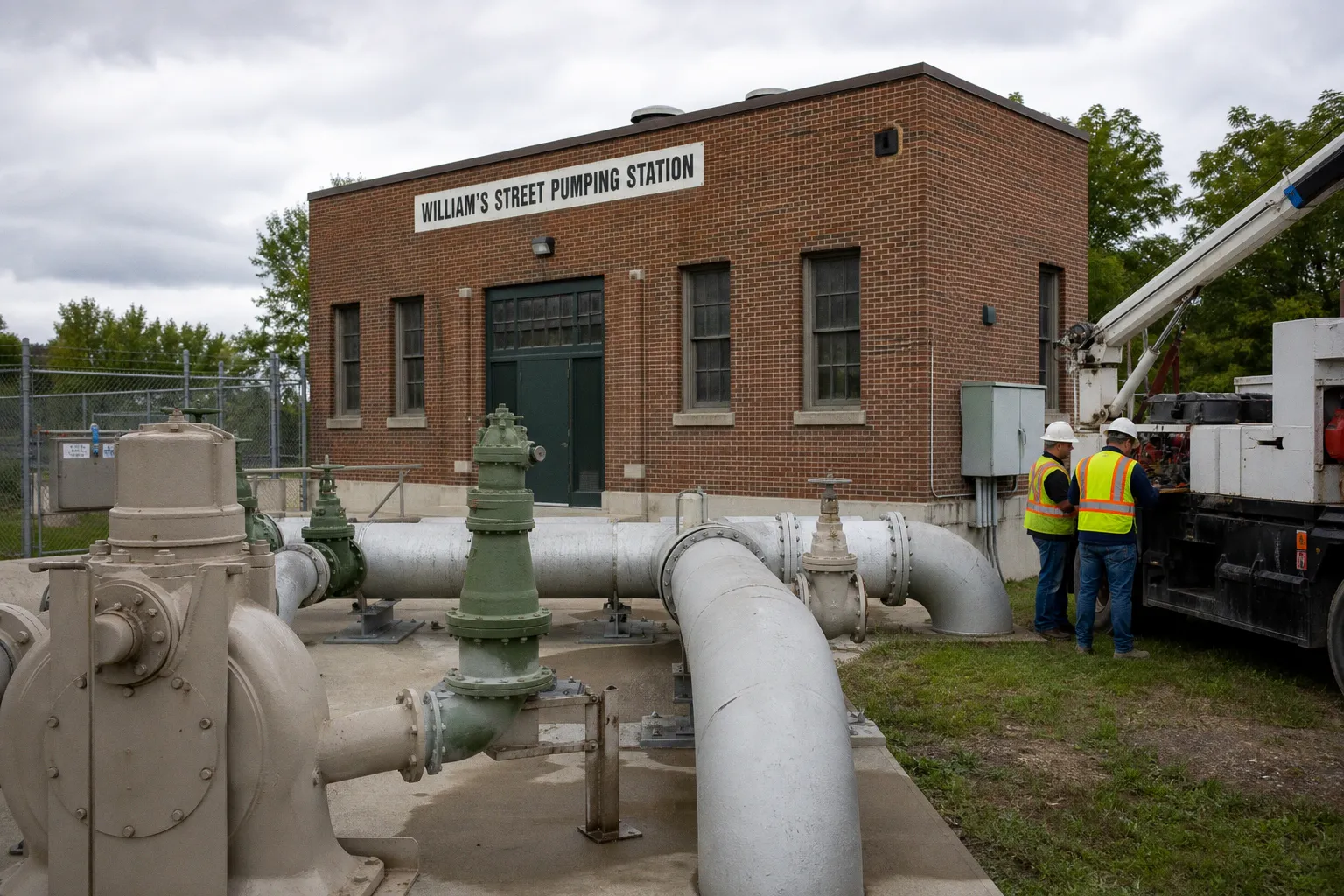
According to the Government of Canada, that's the reality North Middlesex, Ontario has been working around — and on August 11, 2026, the federal government announced a $3.85 million investment to rebuild the William's Street Sanitary Pumping Station, paired with $5.5 million from the province.
The funding is flowing through the Direct Delivery stream of the Build Communities Strong Fund, and the scope is broader than one pump swap.
What's actually getting replaced
The release lays out a stack of work, not a single piece of equipment. The project covers the William's Street pumping station itself, the headworks building — that's the screening and grit-removal side of the operation — the force main that carries sewage under pressure to the treatment plant, and upgrades at the Ailsa Craig wastewater treatment plant. In facilities language, that's the upstream and downstream of the whole conveyance chain being touched in the same window.
If you're an operator on the ground, that combination matters. A new pump dropped into a deteriorated wet well is still a new pump fighting an old failure mode. Replacing the headworks and force main in the same project is what lets the new station actually deliver the capacity the funding is supposed to unlock, rather than shifting the bottleneck one step downstream.
Why "population growth" is the wrong frame
The release frames the work as a response to population growth, aging facilities, and increased demand on existing systems. On the ground, though, the framing residents actually feel is the morning stack-up — everyone in the house showering between 6:30 and 7:15, the dishwasher running, the laundry spinning. A pumping station that can't carry that simultaneous load is the one that alarms at 8 a.m. and shoves a maintenance call onto a crew that's already stretched thin.
By upgrading the station, headworks, and force main together, the project aims to add capacity and meet environmental requirements — which, for a small municipality like North Middlesex, also means fewer of those 2 a.m. callouts where someone drives out to a poorly lit site, pops a confined-space entry, and clears a rag from a pump intake by hand. That's the kind of operator fatigue that doesn't show up in a press release but quietly shapes whether a young technician stays in the job.
What to watch if you're tracking this
A few practical signals worth keeping on your radar. The Direct Delivery stream requires at least 10% of funding to flow toward Indigenous communities, and the deadline for Indigenous and territorial applicants to submit shovel-ready projects under the same stream is August 12, 2026. If you're a supplier, contractor, or a peer municipality watching this file, the procurement pipeline that follows the announcement is where the real work begins — and where the operators who'll eventually inherit the new facility will decide whether the design choices were made for them or with them. Which, in the end, is the difference between a station that hums along and one that pages them at 2 a.m.