Industrial pump overhaul outsourcing paths: choosing the right service model
A pump that is still moving liquid can be deceptively expensive. On the ground, the first symptom is often ordinary enough: the operator hears a rougher note at the bearing housing, notices that the…
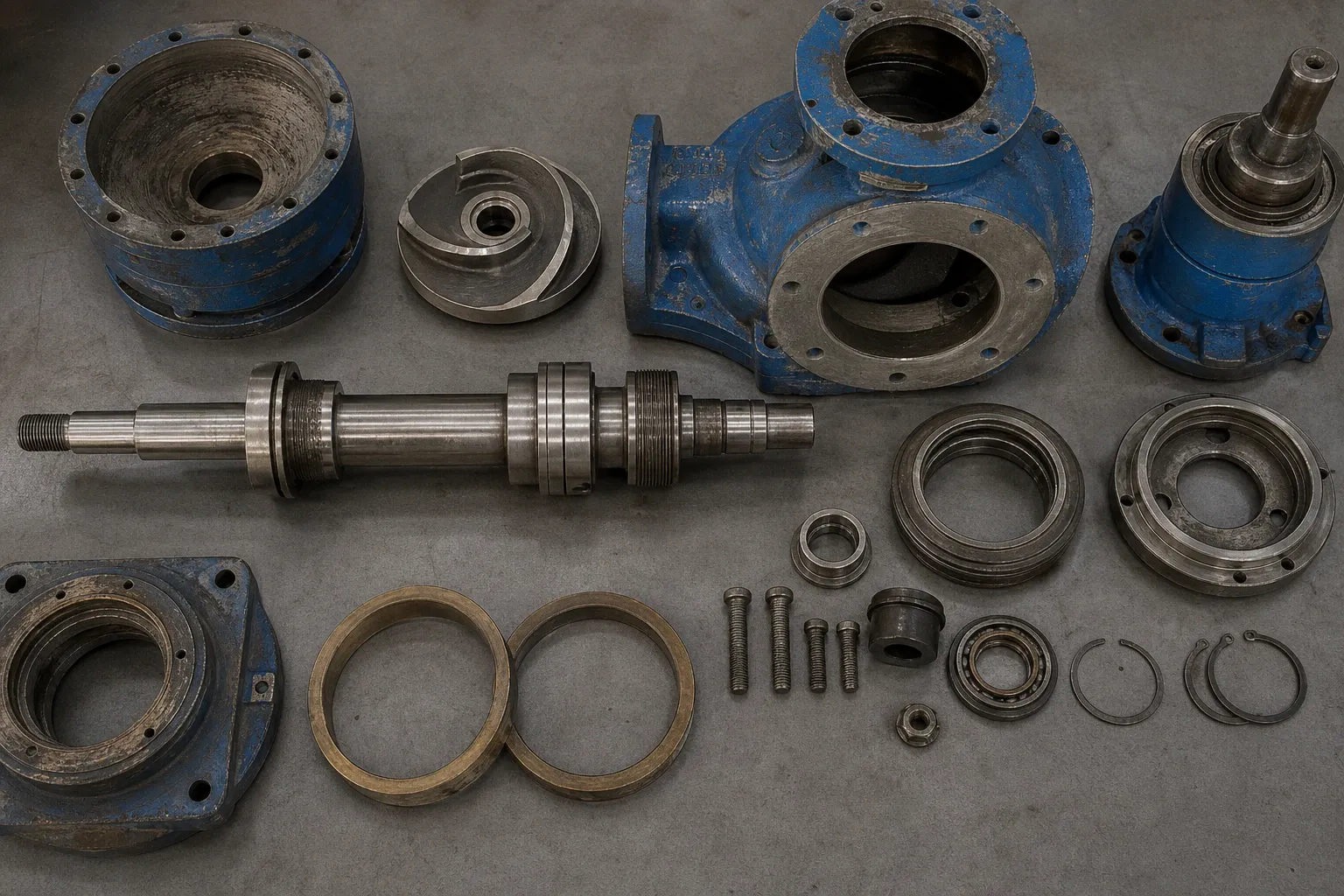
A pump that is still moving liquid can be deceptively expensive. On the ground, the first symptom is often ordinary enough: the operator hears a rougher note at the bearing housing, notices that the standby unit is being called in more often, or has to keep nudging a valve position that used to stay put through the shift. The pump has not necessarily “failed,” but the work around it has already become harder, less predictable, and more tiring.
Compare car rental deals in United Kingdom
See available offersPartner link — DiscoverCars comparisonThis is where industrial pump overhaul repair outsourcing options get misunderstood. The choice is not simply between “send it out” and “fix it here.” It is a choice about what problem we are actually trying to solve: a seal leak that can be contained and corrected in the field, an internal hydraulic loss that needs a full teardown, a recurring vibration pattern that needs evidence before anyone removes a machine, or a critical-service pump whose return to service must be documented as carefully as the repair itself.
For teams comparing in-house versus outsourced pump repair, the useful question is: what must be known, restored, tested, and handed back before this pump can honestly return to its duty?
Start with the scope, not the supplier list
A field technician, a local repair shop, and a condition-monitoring specialist can all be excellent service partners. They are not interchangeable. Each one sees a different slice of the asset, and the wrong service model usually begins with a vague work order: “overhaul pump,” “repair vibration,” or “make it reliable.”
API Recommended Practice 697 provides a more disciplined way to think about the journey. Its repair workflow reaches from identifying the issue and scoping field work through removal of the complete pump from its base, shop inspection, repair or manufacture of parts, reassembly, reinstallation, leak testing, and start-up. That sequence matters because it prevents us from treating a repair as a single event.
If the defect can be confirmed externally and corrected without disturbing the pump’s internal geometry, then field work may be the sensible route. If the job requires inspection of impeller condition, wear-ring clearances, shaft condition, internal erosion, machining, balancing, or controlled reassembly, then the pump needs a repair-shop environment. And if the evidence is incomplete, the first outsourced service may not be an overhaul at all; it may be a diagnostic visit that tells us whether removal is justified.
| Service path | Best fit on the ground | What it can establish well | What it should not be asked to replace |
|---|---|---|---|
| On-site field repair | Seal work, coupling inspection, alignment correction, accessible external defects, commissioning support | Installation condition, visible leakage, basic operating behavior, field alignment | Full internal inspection, precision machining, controlled rotor work |
| Repair-shop overhaul | Internal wear, suspected hydraulic degradation, damaged rotating parts, major rebuilds, critical asset restoration | Before-and-after condition, component repair or replacement, reassembly records, test scope | The plant’s actual piping forces, operating habits, and field installation quality |
| Condition-monitoring-led service | Repeat failures, uncertain vibration history, assets needing better maintenance decisions | Trends in vibration, oil condition, alignment condition, operating drift | A standalone diagnosis from one number or an automatic instruction to replace parts |
| Hybrid contract model | Large sites with a mixed asset population and limited internal specialist capacity | Coordinated diagnostics, field removal/reinstallation, shop repair, commissioning | Clear ownership unless responsibilities are written into the scope |
The practical point is simple: we should procure the work in the shape the equipment needs, not in the shape a vendor’s brochure happens to offer.
A pump overhaul is not defined by where the wrench turns. It is defined by whether the service path gives you enough evidence to put the machine back into duty with confidence.
For outsourced overhauls, API RP 697 describes a repair document package that records inspection findings before and after repair and identifies components repaired or replaced. That should change the conversation with contract pump maintenance service providers. Documentation is not administrative trim added after a purchase order is issued. It is part of the deliverable, especially when the original failure mechanism is uncertain or the pump is too consequential to be returned on verbal assurance.
Ask what the initial inspection will record. Ask whether the owner will see the as-found condition before replacement decisions become irreversible. Ask how repaired versus replaced components will be identified. Those questions make a service scope more usable for maintenance planning, root-cause work, and the next shutdown.
The efficiency case is often inside the casing
Many repair decisions still begin and end with availability: does the pump run, does it hold pressure, does it stop leaking? Those are necessary answers, but they are not the whole operating picture.
The U.S. Department of Energy notes that wear-ring and rotor erosion can reduce wire-to-water efficiency by 10% or more. That figure is not a promise that every overhaul will recover 10%, and it is not a universal savings estimate for every installation. It is a warning that a pump can remain mechanically alive while doing materially less useful work for the electricity it consumes.
In real-world context, this is where operators often feel the issue before a report names it. A process that once ran steadily may need more throttle intervention. A pump may spend more time away from its preferred operating region. A motor may be drawing energy for flow that the process no longer receives with the same ease. None of those observations proves internal erosion by itself, but together they make a strong case for looking beyond external symptoms.
If a pump is removed for overhaul, then the repair scope should connect internal inspection to performance, rather than treating internal clearances as a hidden shop detail. We want the shop to establish what was found and what was restored, and we want the plant team to reconnect that information to the pump’s actual duty point after installation.
A useful conversation with the service provider includes:
- Wear rings and hydraulic clearances. If erosion or excessive clearance is found, the record should show the condition before repair and the condition after restoration, using criteria appropriate to that pump’s design and service.
- Rotor and impeller condition. Erosion, damage, and deposits can alter hydraulic performance as well as mechanical balance. The repair decision should distinguish cosmetic cleanup from a condition that changes operation.
- Shaft, sleeves, and fits. A new seal installed against a damaged sleeve may make the job look complete for a short period while leaving the underlying contact condition unresolved.
- Post-repair performance evidence. The exact test protocol depends on pump type, service, contract requirements, and available facilities. The central point is to define what evidence will demonstrate that the intended repair was achieved.
- Field operating data after return. Flow, differential pressure, power, vibration trend, leakage observations, and operator feedback turn a shop repair into a verified return to service.
This is one of the clearest industrial machinery maintenance outsourcing paths: keep routine operational observation close to the people who run the plant, but use a specialist shop when internal condition must be measured, restored, and documented.
Field repair and shop overhaul are different kinds of work
There is a stubborn tendency to describe shop overhaul as automatically superior to field work. That is not how good maintenance decisions are made. A well-scoped field repair can be quicker, less disruptive, and entirely appropriate. A poorly scoped shop overhaul can be expensive, slow, and still fail to address the installation condition that caused the problem.
The dividing line is not prestige. It is access to the defect.
If the pump has a coupling alignment issue after a motor move, then on-site correction may be exactly right. The pump’s relationship to its driver, baseplate, pipe strain, and operating environment is visible only in the field. A shop cannot see how the nozzle loads behave after piping has warmed up, how the base reacts during operation, or whether the team is repeatedly running the pump too far from its intended duty.
If, then, the issue is internal wear or a compromised rotor assembly, a shop environment becomes valuable because the repair requires controlled inspection and work that should not be improvised beside an operating line. Removal also allows the repair provider to inspect the complete machine rather than chasing one visible symptom.
A practical division of labor often looks like this:
1. Use the field team to capture the operating story. Record what changed, when it changed, how the pump sounds and behaves, what process conditions were present, and whether the issue follows a particular shift, product, temperature, or operating mode.
2. Use condition monitoring to narrow the hypothesis. Vibration analysis and oil analysis are valid maintenance activities, as is checking motor alignment. But one reading is not a verdict. We need measurement conditions, repeatability, trend history, and equipment-specific evaluation criteria.
3. Use the repair shop for internal restoration work. Once removal is warranted, the shop should be contracted for inspection, repair, reassembly, and records that make the technical choices visible to the owner.
4. Use installation and commissioning work to close the loop. Reinstallation, alignment, leak testing, start-up, and early operating checks are not an afterthought. They are the moment when shop workmanship meets the actual plant.
This hybrid pattern is often more resilient than forcing one provider to do everything or building an in-house capability for every rare repair scenario. It also reduces operator fatigue. The operator should not be left compensating for a machine that has been technically “repaired” but returns with the same unstable behavior, the same awkward interventions, and no explanation of what changed.
Contracted repairs need a real lockout/tagout boundary
Outsourcing does not outsource the plant’s responsibility to control hazardous energy. This becomes especially important during pump removal, motor work, coupling work, and any maintenance activity where unexpected startup or stored energy could injure someone.
For U.S. workplaces, OSHA 29 CFR 1910.147 applies when unexpected energization, startup, or release of stored energy can cause injury during servicing or maintenance. The basic logic is direct: isolate and de-energize the equipment, relieve or restrain residual and stored energy, and verify isolation before work begins.
The difficult part is not understanding the rule in isolation. It is making it work when a plant crew, electrical contractor, mechanical contractor, and pump-service provider all meet at the same asset.
Where multiple crews, crafts, or departments are involved, OSHA requires overall job-associated lockout/tagout control responsibility to be assigned to an authorized employee who coordinates affected workforces. Each authorized employee applies and removes their personal lockout/tagout device when beginning and ending their work. That detail is not paperwork. It determines whether everyone on the job has tactile, visible control over their own exposure.
Before the contractor arrives, we should be able to answer these questions without hesitation:
- Who has overall lockout/tagout coordination responsibility for this job?
- Which energy sources exist beyond the obvious electrical disconnect: process pressure, trapped liquid, pneumatic supply, gravity, thermal energy, rotating inertia?
- Who isolates the pump, who verifies isolation, and how is that verification communicated across shifts?
- What is the handoff procedure if the field crew removes the pump but the contractor performs the mechanical work?
- What must be restored, inspected, and signed off before the equipment can be returned to service?
If these responsibilities are fuzzy, then the repair scope is not ready, no matter how detailed the mechanical quotation looks. Safety coordination is part of service design: it shapes the sequence of work, the confidence of the crew, and the number of assumptions people must carry through a long shift.
The cleanest repair plan is one where nobody has to guess who owns the energy boundary.
Specify standards by edition and acceptance method
“API compliant” sounds reassuring, but it is not a complete repair requirement. Standards have editions, asset populations have contractual histories, and acceptance criteria only work when the parties agree on what they mean before the repair begins.
API RP 697 was written for pumps covered by API 610 and can generally be applied more broadly across pump types. Still, applicability should be checked against the owner’s specification and the actual pump. The repair requirement should identify the intended API 610 edition rather than simply writing “API 610 compliant.” API’s standards plan lists the 12th edition dated January 26, 2021, and the 13th edition dated June 29, 2026. Those dates are a useful reminder that a generic reference can leave a contractor and owner working from different assumptions.
The same discipline applies to vibration acceptance. ISO 10816-7:2009 addresses vibration evaluation for industrial rotodynamic pumps above 1 kW using measurements on non-rotating parts such as bearing housings. A proposed successor, ISO/AWI 20816-7, has remained under development rather than serving as a published replacement standard. So a contract should not casually invoke “the new ISO standard” or attach a vibration limit without defining the machine, driver, speed, mounting, service, measurement position, operating state, and governing document.
If the work order says only “vibration must be acceptable,” then everyone has room to interpret the result differently. If it says which standard edition applies, where readings are taken, under what operating condition, and how results will be documented, then the acceptance discussion becomes grounded in the machine rather than in opinion.
This is particularly useful for facilities that are building a longer-term maintenance partner model. The value of outsourced expertise rises when its results can be compared over time. Consistent measurement locations, clear documentation, and repeatable startup records turn isolated repairs into a condition history.
Choosing the route that makes tomorrow’s shift easier
The best pump overhaul service selection criteria are not only technical. They should reflect what the repair changes for the people standing beside the equipment every day.
Choose field work when the failure mode can be safely understood and corrected in place, and when the field condition itself is central to the repair. Choose a full shop overhaul when the evidence points to internal wear, component damage, or a need for inspection and restoration that field access cannot support. Choose monitoring-led service when the machine is giving signals but not yet a clear diagnosis. And choose a coordinated hybrid contract when the site needs all three capabilities without pretending that one crew can see every problem equally well.
We should also be honest about what cannot be universalized. There is no responsible fixed turnaround time for industrial pump overhaul: pump design, materials, damage, spare-part availability, testing needs, logistics, and shop capacity all change the calendar. There is no universal price range that makes outsourcing automatically cheaper than in-house work. And there is no single vibration limit or alignment number that can be copied across every pump without context.
What we can standardize is the decision quality. Capture the operating story. Define the work boundary. Assign hazardous-energy control. Specify the applicable standards and their editions. Require an as-found and as-left record. Verify the machine after it returns to its real duty.
That is how outsourcing stops being a handoff of a problem and becomes a service model that gives operators a steadier machine, clearer feedback at the controls, fewer compensating routines, and a shift that asks less of their attention for all the wrong reasons.