Leander Secures $20.8M Deal for Critical Water Storage and Pump Infrastructure
According to Community Impact, the Leander City Council has approved a $20.8 million contract with Austin Engineering Co. for a new ground storage tank and pump station.
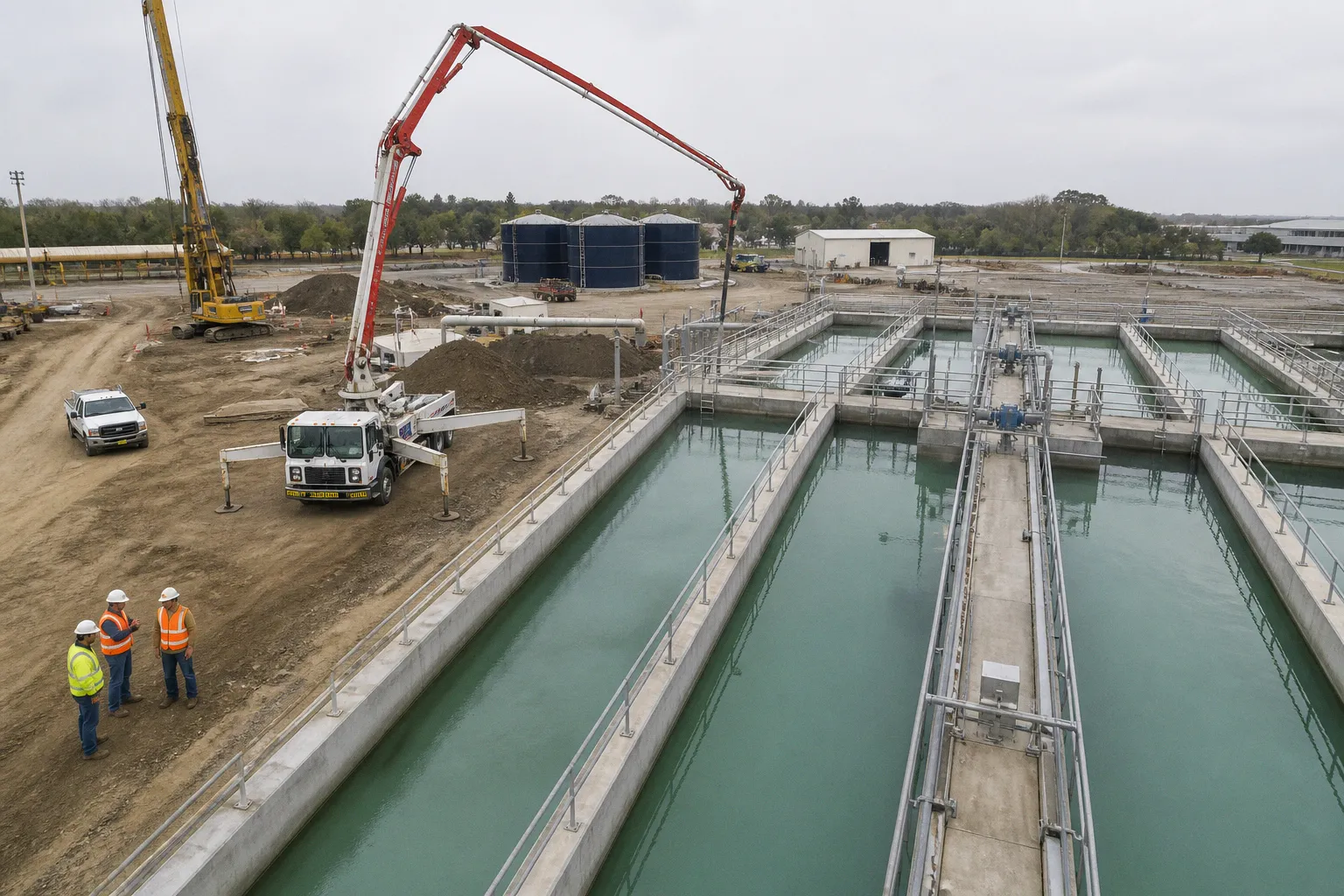
The project is designed to add 2.5 million gallons of storage and increase the city’s ability to move water from the Brushy Creek Regional Utility Authority through the Ronald Reagan Boulevard corridor. For anyone following municipal pump infrastructure, the important point is not simply the contract value: this is a staged system intended to manage demand where it rises and falls sharply during the day.
The equipment package is being built in phases
The first phase will include three of the facility’s planned five pumps, with a stated capacity of approximately 17.5 million gallons per day. The remaining phases are planned to increase movement to between 30 million and 35 million gallons per day, although funding for those future phases has not yet been identified.
That distinction matters on the ground. When a water system is designed in stages, the first installation has to serve today’s operating requirement while leaving a credible path for later expansion. Here, the tank and pump station are intended to work together: storage provides a buffer, while the pumps control how water is moved through the distribution network.
If demand rises sharply in the morning, the system can draw on stored water rather than relying only on the immediate incoming flow. If demand falls later, the storage volume can be replenished. City capital improvement program manager Tony Bettis compared this daily movement in demand to the way the stock market rises and falls, with storage helping to smooth the pattern.
Why the pump station is described as a “linchpin”
The new facility will be located at the northeast corner of Ronald Reagan Boulevard and East Crystal Falls Parkway. City leaders describe it as a central element of Leander’s water master plan because it will move water through the area, loop it back toward the north side, and circulate it through the wider system.
For equipment teams, this is a useful reminder that a pump station rarely stands alone. The value of the pumps is tied to the network around them: the tank volume, the incoming supply, the distribution route, and the points where additional boosting may eventually be required. Leander’s documents identify a future need for a booster pump near San Gabriel Parkway and Bagdad Street, which indicates that later capacity decisions will remain part of the wider infrastructure picture.
The project was ranked eighth in the city’s capital improvement planning matrix, which considers operational capacity, economic development, public safety, and quality of life. Its first phase will be funded through water impact fees. The city has not yet identified funding for the later phases, so the full five-pump configuration should be understood as a planned endpoint rather than a completed installation.
What to watch as the project develops
The contract was selected from 13 bids submitted to the city, with proposals ranging from $18.3 million to $29.3 million. That provides some procurement context, but it does not by itself tell us how the final station will be operated or how the equipment will perform in service.
The practical checkpoints are therefore straightforward: whether the first three pumps deliver the stated 17.5 million gallons per day, how the 2.5-million-gallon tank is integrated into daily demand management, and when the city identifies funding for the remaining capacity. From our perspective, those details will matter more than the headline contract figure, because they show whether the design is improving the real-world reliability of the system without creating unnecessary operational complexity for the people who maintain it.