Siemens Energy Secures Major Compression and Power Contract for Petrobras FPSOs
Siemens Energy has booked a 16-skid compression and power generation order from SBM Offshore, split evenly across the P-81 and P-87 FPSOs bound for Petrobras' Sergipe-Alagoas basin offshore Brazil…
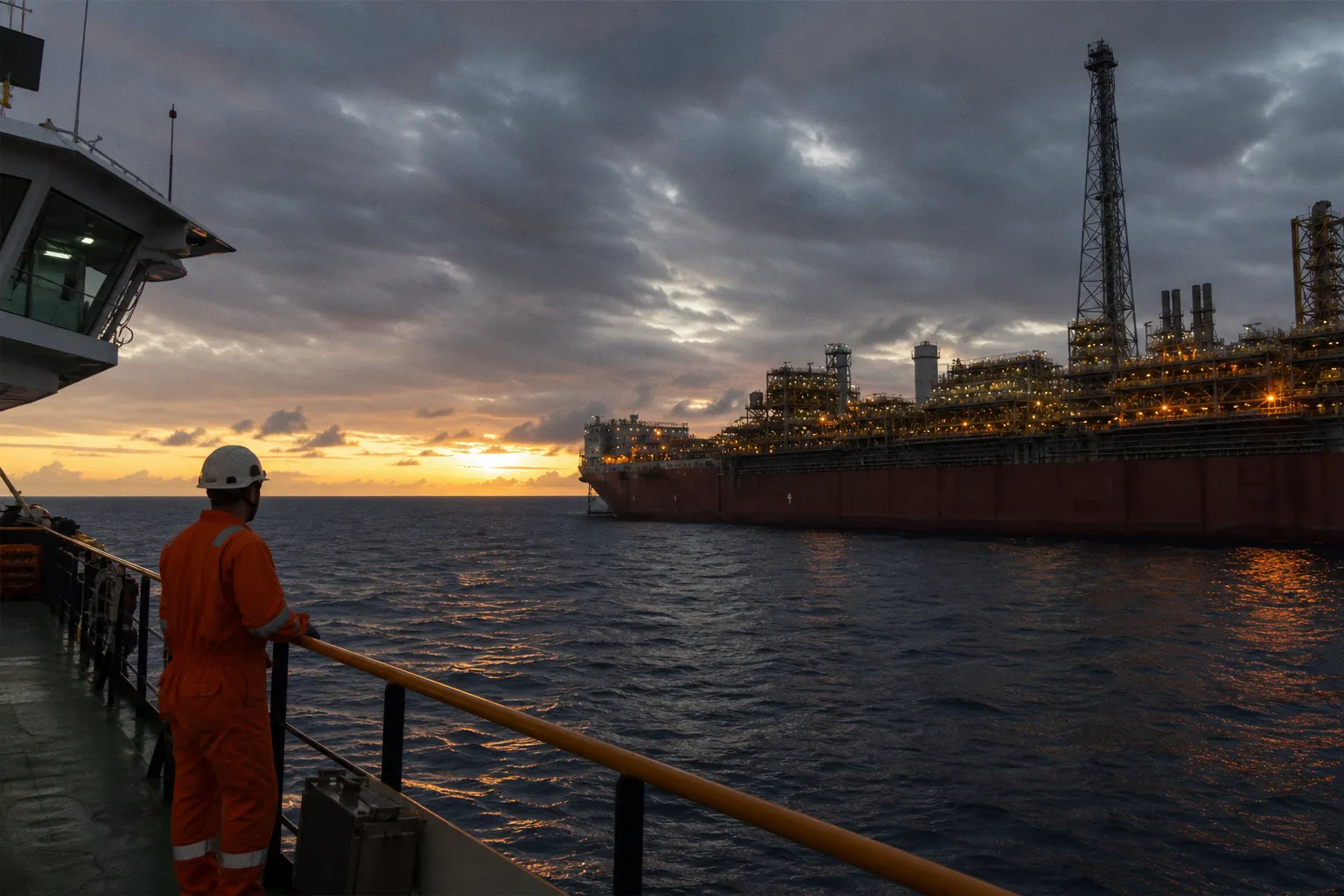
Siemens Energy has booked a 16-skid compression and power generation order from SBM Offshore, split evenly across the P-81 and P-87 FPSOs bound for Petrobras' Sergipe-Alagoas basin offshore Brazil, according to CompressorTech2. Each vessel receives an identical eight-skid package: three gas turbine-driven compressor trains, one electrically driven compressor, and four gas turbine generator sets. For spec reviewers, the operative metric is package density per skid — deck designers trade mass and footprint against every kilowatt installed, not nameplate horsepower.
Package composition
Across the two FPSOs, Siemens Energy is to supply six gas turbine-driven compressor trains, two electrically driven compressors, and eight gas turbine generator sets. The turbine-driven compressors handle gas processing and export; the electrically driven units are sized for reservoir gas injection, where turndown ratio and controllability matter more than peak flow. Four generator sets per vessel cover hotel and process load, which sets the paralleling logic, load-shedding priority, and harmonic limits the electrical one-line must support. Skid modularity — sixteen units split evenly — also sets the maintenance philosophy: each skid can be overhauled or replaced independently rather than pulled as a single integrated train.
Footprint, reliability, and local content
Siemens Energy frames the package around equipment reliability and compact footprint — the two constraints that drive OPEX on offshore production assets, per CompressorTech2. Assembly runs through the company's Santa Bárbara d'Oeste facility in southeastern Brazil, which has shipped more than 150 oil-and-gas skids since 2012. That figure functions as a process-throughput proxy for procurement teams: it signals repeatable skid integration rather than first-of-kind execution risk. The Brazilian footprint also closes the local-content checkbox that Petrobras FPSO tenders routinely require.
Heuristics for spec and procurement review
- Confirm per-skid mass, envelope dimensions, and lift-point coordinates before quoting deck layout; eight skids per FPSO is a packaging problem, not a bill-of-materials problem.
- Validate the turbine-driven versus electrically driven compression split against gas-injection ramp curves — turndown and part-load efficiency set compressor count, not nameplate flow.
- Treat the 150-skid Santa Bárbara track record as a process repeatability metric in vendor evaluation, separate from equipment MTBF claims.
- Treat the four-generator-set architecture as a hard constraint on the electrical one-line: black-start sequencing, load-shedding priority, and harmonic limits all derive from that count.
- Verify the gas turbine generator sets' fuel flexibility against field gas composition; H2S and CO2 content drive material selection and overhaul intervals on the hot section.
- Map the SBM Offshore / Siemens Energy interface boundary early; the order covers compression and power generation skids only — process and utility modules downstream remain on separate scopes.