PILLER VapoFlex Compressors Reach BASF Ludwigshafen for Industrial Heat Recovery
According to PILLER Blowers & Compressors, that choreography just hit a very visible milestone: the first VapoFlex compressor stages have been delivered and positioned on their concrete bases at…
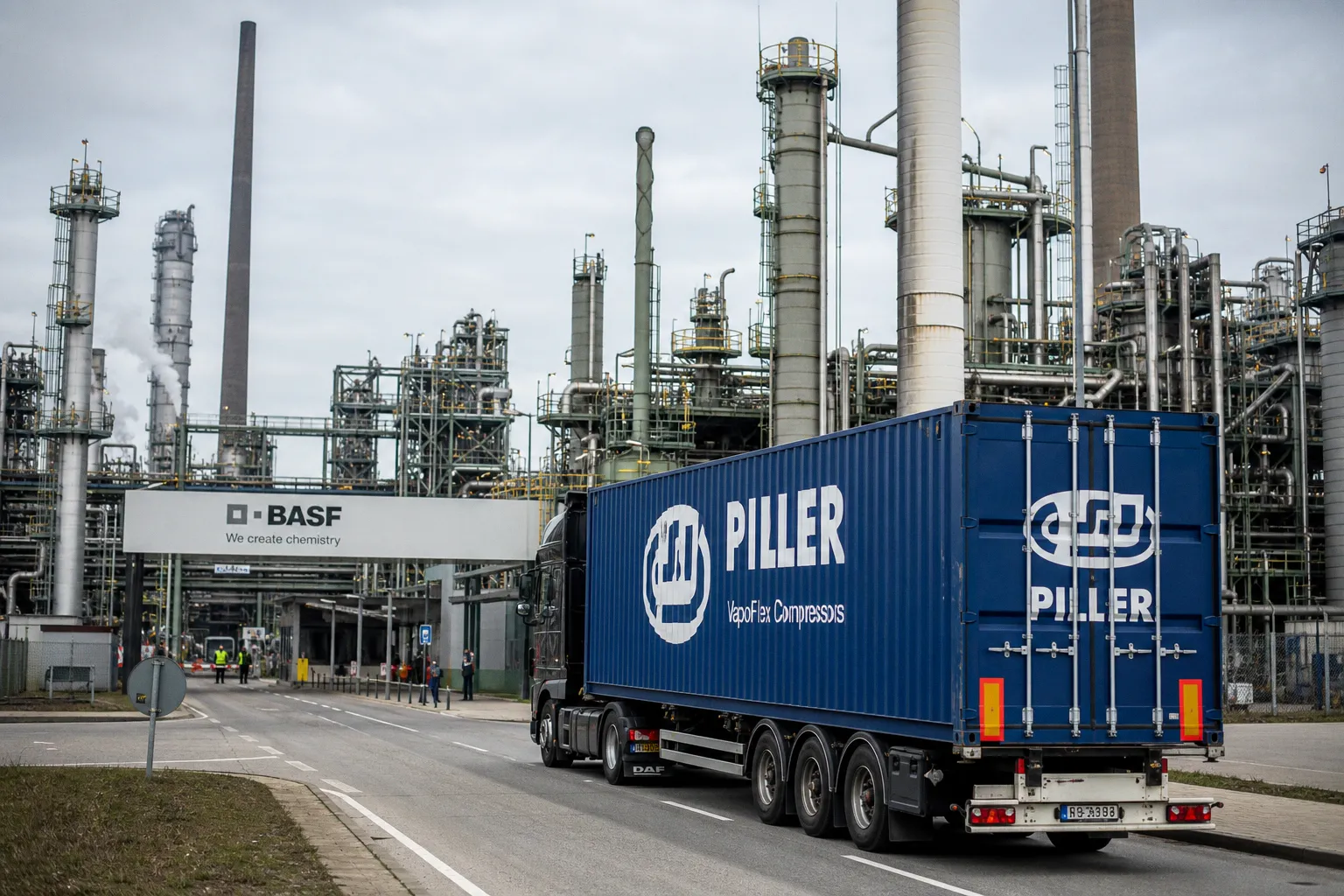
If you've ever stood on a process island at 5 a.m. and watched a multi-tonne compressor being inched into place, you know the real work is never the machine itself — it's the choreography of cranes, concrete, and commissioning crews trying to stay one step ahead of each other. According to PILLER Blowers & Compressors, that choreography just hit a very visible milestone: the first VapoFlex compressor stages have been delivered and positioned on their concrete bases at BASF's Ludwigshafen site, in one of the world's most significant industrial heat pump projects to date.
What's actually on the ground
PILLER is supplying eleven VapoFlex compressor stages in total, with GKT GmbH acting as the EPC contractor pulling the whole system together. The plant's purpose is quietly transformative: it will lift waste heat from Steamcracker II and convert that energy into process steam for formic acid production. Heat that would otherwise be vented becomes the raw material for a downstream chemical step.
The tricky part, as PILLER's own update points out, is that engineering and manufacturing work doesn't really "land" until the equipment is physically on site. Once the first units are set, the residual risk shifts from the factory floor to the construction site — alignment, piping tie-ins, electrical, and the layered coordination of multiple subcontractors whose schedules all have to interlock.
The small design choices that pay off later
One detail worth pausing on is the elevated concrete bases. Rather than pouring a separate condensate collection pit below each unit, the team designed raised pedestals and routed a piping network to a central collection tank. PILLER's team frames it as a move that reduces construction cost and supports reliable operation — but on the floor, what it really buys is accessibility. If you've ever had to crawl into a confined pit in full PPE to verify a drain, you already know that layout choice is the kind of decision that quietly decides whether maintenance feels tolerable or punishing.
The broader project also threads a needle that anyone specifying industrial heat pumps will recognise: managing scope across multiple stakeholders. PILLER describes rapid technical evaluation between departments and a willingness to assess changes against the whole plant, not just the compressor scope. That kind of cross-organisational discipline is the unglamorous work that keeps a schedule from sliding when a design change lands mid-construction.
What to watch from here
The first stages are on their bases. The next things to follow, on the ground, are mechanical alignment, the first piping tie-ins, and the day the heat-pump loop is finally run against Steamcracker II. Eleven stages will arrive in phases, so the logistics tempo we just described will repeat — each delivery a small stress test of whether the coordination model holds at scale.
For the operators and maintenance leads who will eventually live with this equipment, the promise is straightforward: process steam recovered from waste heat, fed directly into formic acid production, instead of being vented. That's not a design philosophy — it's a quieter shift on the floor, and one that starts paying off the day the loop is first closed.