FantaCinema Tickets: A Step-by-Step Route to Booking in Genoa
FantaCinema occupies roughly 600 square metres on the ground floor of Module 1 at Genoa’s Magazzini del Cotone, inside the Porto Antico district. The operating window is broad: daily from 10:00 to 19:00.
The visit itself normally takes one to two hours.
 Genoa
GenoaTickets and prices
FantaCinema
Entry ticket — Fantasy cinema exhibition
from€6
Check availabilityCombined entry ticket — 2 attractions
from€36
Check availabilityOfficial ticket — Adult admission
from€6
Check availabilityBox office and online booking
The main planning error is not ticket availability. It is route ambiguity. Visitors often combine FantaCinema with the Aquarium of Genoa, arrive at Porto Antico without identifying the correct Magazzini del Cotone module, or assume that an online booking must specify an exact entry time. It does not. FantaCinema is structured for flexible, self-guided access.
This changes the booking sequence. Identify the location. Select the ticket channel. Confirm the entry category. Then align the visit with the rest of the Porto Antico schedule.
1. Locate FantaCinema before selecting a ticket
FantaCinema is not a standalone building with a street-facing entrance that is obvious from every approach. It is installed inside Module 1, also called the Primo Modulo, of the Magazzini del Cotone complex at Porto Antico.
That distinction has practical consequences. Porto Antico is a large waterfront area with several attractions, restaurants, event spaces and pedestrian routes. A ticket does not reduce the cognitive load of navigating the site. The location must still be resolved separately.
Use this location chain:
1. Reach Genoa’s Porto Antico district. This is the wider destination area.
2. Find the Magazzini del Cotone complex. Do not stop at the Aquarium unless it is part of the same itinerary.
3. Identify Module 1 or Primo Modulo. FantaCinema is located inside this module.
4. Proceed to the ground-floor exhibition space. The museum occupies approximately 600 square metres.
5. Use the ticket channel selected in advance or purchase entry on site.
The most reliable mental model is not “find the FantaCinema building.” It is “find Module 1 inside Magazzini del Cotone.” That removes one layer of search friction.
The route is simple once the hierarchy is correct: Porto Antico, Magazzini del Cotone, Module 1, ground floor.
This matters more for combined visits. The Aquarium and FantaCinema are both in the Porto Antico area, but they are separate attractions with separate access logic. A combined ticket can reduce transaction overhead. It does not turn both venues into one continuous exhibition.
What to confirm on arrival
The site has several sources of visual and informational noise. Porto Antico includes enough competing destinations to increase wayfinding latency, particularly when visitors are moving with children or operating against a fixed train, cruise or restaurant booking.
Before entering the area, have these four data points available:
- The attraction name: FantaCinema.
- The complex: Magazzini del Cotone.
- The module: Module 1 / Primo Modulo.
- The expected visit duration: approximately one to two hours.
This is a small information set. It is sufficient for the route. More detail does not improve navigation unless it identifies the exact entrance or ticket desk.
2. Choose how to buy FantaCinema tickets
FantaCinema tickets can be purchased through more than one channel. The basic options are:
- On-site purchase at the museum.
- Online purchase through the official museum channel.
- Online purchase through third-party ticket platforms.
- A combined product covering the Aquarium of Genoa and FantaCinema.
The correct choice depends on itinerary structure, not on a universal preference for online or on-site booking.
On-site purchase
Buying at the museum is the lowest-commitment route. It removes the need to decide in advance and suits visitors already in Porto Antico who can absorb a short transaction step before entry.
The trade-off is operational. On-site purchase adds queue exposure and leaves less control over the order of attractions. The ticket desk may be efficient, but the article should not be treated as a guarantee of zero waiting time. Queue conditions change with daily demand, school groups, seasonal traffic and nearby events.
On-site purchase is a reasonable choice when:
- FantaCinema is an optional stop rather than the fixed centre of the day.
- The group is already at Magazzini del Cotone.
- The itinerary has no narrow departure deadline.
- The visitor wants to preserve flexibility.
Official online purchase
The official online channel provides a direct route to the museum’s own ticket inventory and entry categories. It is the cleanest option when the visitor already knows that FantaCinema is part of the itinerary.
Online purchase reduces transaction latency on arrival. It also creates a record of the booking, which is useful when several attractions are being coordinated. The remaining task is simple: retain the digital ticket in an accessible form and follow the instructions shown at purchase.
There is no need to construct a visit around a fixed timed slot. FantaCinema does not require advance reservation of a specific entry time for standard access.
Third-party platforms
Third-party platforms can be useful when the visitor is comparing several Genoa activities in one interface or wants to bundle FantaCinema with other travel products. Availability can be displayed for near-term dates, and the booking flow may be familiar to travellers already using the platform.
The constraint is price transparency. Third-party booking fees or service charges may apply beyond the museum’s direct ticket conditions. These charges are not stable enough to treat as a permanent part of the visitor guide.
Compare the final checkout amount and the stated redemption process. Do not compare only the headline ticket label.
A practical channel comparison
| Booking route | Best use case | Main operational advantage | Main constraint |
|---|---|---|---|
| On site | Flexible Porto Antico itinerary | No advance purchase required | Queue and transaction time remain variable |
| Official online channel | FantaCinema is a confirmed stop | Direct access to museum ticket categories | Requires a separate digital purchase workflow |
| Third-party platform | Multi-attraction planning or bundled activities | Consolidates booking information | Fees and conditions may differ from direct sales |
| Aquarium + FantaCinema combination | Both attractions are planned for the same trip | Reduces separate purchase steps | Does not remove the need to plan movement between venues |
The purchase channel should reduce system friction. If a platform adds more decision points, unclear redemption instructions or a higher final cost, its convenience is theoretical rather than operational.
3. Understand the entry categories before checkout
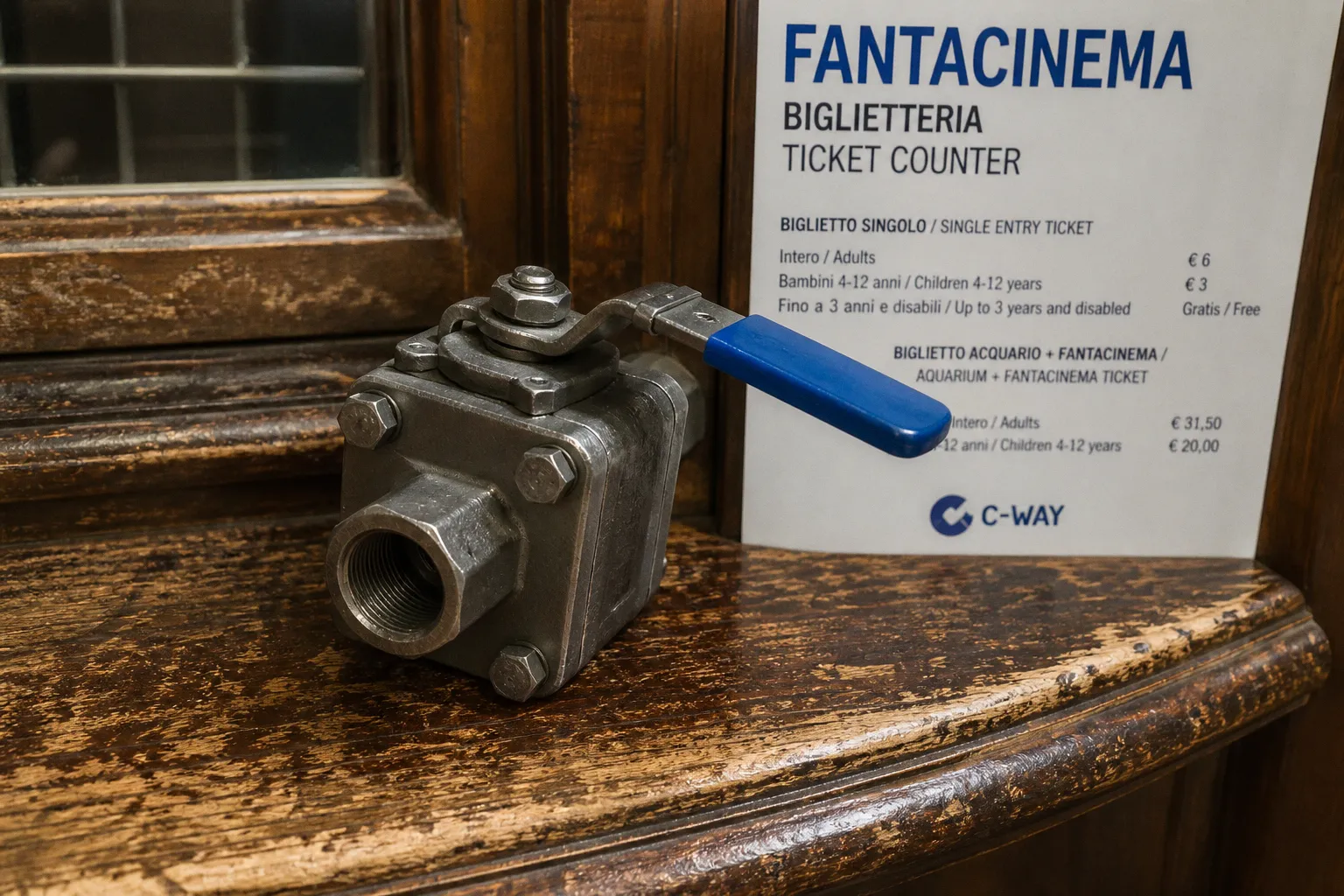
The official museum ticket structure includes separate categories for adults, children aged 4 to 12, children up to 3 years old and visitors with disabilities. The exact ticket price is subject to change and should be read from the active booking interface rather than copied from an evergreen article.
The category logic is more stable than the amount:
- Adults use the standard individual entry category.
- Children from 4 through 12 use the child category.
- Children up to 3 years old enter free of charge under the stated museum conditions.
- Visitors with disabilities enter free of charge under the stated museum conditions.
Group composition changes the transaction sequence. A family booking should not be treated as several identical adult purchases. The correct age category must be selected for each visitor, and any eligibility condition attached to a free category should be checked in the current ticket instructions.
The same rule applies to combined products. A combined Aquarium and FantaCinema ticket has its own adult and child categories. It should be evaluated as a separate product rather than assumed to be a simple addition of two individual admissions.
The age boundary that affects selection
The relevant child range is 4–12. Children up to 3 years old fall into the free-entry category listed by the museum. A child who has crossed that boundary should not be placed in the infant category simply because the difference in age is small.
This is basic data validation. It prevents a correction at the ticket desk and lowers the chance of a failed redemption.
At checkout, the visitor should resolve:
- Number of adults.
- Number of children aged 4–12.
- Number of children up to 3.
- Whether a disability-related free-entry category applies.
- Whether the visit includes the Aquarium of Genoa.
- Whether the selected product is direct admission or a combined ticket.
Do not infer current prices from old screenshots, search snippets or previous visits. Ticket amounts are a volatile data field. The museum’s current sales interface is the relevant source at the moment of booking.
4. Flexible access means no fixed time-slot dependency
FantaCinema does not require visitors to reserve a strict entry slot in advance. Tickets support flexible self-guided access within the operating day, subject to the attraction’s opening conditions.
This is the central planning advantage. The visit can be placed around the Aquarium, lunch, a waterfront walk or another Genoa activity without binding the entire schedule to a precise admission minute.
That flexibility should not be confused with unlimited timing. The museum operates daily from 10:00 to 19:00. The visitor must arrive within the active operating window. A flexible ticket removes slot latency. It does not remove closing time.
Build the day around duration, not a forced slot
The usual visit duration is one to two hours. That range is sufficient for most itinerary planning, but it should not be treated as a guaranteed dwell time. Exhibition density, group size and the number of stops for photographs can change the actual duration.
For planning purposes, use three layers:
1. Entry buffer. Allow time to reach Module 1 and resolve the ticket process.
2. Exhibition window. Allocate approximately one to two hours for FantaCinema.
3. Transfer and meal buffer. Add space before the next fixed booking.
This is a schedule architecture problem. A flexible museum admission is valuable because it absorbs variance. A rigid sequence of back-to-back attractions does not.
For example, a visitor with an Aquarium booking at a fixed time should avoid placing FantaCinema immediately before it unless the transfer and entry process have been explicitly allowed for. FantaCinema itself may take one hour. Finding Module 1, purchasing a ticket, moving through the complex and regrouping can extend the total block.
The best arrival windows
The daily opening period runs from 10:00 to 19:00. A morning visit provides the largest remaining scheduling buffer. A late visit reduces the number of recovery options if the group arrives at Porto Antico behind schedule.
The practical hierarchy is:
- Morning: highest schedule resilience.
- Midday: compatible with a flexible waterfront itinerary.
- Late afternoon: workable, but more sensitive to delays and closing time.
- Near closing: lowest tolerance for queues, navigation errors or a longer-than-expected visit.
No universal “best time” exists. The correct choice depends on the next fixed event. The lower the schedule tolerance, the earlier FantaCinema should be placed.
5. Combine FantaCinema with the Aquarium without creating a bottleneck
A combined Aquarium of Genoa and FantaCinema ticket is available through C-Way. It is designed for visitors who intend to visit both attractions and prefer a single bundled purchase.
The product can reduce administrative overhead. One checkout is simpler than managing two unrelated admissions. It may also fit visitors comparing the major Porto Antico attractions as one day plan.
The combination does not solve every operational issue. The attractions remain separate venues. Their sequence still affects throughput.
When the combined ticket is structurally useful
A combined ticket is a strong fit when:
- Both attractions are definite parts of the itinerary.
- The visitor wants to reduce the number of separate booking decisions.
- The group is travelling with children and benefits from fewer ticket transactions.
- The day has enough capacity for both visits.
- The visitor wants to keep FantaCinema as a shorter component around the Aquarium.
It is a weaker fit when:
- FantaCinema is only a backup activity.
- The Aquarium may be cancelled because of weather, fatigue or transport delays.
- The itinerary includes several fixed-time events.
- The visitor needs maximum freedom to change attractions at the last minute.
The key distinction is commitment. A combined product improves purchase efficiency when the itinerary is already stable. It can increase correction cost when the day is uncertain.
Select the sequence using schedule constraints
The Aquarium generally represents the larger time commitment. FantaCinema is more compact, with a typical duration of one to two hours. That makes FantaCinema useful as either an opening activity or a controlled secondary stop.
Two common sequences are operationally sound:
FantaCinema first, Aquarium second
This sequence works when the visitor wants to complete the smaller attraction early and reserve a larger block for the Aquarium. It also creates more recovery capacity if the first visit starts slightly late.
Aquarium first, FantaCinema second
This sequence works when the Aquarium is the primary objective and FantaCinema is a shorter follow-up. It is efficient when the group already knows that energy and available time will remain after the Aquarium.
The correct sequence is determined by fixed commitments, not by an abstract preference. Put the attraction with the lower schedule tolerance earlier in the day.
A combined ticket reduces purchase friction. It does not reduce geographic or temporal friction between two separate attractions.
Avoid the false precision of a minute-by-minute itinerary
The absence of a strict FantaCinema time slot is an asset. Use it to absorb variance. Do not replace that flexibility with a schedule that assumes every transition will occur at the planned minute.
A robust itinerary includes:
- A defined arrival range rather than one exact minute.
- A one-to-two-hour FantaCinema block.
- A separate transfer allowance within Porto Antico.
- A buffer before any transport departure or timed reservation.
- A fallback point where the shorter attraction can be dropped without damaging the day.
This is standard capacity planning. The plan should degrade gracefully when the first component runs late.
6. A step-by-step booking route
The following sequence is designed to minimise cognitive load and entry errors.
Step 1: Fix the attraction set
Decide whether the plan includes only FantaCinema or both FantaCinema and the Aquarium of Genoa. Do not begin with the ticket price. Begin with the required access model.
If both attractions are definite, compare the combined product. If only FantaCinema is definite, an individual ticket maintains a cleaner dependency structure.
Step 2: Confirm the location hierarchy
Record the destination as:
- Porto Antico.
- Magazzini del Cotone.
- Module 1 / Primo Modulo.
- Ground floor.
This is more useful than saving only the attraction name. It converts a broad district into a specific route target.
Step 3: Select the sales channel
Choose between on-site purchase, the official online channel and a third-party platform. Use the official route when direct conditions and simple admission are the priority. Use a third-party route when it materially simplifies a multi-activity booking.
Check the final transaction conditions before payment. A reseller may show different fees or redemption requirements.
Step 4: Assign every visitor to an entry category
Separate adults, children aged 4–12, children up to 3 and eligible visitors with disabilities. Do not collapse the group into one generic quantity.
This is where most preventable checkout errors occur. The category model is simple. The error rate rises when the group is entered quickly without age segmentation.
Step 5: Confirm the operating window
The standard daily schedule is 10:00–19:00. Place the visit inside that window and leave enough time for navigation and entry before the planned exhibition block.
A ticket without a usable arrival plan is not a complete itinerary.
Step 6: Store the ticket where it can be retrieved quickly
Keep the digital ticket accessible before reaching the entrance. Avoid making the group search email accounts, messaging threads or multiple booking applications at the point of entry.
This is a small interface decision with a direct effect on queue latency.
Step 7: Navigate to Module 1
At Porto Antico, follow the Magazzini del Cotone route and identify Module 1. Do not assume that reaching another major attraction in the complex means the museum has been reached.
Step 8: Enter and keep the visit self-guided
FantaCinema is designed for flexible self-guided access. The visit does not depend on a preassigned time slot. Maintain the planned one-to-two-hour window, then continue to the next part of the Genoa itinerary.
Common planning failures
The predictable errors are procedural.
Treating Porto Antico as the final destination
Porto Antico is the district, not the complete location instruction. A visitor who stops at the district level still has to resolve Magazzini del Cotone and Module 1.
Correction: save the full location chain before departure.
Assuming an exact reservation slot is mandatory
FantaCinema does not require a strict time-slot reservation for standard entry. Building the day around an invented slot constraint creates unnecessary scheduling friction.
Correction: use the opening hours and estimated duration as the planning variables.
Comparing obsolete ticket amounts
Ticket prices change. A price shown in an old guide, cached search result or user review may no longer represent the active offer.
Correction: use current ticket information at the moment of purchase. Treat the amount as dynamic inventory data.
Using a combined ticket without committing to both attractions
A bundle is operationally efficient only when both components belong in the itinerary. If one attraction is uncertain, the bundle can add dependency without adding value.
Correction: distinguish confirmed activities from optional activities before checkout.
Scheduling FantaCinema too close to transport
The museum visit may be short, but the total block includes navigation, ticket retrieval, entry and movement through Porto Antico. A one-hour estimate should not be used as a zero-buffer transfer calculation.
Correction: add time for the system around the exhibition, not only the exhibition itself.
Ignoring the late-day constraint
Flexible entry does not mean late entry is risk-free. The attraction closes at 19:00, and a delayed arrival reduces recovery capacity.
Correction: move the visit earlier when the day contains a fixed departure or reservation.
Final routing heuristics
- Treat Module 1 / Primo Modulo as the decisive location identifier.
- Plan FantaCinema as a one-to-two-hour self-guided visit.
- Use the 10:00–19:00 daily schedule as the hard operating boundary.
- Do not add a fictional time-slot constraint. Specific advance entry slots are not required.
- Separate adult, child and free-entry categories before checkout.
- Compare direct and third-party booking conditions at the final payment stage.
- Use the combined Aquarium and FantaCinema product only when both attractions are confirmed.
- Place the attraction with the lower schedule tolerance earlier in the day.
- Keep digital tickets accessible before reaching the entrance.
- Leave a transfer buffer. The ticket is not the whole journey.
FantaCinema is a low-complexity attraction with a high dependence on correct routing. The exhibition itself fits into a compact visit window. The operational risk sits outside the galleries: location hierarchy, ticket categorisation, bundle selection and schedule compression. Resolve those variables in that order, and the Genoa visit remains flexible without becoming vague.
Practical info
Currency: EUR
Driving: on the right
Emergency number: 112