How New Wastewater Treatment Tech Impacts Daily Plant Operations
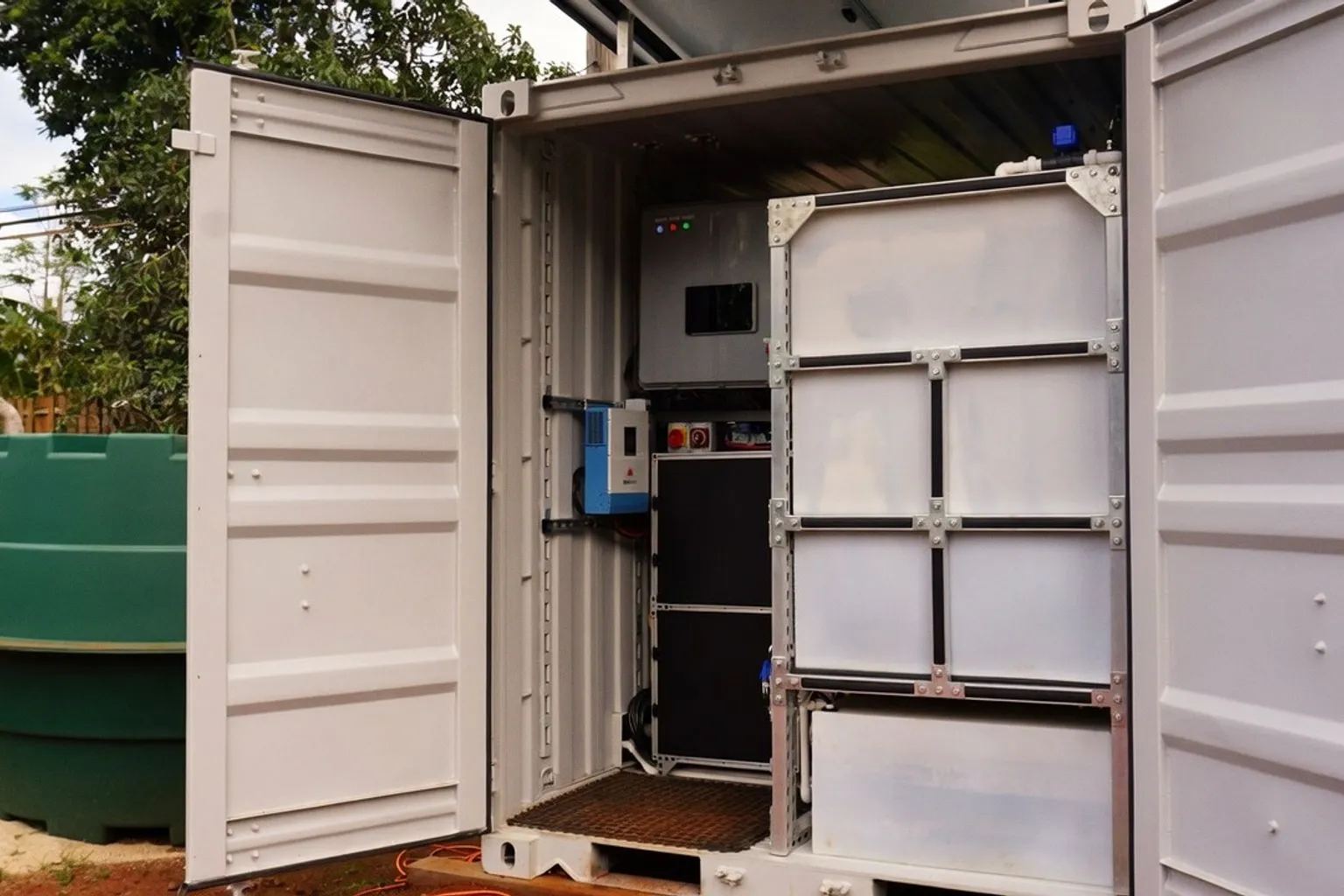
According to the City and County of Honolulu, a new innovative wastewater treatment technology has been unveiled at the Wahiawa Wastewater Treatment Plant, with funding from the National Science Foundation.
If you're the operator who walks into the plant house at 5:45 a.m. and heads straight for the panel before you've even shrugged off your jacket, you know the first hour of a shift is rarely about the headline technology. It's about whether the pumps, the valves, the screens and the controls are behaving themselves today. That's the lens we want to put on this week's cluster of wastewater news, because three separate announcements are pointing in the same direction: treatment infrastructure is getting redesigned around the worker and the system, not just around the chemistry.
If you've been in the trade long enough, you know what an "unveiling" actually means in your day: a new process step you didn't train on last year, new interlocks, new sensors, and almost certainly a new way the existing pumping and piping has to hand off material. Before you read any further, the practical question isn't what was unveiled — it's what changes when you arrive at work tomorrow.
What we can actually verify
The Honolulu release is the most concrete of the three: a technology has been put on display at Wahiawa, and the NSF is behind the funding. That's it. There's no public breakdown yet of the equipment list, the pumping duty points, or the operator interface, so on the ground we'd treat this as a watch item rather than a spec item. If you're responsible for a similar plant, your move today is a quiet one — bookmark the Wahiawa project, and keep an eye out for follow-up technical papers or vendor disclosures so you can compare the new process against what you're already running.
Across the Atlantic, Uisce Éireann has completed a €13 million upgrade of the Fethard wastewater treatment plant in Tipperary, framed by the utility as an improvement in water quality and support for local development. For anyone specifying hardware in that budget range, the useful signal here is the category of spend: a full-plant refresh in a small Irish town, funded and delivered in one cycle. That's the kind of reference project procurement teams will quietly point to when they're defending a similar envelope.
Then there's the industry-side momentum. Alfa Laval and AquaGreen have announced a strengthened collaboration at WEFTEC 2026, combining decanter and thermal treatment technologies for sustainable biosolids and sludge management, with a shared presence at booth #1829 in New Orleans from September 28–30. If you handle sludge, this matters because the conversation is shifting from "how do we dispose of it" to "how do we recover value from it" — and that shift tends to drag new pumps, new heat-exchange skids, and new control philosophies along with it.
What to do with this in your own work
Here's the if-then we keep coming back to. If your plant is approaching a similar upgrade window in the next 18 months, then these three announcements together suggest the procurement conversation will increasingly include process novelty alongside hardware replacement. You don't need to redesign your spec today, but it's worth asking your vendor reps a sharper set of questions on the next site visit: what's the energy profile per cubic meter, what's the failure mode under operator fatigue at 3 a.m., and how does the new step hand off to the existing pump room without forcing a rebuild.
The honest caveat is that none of these releases gives us the full equipment picture yet — Honolulu hasn't published detailed process documentation, and the Fethard upgrade is reported at a budget level rather than a component level. So the right posture, on the ground, is informed patience: track the project, talk to the integrators, and let the next round of technical disclosures do the heavy lifting before you commit capital.