STARD GEARS Pneumatic Actuators Engineered for Corrosive Chemical Valve Control
Picture the moment you're six hours into a shift, standing beside a chemical-service line, when the quarter-turn actuator that should be seating is instead dragging and weeping vapor at the seal face…
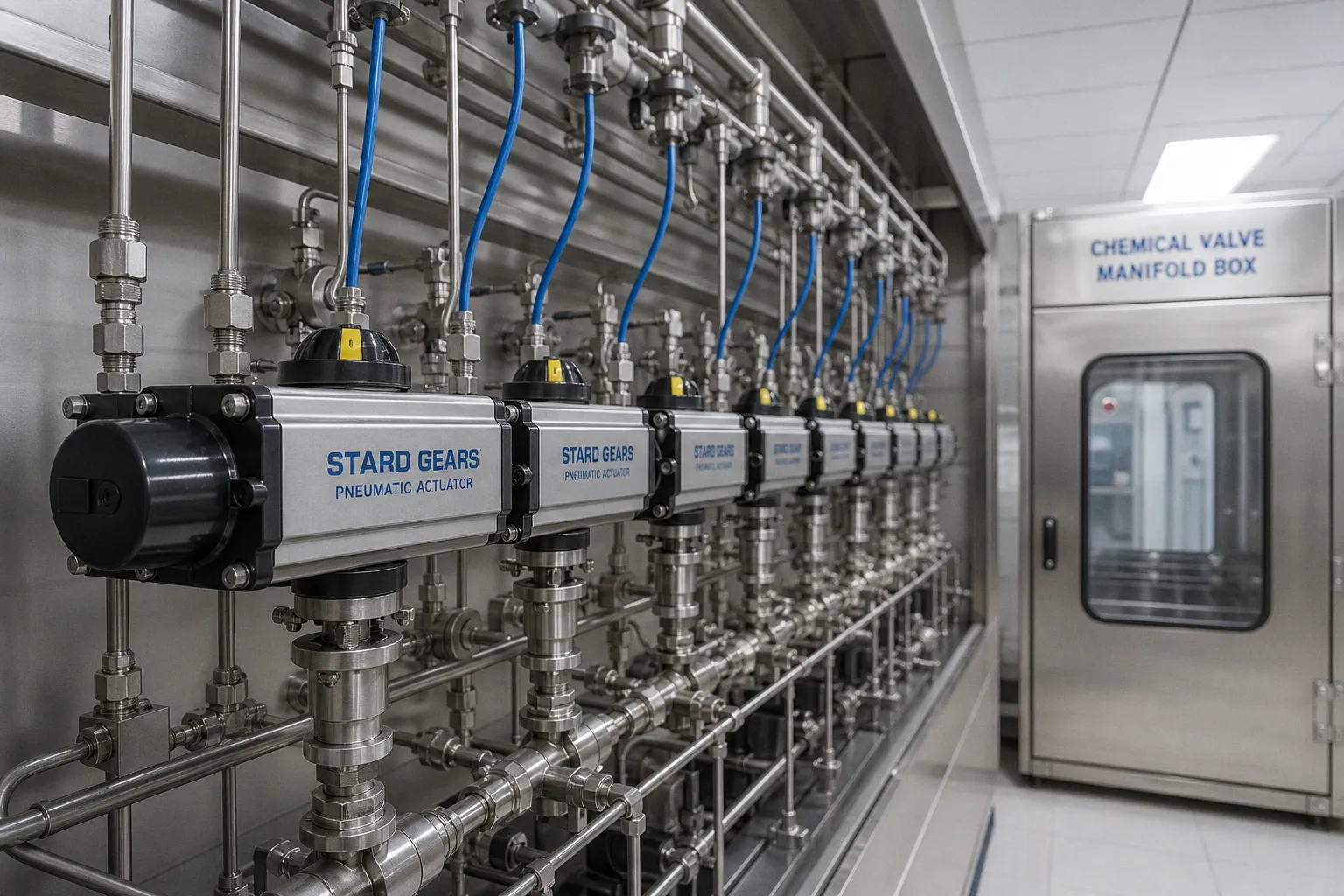
Picture the moment you're six hours into a shift, standing beside a chemical-service line, when the quarter-turn actuator that should be seating is instead dragging and weeping vapor at the seal face — that's the scenario STARD GEARS, as reported by EIN News, is targeting with its newly introduced chemical-process pneumatic actuator aimed at reliable valve control and automation in demanding chemical environments. The release emphasizes that the actuator is engineered to withstand aggressive media and to maintain pipeline tightness under those conditions. If you're the person standing next to the line when something doesn't seal, that's the part of the pitch that decides whether this is a real upgrade or another data-sheet promise.
What STARD GEARS is actually putting on the table
The release positions the new actuator inside the rotary-pneumatic family — compressed air in, controlled torque out — with the design priorities called out being chemical resistance and seal integrity under aggressive media. In practical terms, that's a package aimed at corrosive duty rather than the lighter water, steam, or instrument-air lines that often share the same plant footprint. We don't yet have published cut-sheets to confirm pressure ratings, temperature envelopes, torque curves, or the specific elastomer and bearing choices, so anything in those columns should be verified directly with the manufacturer or its regional channel before procurement signs anything.
What to verify before you spec, swap, or recommend
If this actuator is heading onto a line you've been babysitting for years, three things are worth pressure-testing in the vendor conversation rather than on the line itself. First, confirm the actuator-to-valve interface — a pneumatic unit only behaves as well as the stem connection, mounting kit, and bracketry allow, and a mismatch here is the most common reason a "new" actuator underperforms the old one. Second, ask what instrument-air quality the design assumes, because on chemical service contaminated or wet supply air is the silent killer of seals and internal components, and the answer will tell you whether you also need an upstream dryer or filter upgrade as part of the swap. Third, walk the seal-material list against the specific media you'll actually see on your line. "Aggressive media" is a wide spectrum, and the right elastomer for one plant's chemistry can be the wrong choice two aisles over.
On the ground, this is the kind of release we like to see when a vendor treats the operator's day as part of the spec sheet. A pneumatic actuator that holds its torque through a heat-up, seats cleanly under load, and doesn't punish the maintenance tech at every PM interval is the difference between a smooth campaign and a string of callouts — and on a chemical line, that margin is rarely theoretical.