Achieving SIL3 Compliance: Strategic Planning for Industrial Valve Actuators
According to a recent release from EIN Presswire, STARD GEARS has now outlined its SIL3 valve actuator planning guidelines, showing how its modular pneumatic and scotch yoke actuators slot into…
When the Actuator Is the Last Line of Defense
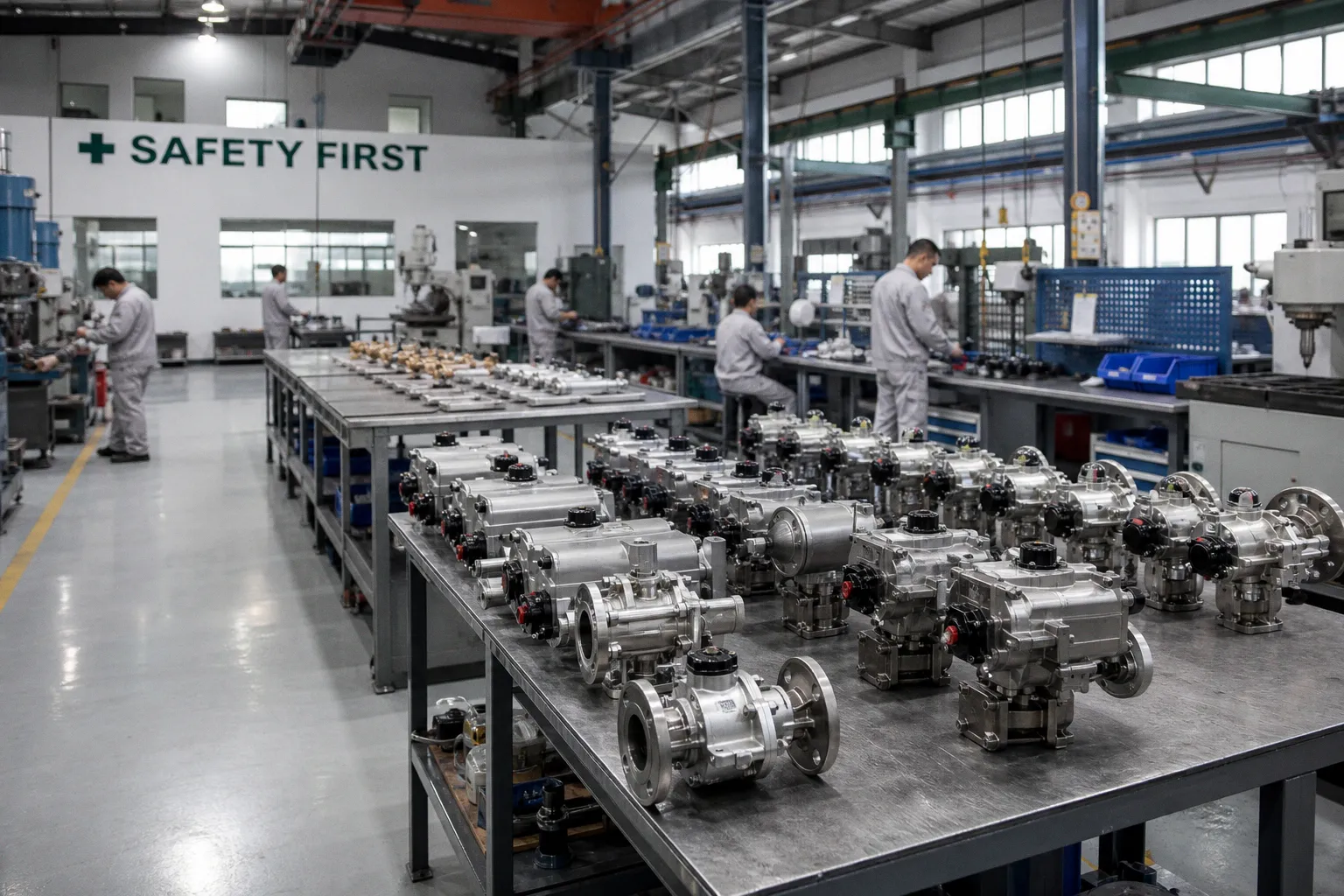
Picture this: it's the tail end of a twelve-hour shift, and the control room calls out a high-integrity trip. The valve on line three has to close — not almost close, but seat fully, under a defined proof pressure, within a specified time. Your actuator, which looked fine on the morning walk-down, has to perform in that exact moment. If you have ever felt your stomach drop when a hand-wheel refuses to budge, you already understand why SIL3 planning is not a slide deck exercise — it is a maintenance reality. According to a recent release from EIN Presswire, STARD GEARS has now outlined its SIL3 valve actuator planning guidelines, showing how its modular pneumatic and scotch yoke actuators slot into safety-instrumented systems across industrial valve control.
What the Guidelines Are Actually Trying to Solve
Safety Integrity Level 3 doesn't tolerate guesses. When a valve is part of a safety instrumented function, the actuator has to deliver a predictable, repeatable stroke — closing on demand, with a known torque margin, every single time. STARD GEARS, the automation arm under Suzhou SIP Stard Automation, frames its planning approach around two actuator families that show up again and again in process plants: modular pneumatic actuators for routine modulating and on-off duty, and scotch yoke designs for the higher-torque, quarter-turn applications where you need that mechanical advantage to push through pressure drops and debris.
On the ground, that means a planner should be able to answer three questions before the actuator even ships: what is the required safety integrity level for the SIF this valve belongs to, what is the maximum differential pressure the actuator must seat against, and how often will proof testing realistically happen given the maintenance window you actually have — not the one on paper. STARD's modular construction matters here, because if-then logic drives most spec errors: if your torque requirement changes, then a swap of the spring cartridge or yoke geometry should be possible without redesigning the whole package.
Why This Matters for Your Walk-Down Tomorrow
We tend to talk about actuators in catalogs, but operators live with them. The tactile feedback of a well-tuned scotch yoke — that positive snap through the stroke — tells a technician whether the linkage is wearing, whether the spring set is fatigued, whether the positioner is hunting. STARD's planning emphasis is a reminder that a SIL3 valve is only as honest as the maintenance routine behind it: documented proof tests, accessible bleed ports, and a clear path to replacement parts when a seal begins to weep at the end of a shift.
The practical takeaway is simple. When you are sizing the next valve assembly, treat the actuator planning step as part of the safety case, not a procurement footnote. Confirm the SIL target, match the actuator family to the torque profile, and walk the line with whoever will be rebuilding it at two in the morning. That is where modular pneumatic and scotch yoke designs earn their keep — in the hands of the people who have to make them work, every shift, without drama.