Why UK Water and Energy Policy Is the Critical Bottleneck for AI Infrastructure
According to Water Magazine, water and energy policies will "make or break" the United Kingdom's AI future — and that sentence deserves a second read from anyone who specifies, installs, or maintains pumping equipment.
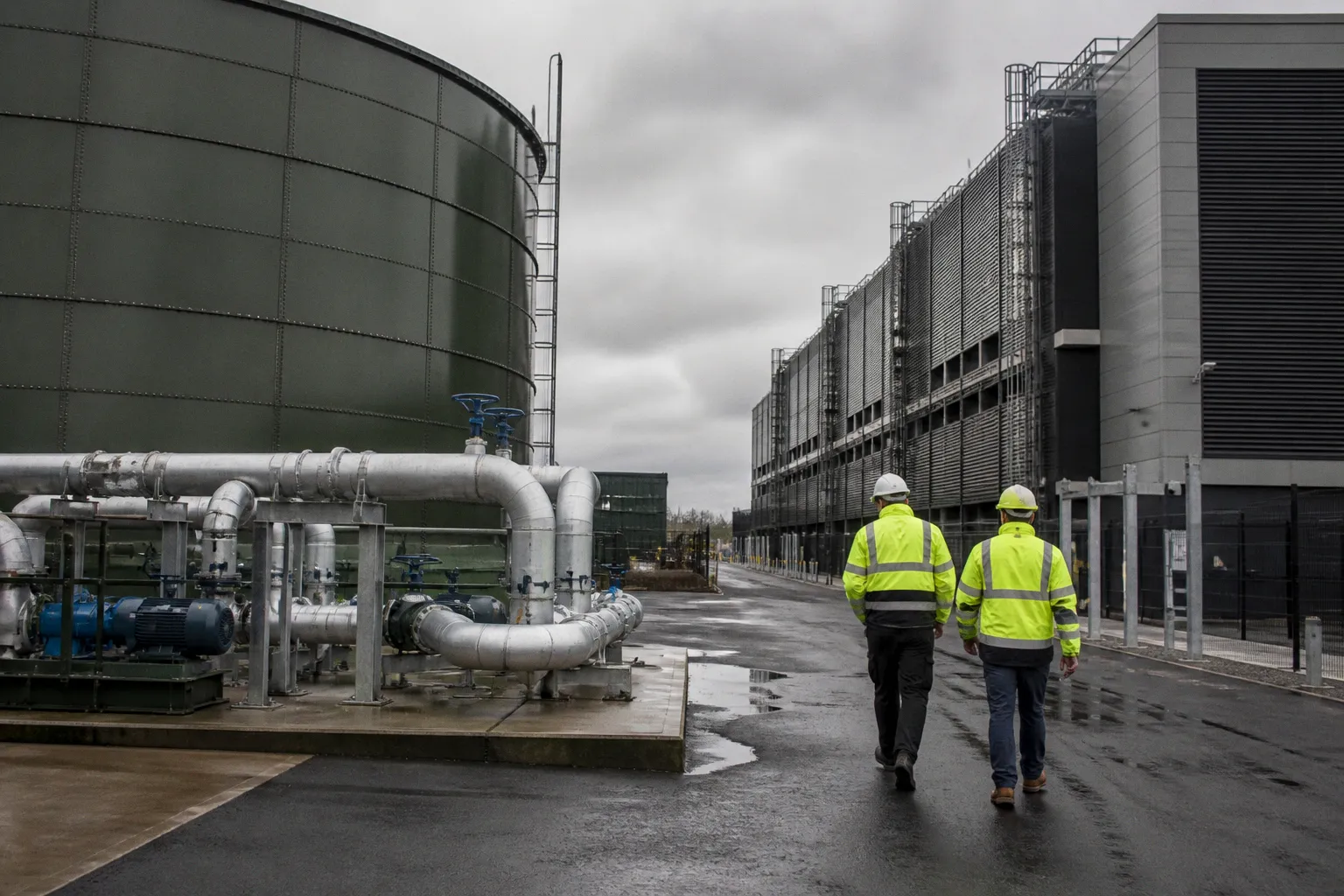
Because every megawatt of compute that comes online asks the same quiet question of the physical world: where does the cooling water come from, and who keeps it moving?
The cooling backbone behind the headlines
We tend to talk about AI as if it lived in the cloud, but on the ground it lives in a building full of servers that throw off serious heat. That heat has to leave the building, and in most hyperscale and enterprise sites it leaves through water — chilled loops, cooling towers, evaporative systems, heat exchangers. Behind every one of those circuits sits a pump room, a valve manifold, and a maintenance team that the policy debate rarely mentions.
So when policy makers argue about grid capacity, abstraction limits, or new water-stressed tariffs, the consequences do not stop at the data center gate. They ripple backward into the spec sheets of pump manufacturers, the retrofit queues of facilities teams, and the daily walk-throughs of operators who already manage aging assets. If regulators squeeze water availability or push energy prices up, the design choices we make today — variable-speed drives over fixed-speed, sealed glandless pumps over packed designs, parallel redundancy over single-vendor — become decisions with a much shorter shelf life.
What this looks like on the floor
Picture the operator we keep coming back to: ten years on the tools, running three shifts at a water treatment works or a process cooling skid. They already know what happens when a pump is overspec'd for the duty — cavitation, bearing wear, the small tremor in the pipework at 3 a.m. that wakes them up. Now imagine a policy shift that suddenly makes their site more attractive as a heat-recovery node for a nearby data center, or one that tightens the abstraction budget mid-summer. If-then: if your utility introduces a tariff for returning warm water, then your pump curve changes overnight; if your local authority tightens abstraction limits, then your existing impeller choice may no longer hold its efficiency window.
That is not a hypothetical policy debate — it is the next twelve to twenty-four months of specification work, as reported by the trade press. The teams that read this signal early will be the ones whose equipment selections age well, and whose operators are not the ones paying the price for decisions made three budgets ago.
What to track before you spec
We would keep three threads on the radar, because they directly shape pumping hardware decisions and the operator experience downstream:
- Policy boundary conditions. UK planning consultations, water-regulator decisions, and any new cooling-water guidance for data center developers. These set the box your pump room has to live inside, and they tend to move faster than the equipment replacement cycle.
- Efficiency and redundancy norms for cooling loops. Whether the operator on the next shift inherits a system that runs comfortably at part load with clear tactile feedback at the valve, or one that groans near its curve knee every August. That gap is a design decision, not a maintenance one.
- Maintenance reality under uptime pressure. Glandless designs, cartridge seals, modular valve manifolds, and local control panels that an operator can actually read at 2 a.m. Anything that reduces operator fatigue and shortens time-to-restore is going to earn its place when uptime pressure rises with AI demand.
The framing in Water Magazine is right: water and energy policy is the lever. For us — the people who live one level down, in the pump room — it is also the timeline we plan against. The smarter we read it now, the kinder our choices will be to the operators who inherit them.