Deploying Dickow Magnetic-Drive Pumps for Critical Overseas Fuel Logistics
Picture the maintenance crew on a remote military base, three thousand miles from the nearest parts warehouse — when a fuel transfer pump fails, you don't just lose uptime, you lose a whole shift's…
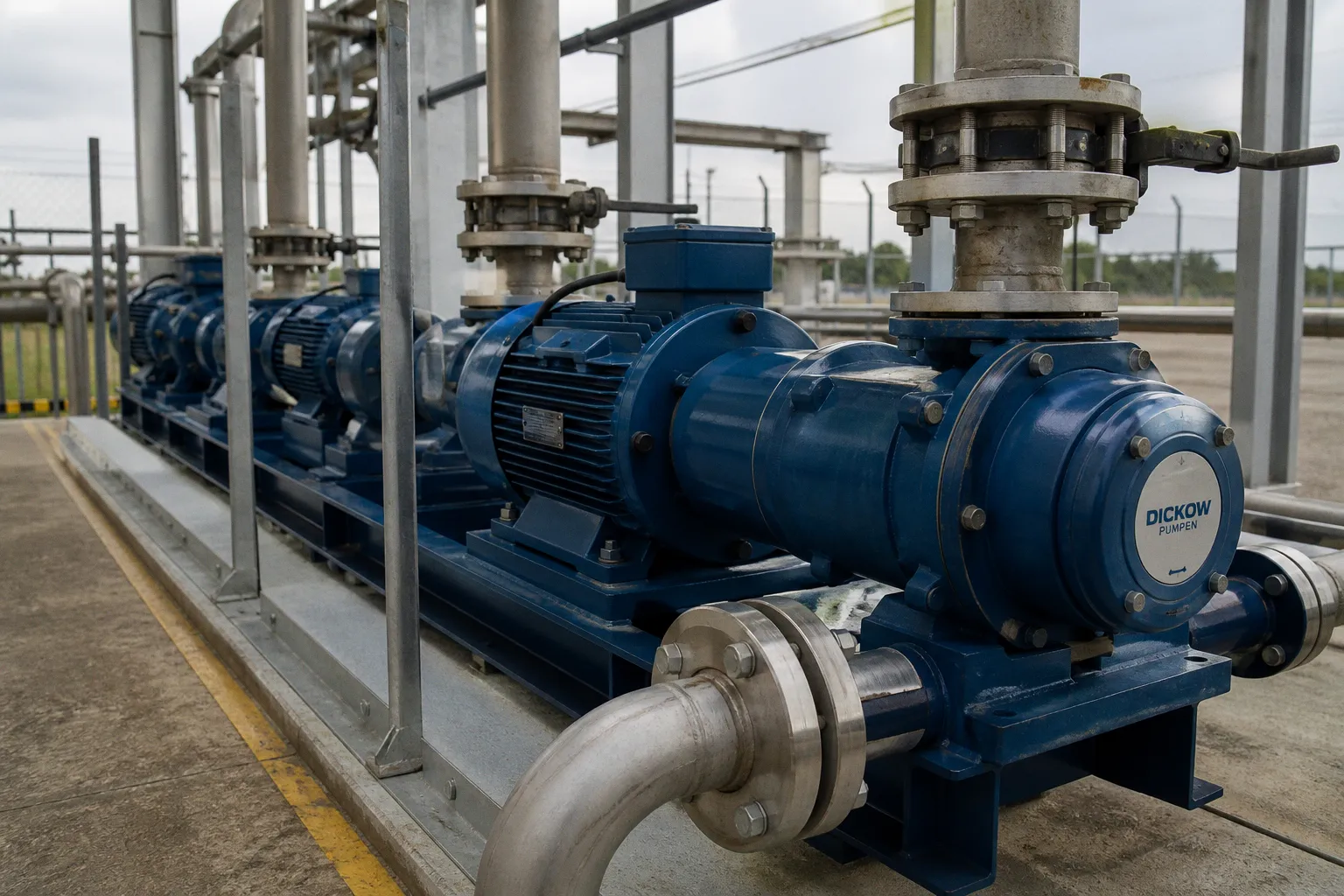
Picture the maintenance crew on a remote military base, three thousand miles from the nearest parts warehouse — when a fuel transfer pump fails, you don't just lose uptime, you lose a whole shift's logistics, and according to Flow Magazine, that's exactly the scenario Michael Smith Engineers set out to prevent with a recent supply order: four Dickow Pumpen API 685 magnetic-drive centrifugal pumps heading out for diesel and gas-oil transfer duties.
The package on the ground
When we unpack a delivery like this, the first thing we want to know is how the four units split the work. The headline pump is a Dickow PRM huh 150/320, long-coupled to a 37 kW four-pole motor, moving 270 m³/h at roughly 30 metres of differential head — your high-volume, low-pressure main transfer line. Alongside it sit three PRM huh 80/320 units, each on a 75 kW two-pole motor, delivering 130 m³/h at about 105 metres of head. Read that the way an operator would: the big pump handles the slow bulk move, the smaller trio push against line losses. If you've ever stood beside a fuel farm at work, you know those two regimes rarely belong on the same impeller.
Why sealless changes the technician's day
Here's where the design decision lands in real-world context. A conventional centrifugal pump carries a mechanical seal that, sooner or later, begins to weep — and on a diesel or gas-oil duty at a remote base, that weep isn't just a maintenance ticket. It's a contamination report, an environmental flag, and a reason someone has to be flown in with a seal kit. By removing the seal entirely, the magnetic-drive architecture pushes that failure mode out of the daily shift and into something the maintenance team plans around. Dickow quotes a minimum twenty-year service life and at least three years of continuous operation between planned maintenance intervals. For the technician on rotation, that turns the pump into something you check on a schedule, not something you scramble for at 02:00 with a torch in one hand and a fuel bowser leaking in the other.
What to watch if you're specifying similar gear
If we were putting this on our own selection sheet, three things would earn a second look. First, confirm the duty cycle the vendor is quoting against — "three years between overhauls" only matters if your actual operating envelope matches the test bench. Second, weigh the small efficiency penalty of magnetic coupling against the maintenance savings; on continuous fuel transfer the trade usually favours sealless, but on light intermittent duty the arithmetic can flip. And third, think about who services the unit on day one thousand. Even the best sealless pump eventually needs a bearing change, and at an overseas base the person holding the spanner matters as much as the pump itself.