Greater Western Water Upgrades Melton South with Permanent Pipeline Infrastructure
Pump Industry Magazine is reporting that Greater Western Water is pulling out the temporary rigs in Melton South and laying down a 2-kilometer permanent water pipeline — a quiet swap that is designed…
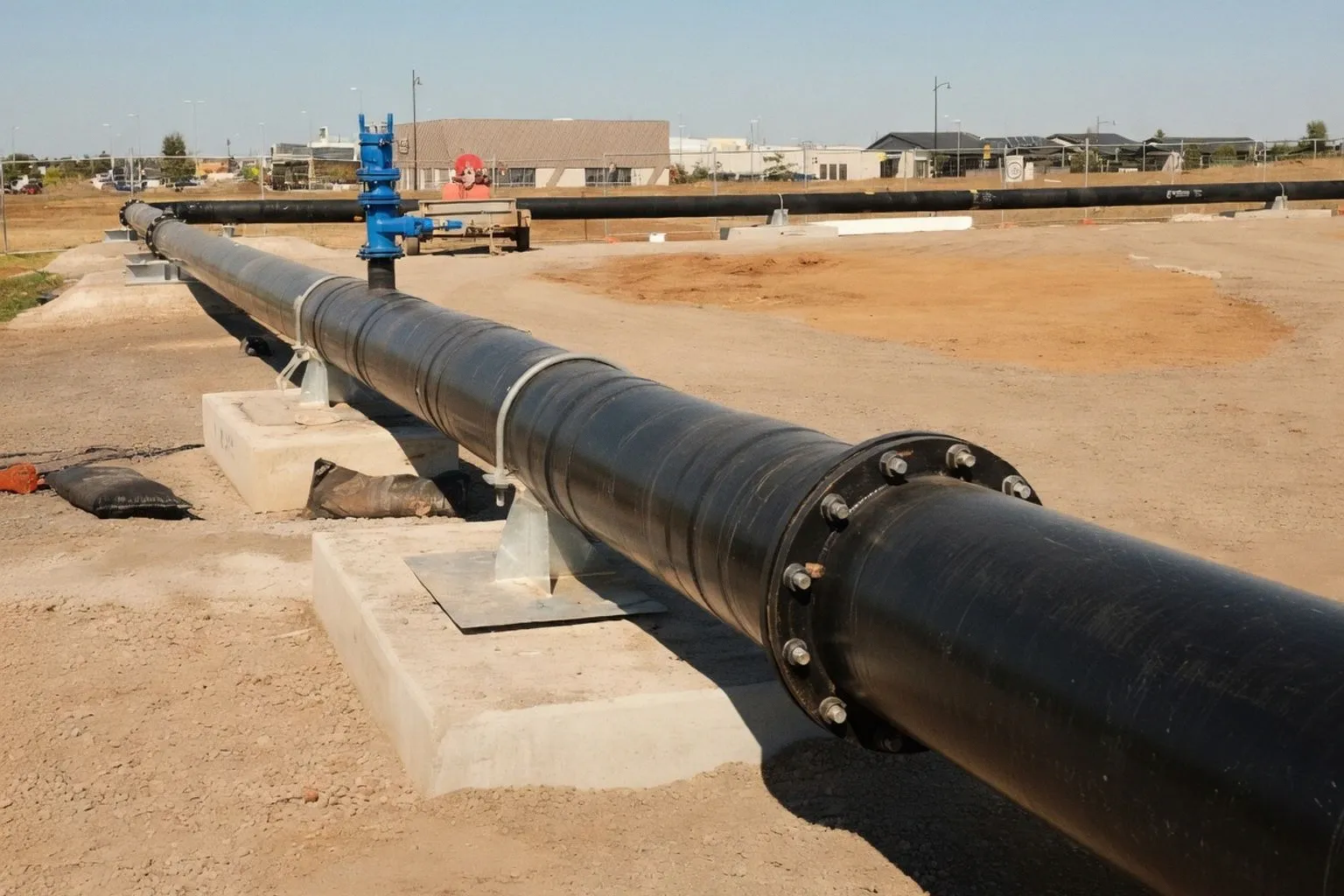
Pump Industry Magazine is reporting that Greater Western Water is pulling out the temporary rigs in Melton South and laying down a 2-kilometer permanent water pipeline — a quiet swap that is designed to lock in water security for a community that has, quite literally, been outgrowing its current setup.
From Workaround to Way of Life
If you have ever stood at the edge of a new subdivision watching a utility crew string together overland hose, header tanks, and diesel-driven booster pumps just to keep the street fed, you already understand the friction this kind of project is designed to end. A temporary network is a bandage. It gets water to the tap, but every shift the operators shoulder the extra load — more valve turns, more pressure checks, more cold nights crawling around fittings that were never meant to live there year-round. That is where operator fatigue quietly eats into the schedule: the same hands that could walk a permanent line in ninety minutes end up babysitting a workaround for half a day. When 2 kilometers of that bandage finally become a permanent line, the crews stop trading in patches and start trading in scheduled walks. The tactile feedback changes, too. A quarter-turn ball valve at a familiar torque feels like a different shift than a saddle clamp someone tightened in a hurry.
The Numbers Behind the Switch
That small regional job sits on top of a much larger tailwind procurement teams are already feeling in the real-world context of their capex meetings. MarketsandMarkets is projecting the global centrifugal pump market to climb from an estimated $43.29 billion in 2025 to $58.94 billion by 2030 — a 6.4% CAGR, paced by spending on water treatment, power generation, and chemical processing. On the valve side, Strategic Market Research puts the ball valves market on a path from $8.73 billion in 2025 to $13.57 billion by 2032, pulled by the same infrastructure expansion across water, power, and chemicals. So while Melton South is one trench, the demand curve behind it is global — and the spec sheet choices made there are quietly setting a template for the next depot down the road.
What to Watch on the Ground
When a utility finally goes permanent, three things tend to follow on the operator's clipboard. First, a clean shut-off map that stops the after-hours callouts. Second, standardized pump stations that use the same familiar handwheel torque you already train new hires on — which is also why MarketsandMarkets flags single-stage centrifugal units as the workhorse for low- to medium-head, high-flow duties like reticulation. Third, a service window measured in months instead of weekends. Watch what trim, isolation spec, and actuator choice Greater Western Water standardizes on, because that is the part you and your crew will actually be turning in the rain two winters from now. If the spec reads the same as the one in the next depot over, you have just won back a shift — and given the operator a quieter one.