Visual Inspection Systems Acquired by The Industrial Service Group to Expand Rotating Equipment Capabilities
to a Business Wire announcement dated September 11, 2026, Generational Group advised on the sale of Visual Inspection Systems LLC to The Industrial Service Group, a TJC portfolio company.
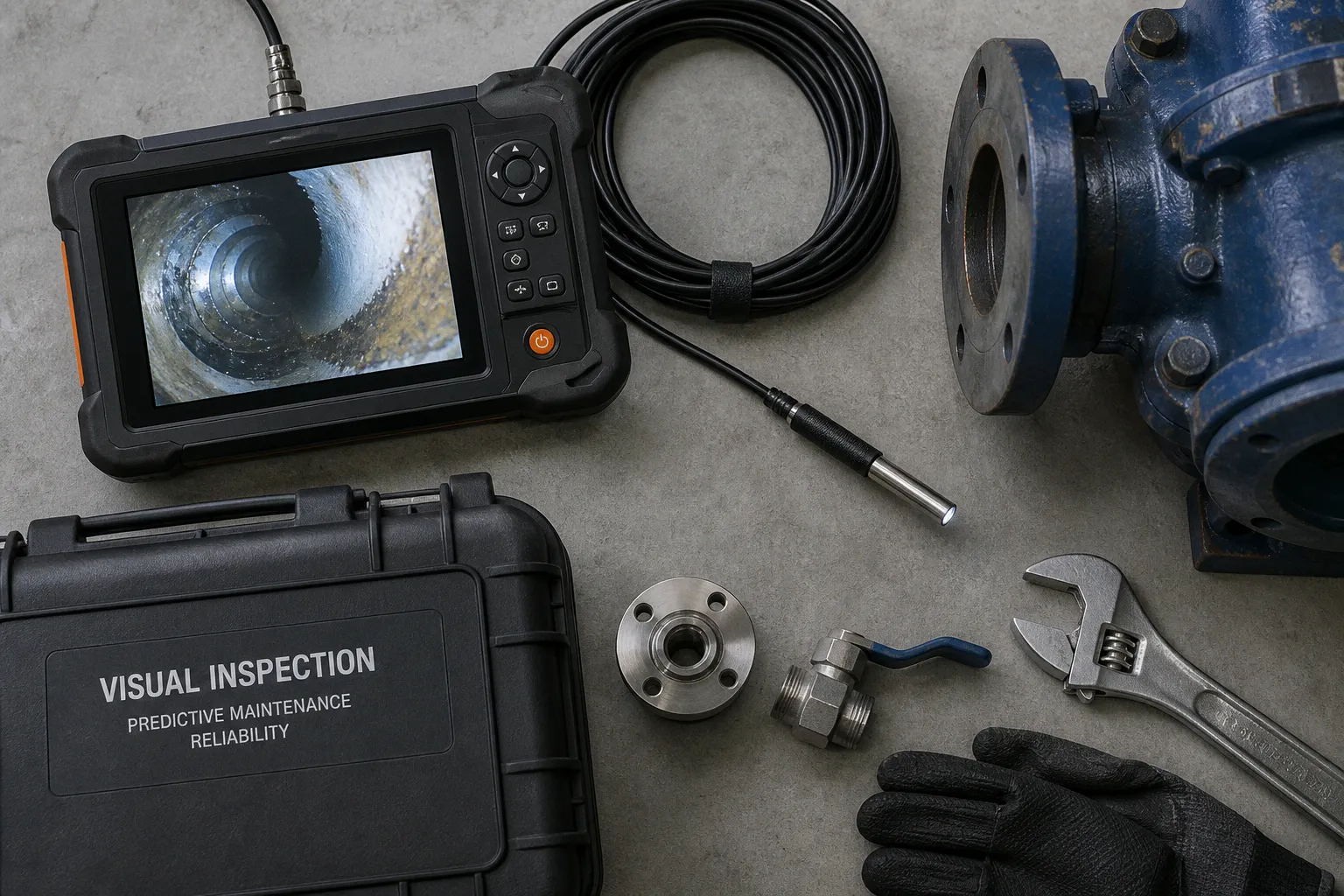
VIS, described in the filing as a predictive maintenance and reliability provider, folds into ISG's specialized industrial service and repair operations. Stated expansion target: critical rotating equipment, including pumps and valves.
Capability Stack Consolidation
Two layers of the rotating-equipment service chain now sit under one vendor. Pre-deal, an operator could contract VIS for condition monitoring and diagnostics while sourcing pump and valve repair separately through ISG or another shop. Post-deal, a single counterparty covers detection, reliability analysis, and physical repair for rotating assets. Handoff count drops. Telemetry-to-wrench latency compresses — in principle. The announcement carries no quantified service-level targets, no integration milestones, no published error-rate benchmarks. The structural gain is real; the operational proof is pending.
Verification Checklist for Operators
Procurement and reliability leads managing pump and valve fleets should confirm before re-sourcing:
- Contract continuity. How active VIS or ISG service agreements are treated under the new combined entity — assigned, novated, or terminated.
- Geographic coverage. Whether VIS predictive-maintenance regions overlap with existing ISG service territories or leave gaps for sites outside both footprints.
- Tooling continuity. Whether VIS condition-monitoring platforms stay standalone or rebrand into the ISG stack, and what that means for installed sensor bases and historical trend data.
- Reporting cadence. Any change to data delivery format, alert thresholds, or dashboard access operators currently receive from VIS.
What Remains Unspecified
The filing does not disclose integration timelines, employee transitions, or revised SLA terms. For any operator weighing a multi-year rotating-equipment service contract, request written documentation on the detection-to-repair workflow before signing. Treat any combined-service pitch as a procurement negotiation, not a default upgrade. Until the combined entity publishes measurable targets — mean-time-to-detect, mean-time-to-repair, false-positive rate — hold existing vendor benchmarks as the baseline.