Wild Florida tickets: common booking traps and timing tips
A Wild Florida visit has two separate timing systems: the park’s operating schedule and the reservation schedule for activities such as airboat tours. Confusing them creates the most common failures.
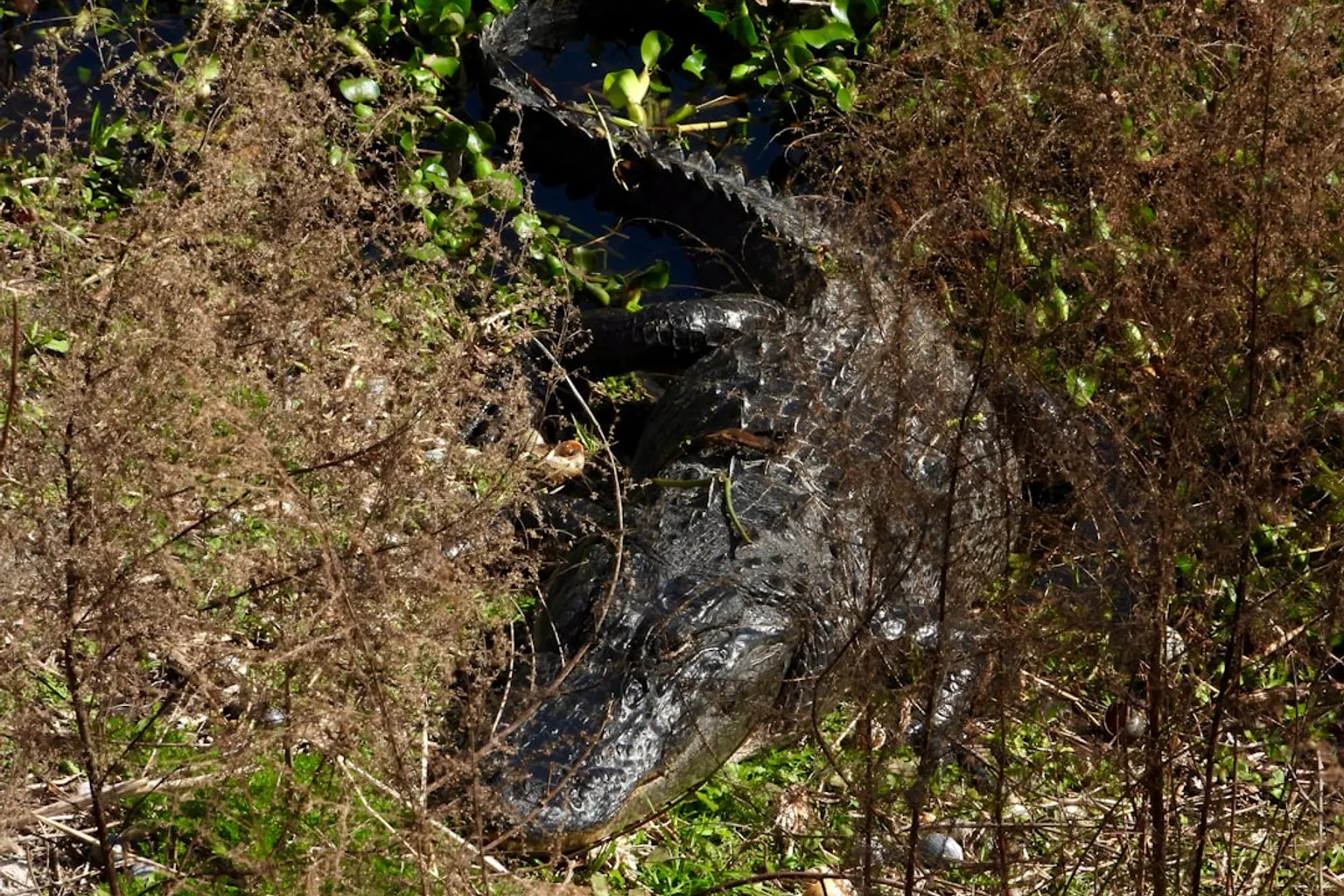
A visitor can hold valid admission and still miss a scheduled boat departure. A late arrival can also reduce the usable time for the Drive-Thru Safari because final vehicle entry is at 5:00 PM, not at closing time.
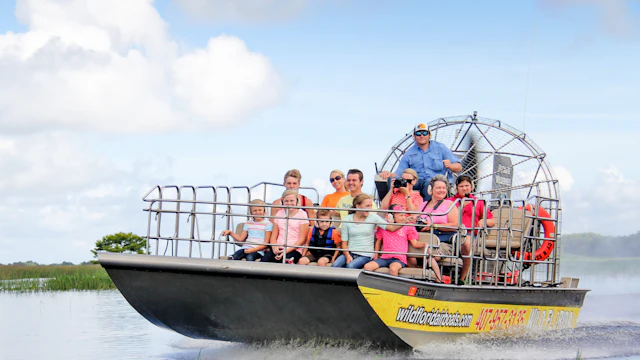 Kenansville
Tickets and prices
Wild Florida
Self-guided tour · Drive your own car
fromUSD34.80
Check availabilityOfficial ticket · Adult
fromUSD35
Check availabilityWild Florida Airboats & Gator Park operates Monday through Saturday from 9:00 AM to 6:00 PM. It is closed every Sunday for animal care, maintenance, and feeding adjustments. That single fact eliminates one common planning error: a Sunday itinerary cannot be repaired by arriving earlier.
The practical sequence is simple. Select the operating day. Choose the activity. Reserve a timed airboat slot if required. Build in the required arrival buffer. Then schedule the Drive-Thru Safari around the fixed entry cutoff rather than around the 6:00 PM closing time.
The operating schedule is the first constraint
Wild Florida is in Kenansville, at 3301 Lake Cypress Road, in the Central Florida Everglades region. The attraction is not a conventional urban venue where late arrival can be absorbed by frequent departures and flexible entry. The system has hard boundaries.
The park’s public operating window is:
- Monday through Saturday: 9:00 AM to 6:00 PM
- Sunday: closed
- Drive-Thru Safari final vehicle entry: 5:00 PM
The one-hour gap between final safari entry and park closing is operationally significant. The Drive-Thru Safari uses a 2-mile loop across 85 acres. It is not a quick walk from the gate to a display building. Visitors enter with a vehicle, follow the route, and remain inside the vehicle for the safari. A 5:00 PM entry therefore belongs in a late-day plan only if the rest of the itinerary is already controlled.
The error rate rises when visitors treat the published 6:00 PM closing time as the last usable entry time. It is not. A ticket that permits access to the attraction does not override the activity-specific cutoff.
What this means for a booking plan
For a low-latency visit, organize the day around the least flexible component. In most cases, that is the airboat departure.
A practical order is:
1. Reserve the airboat tour for a specific departure time.
2. Arrive at the Back Deck at least 30 minutes before that departure.
3. Use the remaining visit window for the Drive-Thru Safari and other included areas.
4. Finish the vehicle loop before the 5:00 PM final-entry deadline.
5. Avoid placing a nonrefundable activity immediately after a long drive or a tightly timed preceding attraction.
The sequence can be reversed, but the constraints do not change. The airboat slot remains fixed. The safari cutoff remains fixed. Sunday remains unavailable.
Wild Florida has two clocks: the 6:00 PM closing time and the 5:00 PM safari entry cutoff. The second one controls late-day access.
Airboat booking is a slot problem, not just an admission problem
The phrase “Wild Florida airboat tour booking” describes a reservation with a departure time. It does not describe open-ended access to a boat whenever the visitor arrives.
Guests booking airboat tours must select a specific time slot and check in at the Back Deck at least 30 minutes before departure. That buffer is a stated operating requirement, not a suggestion for unusually cautious visitors.
The practical consequence is a 30-minute arrival latency built into every airboat plan. If the selected departure is at 11:00 AM, the usable target is arrival and check-in by 10:30 AM. Reaching the property at 10:55 AM does not create a five-minute margin. It creates a missed-buffer condition.
This is where booking interfaces produce bad decisions. A visitor sees a departure time, confirms the reservation, and then plans the drive to arrive near that time. The booking is technically complete. The itinerary is not.
Separate the reservation time from the park-entry time
The reservation time is tied to the airboat operation. Park operating hours define the overall access window. These are related but not interchangeable.
Before completing the reservation, map the following values:
| Planning variable | Operational meaning | Failure if ignored |
|---|---|---|
| Park opening | Earliest standard operating access | Arrival plan starts before the attraction is open |
| Airboat departure | Fixed activity time | Visitor reaches the site after the boat has been assigned |
| 30-minute check-in buffer | Required Back Deck arrival window | Reservation becomes vulnerable to traffic or parking delay |
| Safari final entry | 5:00 PM | Vehicle access is refused after the cutoff |
| Park closing | 6:00 PM | Remaining time is too short for a late arrival strategy |
| Cancellation deadline | At least 24 hours before the activity | Same-day changes are not eligible for a refund |
This table is the booking logic. It is more useful than selecting a ticket first and attempting to fit the day around it afterward.
Morning versus afternoon airboat slots
The best time to visit Wild Florida depends on the rest of the route, not on a universal crowd claim. A morning airboat slot reduces exposure to later-day schedule compression. It also leaves more recovery capacity if the drive from Orlando or another Central Florida location takes longer than planned.
An afternoon slot can work when the visitor is already nearby and has no fixed appointment afterward. It creates more dependency on arrival conditions, summer rain delays, and the 5:00 PM safari cutoff. The problem is not simply congestion. It is accumulated latency.
Use a morning slot when:
- The visit includes both an airboat tour and the Drive-Thru Safari.
- The route to Kenansville is long or unfamiliar.
- The itinerary includes another timed activity later in the day.
- The booking is difficult to replace if missed.
- Weather disruption would have limited recovery time.
Use an afternoon slot when:
- Travel time is short and predictable.
- The group is visiting primarily for the safari or park access.
- There is no hard deadline after the visit.
- The plan does not depend on entering the Drive-Thru Safari near the end of the day.
Avoid treating an afternoon reservation as a way to maximize sleep or minimize waiting. It may do both. It also reduces schedule resilience.
Drive-Thru Safari access has its own failure modes
The Wild Florida Drive-Thru Safari Park is a 2-mile loop across 85 acres. Drivers must maintain a speed of 5 miles per hour or less. Visitors must remain inside their vehicles throughout the route.
These rules affect throughput. The route is not designed for rapid circulation. A driver who enters late cannot assume that the loop will be completed immediately or that the park will extend access beyond its operating cutoff.
There are no restrooms along the safari loop. Facilities must be used before entry. This is a small detail with a direct effect on route continuity. Leaving the vehicle is not an option within the Drive-Thru Safari, and the loop has no internal restroom stop.
Vehicle preparation before the loop
The lowest-friction preparation takes place before the car reaches the entry point:
- Use the restroom before entering the safari route.
- Confirm that every passenger is ready to remain inside the vehicle.
- Set the navigation destination before joining the loop.
- Keep the vehicle at or below the 5 mph speed limit.
- Do not plan the route around a late 5:00 PM arrival unless the rest of the day has substantial margin.
- Treat the 2-mile loop as a controlled drive, not a quick transfer between attractions.
The speed limit is not a minor operating preference. It controls the movement rate of every vehicle behind the driver. Excess speed increases error exposure and disrupts the route’s intended flow.
Safari admission versus full-day sequencing
Searches for “Wild Florida gator park admission” often combine several products and activities. The operational question is not only whether admission includes access to the Gator Park or the Drive-Thru Safari. It is whether the selected product includes the activity the visitor expects and whether that activity has a separate time requirement.
A ticket or pass may represent general park access, a drive-through component, an airboat tour, or a bundled option. Product labels can look similar while imposing different scheduling constraints. Before payment, identify:
- Whether the product includes the Drive-Thru Safari.
- Whether an airboat tour is included or booked separately.
- Whether the airboat requires a selected departure time.
- Where the airboat check-in takes place.
- Whether the reservation covers the intended date.
- Whether the product is valid for the planned arrival window.
Do not infer operational flexibility from a broad product name. The specific activity rules control the visit.
Cancellation policy changes the cost of a bad itinerary
Wild Florida’s cancellation rule uses a 24-hour threshold. Cancellations made at least 24 hours before the scheduled activity are eligible for a refund. Cancellations within 24 hours receive no refund.
That rule applies pressure to the original booking decision. Once the visit enters the final 24-hour window, a weather concern, transport delay, illness, or scheduling conflict may no longer be financially reversible under the stated policy.
The correct response is not to avoid booking. It is to reduce uncertainty before the deadline:
1. Confirm that the attraction is open on the selected day.
2. Verify the airboat departure time.
3. Confirm the 30-minute Back Deck check-in requirement.
4. Check the drive time and likely arrival window.
5. Decide whether the itinerary still works if the journey runs late.
6. Make any cancellation or change before the 24-hour threshold.
Third-party booking interfaces can add another layer of complexity. Availability may be shown for different products, and final totals can vary by booking channel, date, and selected inclusions. The exact price is not a stable planning fact and should be checked at checkout. The operational terms are more durable: opening days, entry cutoffs, timed departures, and cancellation windows.
Avoid the same-day correction model
The highest-risk pattern is booking first and resolving details later. It usually follows this sequence:
- Select a convenient-looking product.
- Assume the airboat is flexible.
- Build a late arrival around the 6:00 PM closing time.
- Discover the 30-minute check-in requirement on the day.
- Attempt to cancel or change after the deadline.
Each step increases cognitive load. The final error is then treated as a ticket problem even though the root cause was itinerary design.
A better model is constraint-first booking. Start with the activity that has a fixed time. Add the arrival buffer. Then add the safari route. General admission becomes the outer layer of the schedule.
How to reduce congestion without inventing a guarantee
Visitors searching for the best time to visit Wild Florida are usually trying to solve two different problems: crowd density and schedule risk. These should not be merged.
An early arrival can reduce the number of downstream dependencies. It gives the visitor more available operating time, more options for arranging the Drive-Thru Safari, and more recovery capacity if the airboat schedule changes. It does not guarantee an empty park.
Avoiding crowds at Wild Florida is therefore a planning exercise rather than a promise of low attendance. The most defensible tactics are:
- Visit Monday through Saturday, since Sunday is closed.
- Choose an earlier operating window when the itinerary includes multiple activities.
- Book a defined airboat slot instead of arriving without a time plan.
- Arrive at the Back Deck 30 minutes before departure.
- Avoid using 5:00 PM as the default safari entry target.
- Complete restroom and vehicle preparation before entering the 2-mile loop.
- Leave enough time between Wild Florida and any later reservation.
Summer afternoon rain can introduce additional delay. The exact effect depends on conditions and operating decisions, so it should be treated as a schedule risk rather than assigned a fixed duration. An early plan has more recovery capacity. A late plan has less.
A reliable booking sequence for Wild Florida
The most effective way to book tickets for Wild Florida is to build the reservation around hard constraints rather than around the lowest displayed price or the most convenient-looking time.
Use this sequence:
1. Remove Sunday from the calendar.
Wild Florida is closed every Sunday. Do not build a Sunday itinerary around the assumption that another product or reseller will provide access.
2. Choose the activity set.
Decide whether the visit is for the Drive-Thru Safari, an airboat tour, the Gator Park, or a combination. Product scope affects the timing model.
3. Reserve the airboat slot first.
If an airboat tour is part of the plan, select its specific departure time before arranging the rest of the day.
4. Set the arrival target 30 minutes before departure.
The target is Back Deck check-in, not arrival somewhere in the surrounding area.
5. Place the Drive-Thru Safari away from the final cutoff.
Final vehicle entry is at 5:00 PM. Earlier access provides more schedule margin and avoids turning the entire visit into a closing-time calculation.
6. Check the cancellation deadline.
Changes must be made at least 24 hours before the scheduled activity to remain eligible for a refund.
7. Review the final booking scope.
Confirm date, activity, departure time, admission type, and any included components. Do not rely on the headline product name.
8. Prepare the vehicle before entry.
Restrooms are unavailable along the safari loop. Drivers must remain at or below 5 mph, and guests must remain inside the vehicle.
This sequence reduces error rate because it resolves the least flexible variables first. It also prevents a common category mistake: treating a park ticket as if it were a complete operating plan.
The robust Wild Florida itinerary is not the one with the most activities. It is the one with the fewest unresolved dependencies.
The operational bottom line
Wild Florida is straightforward to visit when the schedule is modeled correctly. It becomes unreliable when visitors compress separate rules into one generic admission assumption.
The durable facts are clear:
- The park operates Monday through Saturday, from 9:00 AM to 6:00 PM.
- Sunday visits are not available.
- Airboat tours use specific departure slots.
- Back Deck check-in is required at least 30 minutes before departure.
- Drive-Thru Safari final vehicle entry is 5:00 PM.
- The safari route is a 2-mile loop across 85 acres.
- The vehicle speed limit is 5 mph.
- Guests must remain inside vehicles on the drive-through route.
- No restrooms are available along the loop.
- Cancellations must be completed at least 24 hours before the activity for refund eligibility.
Actionable design heuristics:
- Book the fixed-time activity before general admission.
- Treat the 30-minute airboat buffer as part of the reservation, not as optional slack.
- Use 5:00 PM as a hard boundary, not as a preferred arrival time.
- Never schedule Wild Florida on Sunday.
- Verify product inclusions instead of inferring them from the ticket title.
- Complete restroom and vehicle preparation before entering the safari loop.
- Resolve cancellations or changes before the 24-hour deadline.
- Prefer schedule resilience over a tightly packed itinerary.
That is the complete route through the booking problem. Control the slot, protect the buffer, and keep the final entry cutoff visible throughout the day.