Bearing lubrication methods: choosing the right system for your plant
Walk onto any plant floor during a third shift and you will find it eventually — that telltale wail coming out of a motor housing, the housing too hot to keep your palm flat against for more than a second.
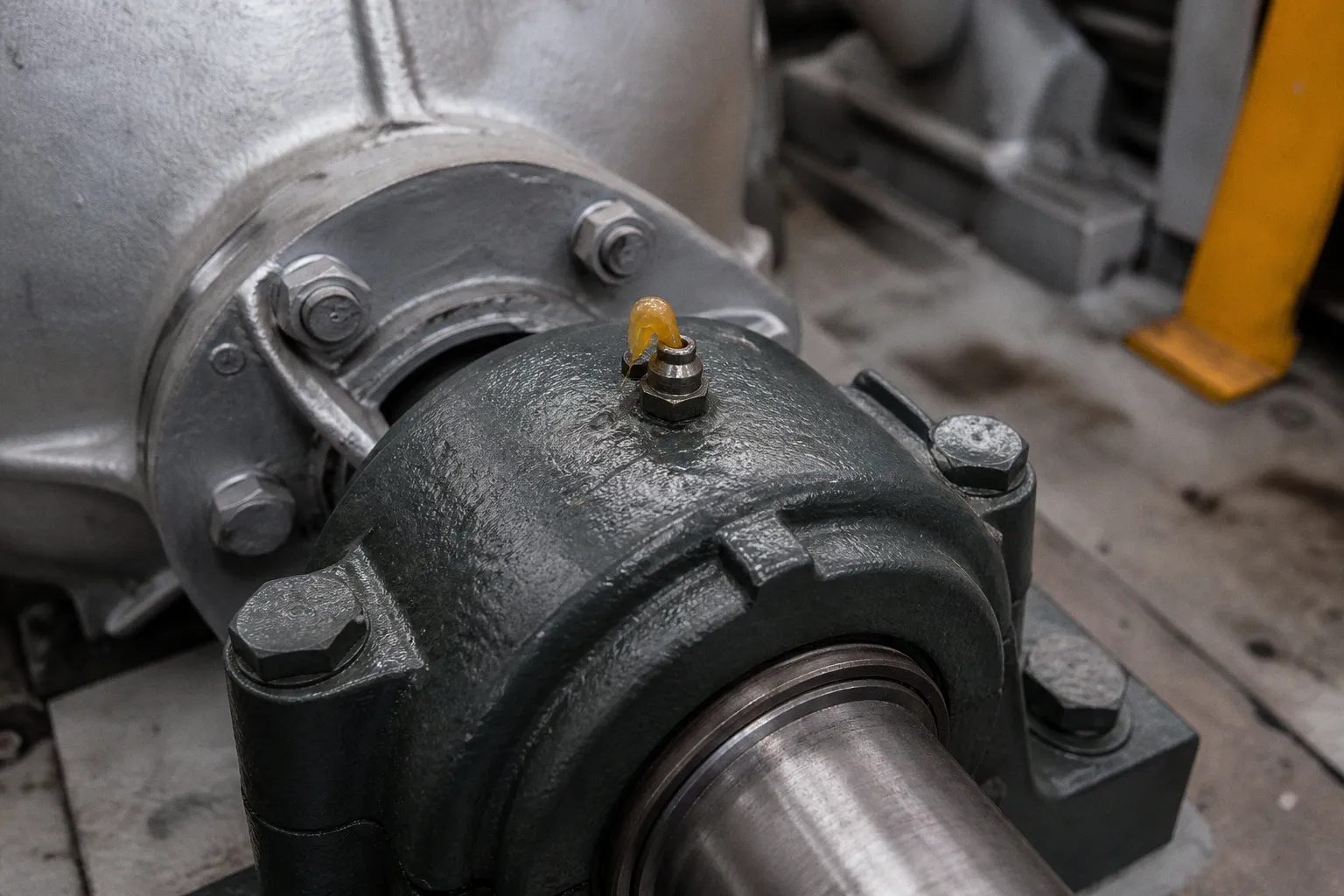
The 80% Failure Factor: Why Lubrication Strategy Matters
When a bearing fails before its rated life, the root cause is rarely the steel, the seal, or the alignment alone. It is what was put into — or not put into — the bearing, and how. Industry analyses have consistently placed improper lubrication as a contributing factor in up to 80% of bearing failures, with poor lubrication practices alone accounting for roughly 36% of premature failures. That is a brutal number, because unlike a cracked race or a fatigued roller, lubrication is the one variable an operator or maintenance team actually controls.
Compare car rental deals in United Kingdom
See available offersPartner link — DiscoverCars comparisonSo when we sit down with a plant manager wrestling with unplanned downtime, the conversation almost always circles back to one question: which lubrication method belongs in this machine, on this shaft, under this duty cycle? There is no single right answer — but there is a defensible path through the decision tree, and most of it comes down to speed, heat, and the level of precision the surrounding system can support. The rest is about choosing the delivery mechanism that matches how the machine is actually used by the people standing in front of it.
If your bearing could speak, it would not ask for the most exotic lubricant on the shelf. It would ask for the right lubricant, in the right amount, at the right interval — consistently.
Grease vs Oil: Navigating the DN Value Threshold
Before we get into the delivery side of things, we have to pick the medium. For roughly 80–90% of industrial bearing applications, the answer is grease. It is simple, it is forgiving, and once packed into a housing it forms its own seal against dust and wash-down water. That last point matters more than people realize on a humid production line where airborne contamination is a constant companion. Grease stays where you put it, and it does double duty as a barrier.
But grease is not a universal answer, and pretending it is gets people into trouble. The boundary is usually expressed as the DN value — bearing bore diameter in millimeters multiplied by operating speed in RPM. Once you cross roughly 250,000 to 300,000 mm·RPM, the grease itself starts generating heat faster than it can dissipate it. Churning kicks in, the viscosity drops, and the protective film thins out. At that point, oil becomes the more honest choice, not because oil is "better" in some abstract sense, but because it can actually be circulated, cooled, and filtered in ways grease cannot.
We see this every day on high-speed spindle lines and large gearboxes driving forced-draft fans. The same grease that happily lubricates a 100 mm bore running at 1,800 RPM will turn into a foamy, oxidized mess inside a 60 mm bore spinning at 20,000 RPM. The steel does not care what marketing claims; it cares about the lambda ratio and the temperature at the contact zone.
| Parameter | Grease lubrication | Oil lubrication |
|---|---|---|
| Typical share of industrial use | 80–90% | 10–20% |
| Best fit DN range (mm·RPM) | Up to ~250,000–300,000 | Above ~250,000–300,000 |
| Sealing function | Yes — acts as a contaminant barrier | No — sealing is handled by external seals |
| Heat dissipation | Limited (passive) | Active (circulation, oil bath, jet) |
| System complexity | Low — housing, nipple, or auto injector | Medium to high — pumps, reservoirs, coolers, filters |
| Typical delivery methods | Manual gun, centralized auto lube, single-point auto | Oil bath, splash, circulating loop, oil mist, oil jet |
| Tolerance to over-lubrication | Low — overfilling causes overheating | Moderate — flow can be throttled and corrected |
| Operator skill required | Low to moderate | Moderate to high |
The fill level question deserves its own moment, because it is the single most common mistake we see when greasing is done by hand. The rule of thumb is to fill the bearing housing to only 30% to 40% of its free internal volume. The instinct is to pack it full — "more is safer, right?" — but the opposite is true. Over-filled housings churn the grease, the temperature climbs, and the very barrier that was meant to protect the bearing cooks itself. Tactile feedback matters here: a properly packed housing feels snug but not stuffed, and a stethoscope probe will pick up a clean running note rather than a gravelly one.
The Physics of Film Thickness: Maintaining the Lambda Ratio
Once the medium is selected, we have to talk about the film. Every rolling element bearing relies on a thin hydrodynamic or elastohydrodynamic film of lubricant separating the raceway from the rolling element. The lambda ratio (λ) is the working metric here — it is the ratio of that lubricant film thickness to the composite surface roughness of the two contacting surfaces. When λ is consistently greater than 1, the surfaces never truly touch; they ride on a pressurized wedge of lubricant. When λ drops below 1, you are in boundary or mixed lubrication, and metal-to-metal contact begins. That is where micro-pitting and premature fatigue start.
So if-then logic is useful here, because the variables are few but unforgiving. If your operating temperature climbs beyond the grease's rated drop point, then viscosity collapses and λ falls. If your load increases without a corresponding rise in viscosity grade, then film thickness drops. If your surface finish is rough because the bearing was relubricated with contaminated product, then the denominator in λ jumps. Any one of these conditions is enough to push a healthy bearing into a failure curve that was not on the OEM's chart.
This is also where base oil viscosity and additive package stop being a chemistry problem and start being an ergonomics problem. On the floor, the difference between a lithium-complex grease with good shear resistance and a simple lithium soap that breaks down under mechanical stress within weeks is felt as either quiet operation or the slow creep of unplanned maintenance. Maintenance techs who have to grease the same hot bearing every two weeks instead of every three months are spending cognitive load and shift hours on something the design should have solved.
A bearing that runs hot is not just a mechanical problem — it is a people problem. Every unscheduled stop is a shift that someone has to recover from.
Precision Delivery: The Case for Automatic Lubrication Systems
Once the bearing is the right size, the speed is the right speed, and the medium is the right medium, the remaining lever is delivery. This is where most plants leave a great deal of life on the table. Manual greasing is still the default on many production lines, and it carries a few structural weaknesses: it is intermittent, it is human-dependent, and it tends to drift toward either under-greasing or over-greasing depending on who holds the gun that week.
Automatic lubrication systems — whether single-point battery units on isolated bearings or centralized progressive systems feeding an entire machine — change that calculus. Because they deliver small, precise, continuous doses of grease at defined intervals, they typically reduce total grease consumption by 20% to 40% compared to manual methods. The reduction is not the point; the consistency is. A bearing that receives 0.3 cm³ of grease every twelve hours behaves very differently from one that receives 4 cm³ once a week, even though the weekly totals land in the same range. The first scenario maintains a stable film; the second floods the bearing, then starves it, then floods it again — a cycle that accelerates wear on both ends.
In practice, we frame the choice between manual and automatic around three on-the-ground questions: how accessible is the lube point, how critical is the machine to the line, and how repeatable is the operator's behavior at 2 a.m. If the answer to any of those is "not very," automatic starts looking less like an upgrade and more like insurance. Accessibility alone is a showstopper on some lines — overhead conveyors, confined spaces behind rotary joints, or bearings buried inside guarded housings that require a lockout-tagout just to reach with a grease gun. If the tech needs fifteen minutes of prep to grease one point, the interval will drift. It always does.
For oil systems, the delivery conversation gets richer. An oil bath is simple and works beautifully for low to medium speeds in horizontal housings, but it limits the speed range and offers no filtration. Circulating oil systems introduce a pump, a reservoir, a cooler, and a filter, which is a real capital cost — but in return they remove heat from the housing, keep the oil clean, and let you monitor condition with online sensors. Oil mist and oil jet injection sit at the far end of the curve, used in high-speed spindles and turbomachinery where heat removal and minimal windage losses dominate the design.
The honest caveat here is that automatic lubrication is not magic. A poorly designed centralized system with the wrong metering devices, or one running on contaminated supply lines, will underperform a disciplined manual routine every time. We have walked into plants where the auto lube skid was the single largest source of wear debris on the line, because no one had changed the filter or verified the injector outputs in eighteen months. Design without follow-through is just expensive plumbing.
Extreme Environments and Solid Film Alternatives
There is a class of applications where neither grease nor oil survives. Extreme temperatures above roughly 200 °C, cryogenic environments below -50 °C, hard vacuum, exposure to radiation, or contact with chemicals that would attack any petroleum or synthetic base oil — these are the conditions where we reach for solid film lubricants. Molybdenum disulfide, graphite, and PTFE-based coatings each have a different operating envelope: MoS₂ handles high load in vacuum but degrades in air at elevated temperatures; graphite performs well at high temperatures in vacuum or inert atmospheres, though it oxidizes readily in air above moderate thresholds; and PTFE shrugs off chemicals that would dissolve a conventional grease.
These are not everyday choices. They tend to show up in steel mills, semiconductor fabs, aerospace ground equipment, and food-grade lines where incidental contact with the lubricant is a regulatory problem. When we recommend a solid film, the conversation usually turns to surface preparation, bond coat chemistry, and reapplication intervals, because solid films are sacrificial — once the layer is gone, it cannot be replenished through a grease nipple. The technician who treats a MoS₂-coated bearing like a set-and-forget component is the same technician replacing that bearing six months later.
We also tend to push harder on sealing and exclusion at these sites. If the lubricant cannot survive the environment, the environment cannot be allowed to reach the lubricant. That often means upgraded lip seals, labyrinth arrangements, or even positive-pressure purge systems — the bearing sits inside a tiny clean room of its own. The cost of those measures has to be weighed against the cost of pulling a gearbox or spindle on an unplanned schedule, and on most critical lines the math settles quickly.
The right lubricant is not the one on the supplier's bestseller list. It is the one that survives your actual operating envelope, day after day, with the operator you actually have.
Bringing It Back to the Floor
Choosing a lubrication method is rarely a single decision. It is a stack of small, defensible choices that either compound into a long, quiet bearing life or stack the deck against the people who have to live with the machine. On the ground, the difference between a well-lubricated line and a struggling one is rarely visible in the first week. It shows up in month six, when the bearing housings are still cool to the touch, the greasing routes take minutes instead of hours, and the maintenance crew has stopped dreading the night audit.
That is the test we keep coming back to. A lubrication strategy that respects the physics — the DN value, the lambda ratio, the fill level, the delivery precision — and respects the operator standing in front of it, will quietly outperform a more sophisticated setup that ignores either. The hardware is only half the design. The other half is the human hand, and how often it has to reach for the gun.