Bearing seal selection: labyrinth versus contact paths for heavy industry
A bearing rarely fails in a clean, honest way. The grease tells the story first: a chalky paste full of fines, a blackened streak where lubricant escaped, a housing too hot to leave a hand on.
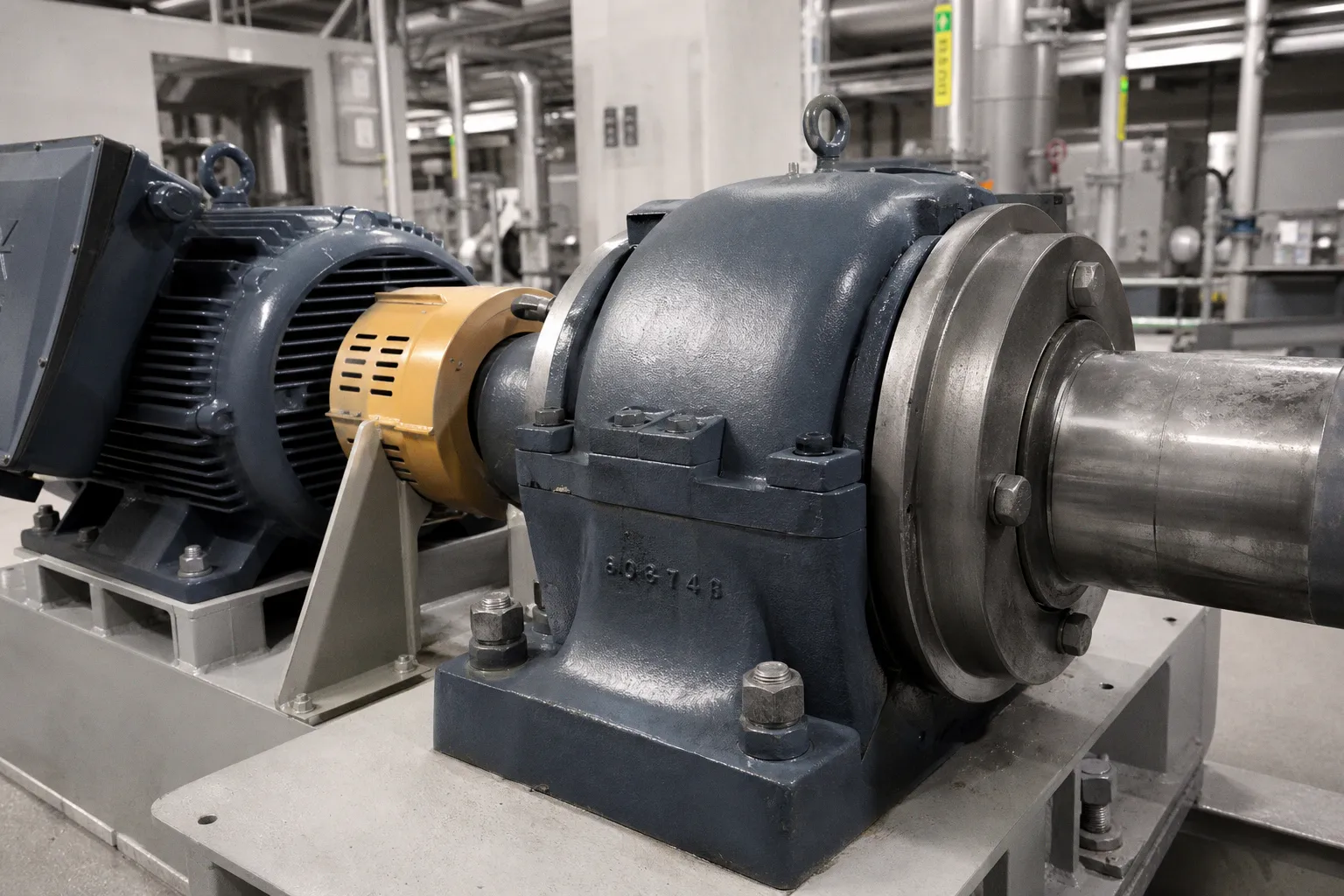
By the time the bearing starts talking through vibration or noise, the sealing decision has usually been at work for months.
Compare car rental deals in United Kingdom
See available offersPartner link — DiscoverCars comparisonThat is why bearing seal selection—labyrinth versus contact—is not a catalog exercise. It is a decision about how a housing will behave when speed rises, grease ages, dust finds every opening, and the lubrication route slips by a week. Both seal paths can be effective. Neither is a magic wall. The useful question is not which design is “better,” but which failure mechanism the machine is most likely to face.
A seal is not a wall. It is a negotiated boundary between the lubricant you want to keep in and the contamination you want to keep out—and speed, heat, dirt, and maintenance discipline all get a vote.
High-Speed Dynamics and the 25 m/s Threshold
At speed, a contact seal has to live with its own success. The lip presses against a rotating shaft, and that contact improves the barrier against dust, water, and grease loss. But every revolution also creates friction. Friction creates heat; heat changes elastomer behavior; wear changes the contact patch. There is no mystery in the chain, only an operating envelope that has to be respected.
Around 25 m/s at the seal circumference is a useful point for reconsidering the arrangement. It is guidance, not a universal prohibition. Above that range, a designer should normally give serious preference to non-contact sealing—especially a labyrinth—because a conventional elastomeric lip may face a harder thermal and wear duty than its material, geometry, shaft finish, and lubrication condition can comfortably support.
Some contact seals are engineered for more demanding service than others. Lip material matters. Spring loading matters. The shaft’s surface finish and runout matter. So do temperature, pressure differential, lubricant chemistry, and whether the housing is actually aligned the way the drawing assumed. A 25 m/s figure should start a technical conversation, not end one with a red marker.
The number is still useful because it stops a common mistake: treating all shaft speeds as though they impose the same duty on the seal. They do not. A low-speed conveyor tail pulley and a high-speed fan shaft may use the same basic bearing-housing language, but the seal sees two very different worlds.
| Scenario | Surface speed at seal | Likely seal direction | What needs attention |
|---|---|---|---|
| Small electric motor or modest-speed gearbox shaft | Under 8 m/s | Contact seal often suits the duty | Lip material, shaft finish, grease compatibility |
| Crusher, pulley, or conveyor idler | 10–20 m/s | Labyrinth or a combined arrangement is often worth considering | Dust exposure, grease purge path, housing movement |
| High-speed fan, dryer roll, or compressor shaft | Around or above 25 m/s | Non-contact labyrinth commonly becomes the starting point | Heat, shaft runout, lubricant leakage, actual peripheral speed |
The practical distinction is not “contact below, labyrinth above” as though the line were painted on the floor. It is this: as speed climbs, the penalty of rubbing contact grows. A non-contact path removes that rubbing penalty, but it asks more from geometry, clearances, grease condition, and the surrounding housing design.
A high-speed shaft with stable alignment, clean service, and a purpose-designed lip may still justify a contact solution after proper review. A shaft at moderate speed in abrasive dust may make a labyrinth look attractive much earlier than the speed figure alone would suggest. The seal should be selected against the whole duty, not one number copied from a table.
Labyrinth Clearances as Leakage Reduction Mechanisms
A labyrinth seal does not win by making contact. It wins by making travel difficult.
The rotating and stationary parts create a long, interrupted path of grooves, turns, shoulders, and close clearances. Dust, water, and escaping grease have to negotiate that path rather than passing through one open gap. Every change in direction and every restricted passage reduces the ease with which material migrates toward the bearing.
That is why the word clearance deserves more respect than it usually gets in a maintenance discussion. A labyrinth is a leakage-reduction device, not a leakage-elimination device. If radial clearance grows through wear, shaft movement, loose fits, or a generous interpretation of machining tolerance, the protective path becomes less demanding. Contaminants do not need an invitation; they need a route.
The best practical rule is to keep labyrinth clearance as tight as the actual machine can tolerate. “Actual” is doing a lot of work there. The layout must allow for thermal expansion, shaft deflection, bearing internal movement, housing tolerance, and the small indignities of industrial assembly. A theoretical tight clearance that rubs under load is not a labyrinth anymore; it is an accidental contact seal with no controlled lip geometry.
Grease makes this arrangement much more effective. In many industrial housings, the labyrinth gaps are packed with grease so that the grease itself becomes a secondary barrier. Fresh grease fills voids, slows the inward migration of fines, and provides a path for old grease and entrained contamination to be pushed outward during relubrication.
An empty labyrinth in a dusty environment is often only a long corridor. A grease-packed labyrinth is a working system.
That distinction matters when troubleshooting. If a bearing behind a labyrinth is starved while the labyrinth cavity looks clean and dry, the answer is not necessarily that the labyrinth “failed.” The installation may have been underfilled, relubrication may have stopped, or the purge route may not be doing what the team assumed. The seal arrangement and the lubrication arrangement are coupled. Treating them as separate maintenance items is how a sound housing becomes an expensive one.
What a labyrinth asks of the machine
A labyrinth is forgiving in one way and demanding in another. It has no rubbing lip to burn away at high peripheral speed, which is why it belongs in many fast-rotating applications. But it asks the machine to maintain reasonable geometry.
Watch for these conditions:
- Shaft deflection and runout. Excessive movement can enlarge effective clearances or create intermittent contact where there was meant to be none.
- Housing fit and assembly quality. A labyrinth depends on concentric, stable parts. A loose carrier or damaged bore defeats careful groove geometry.
- Grease selection. The grease must remain in the intended cavity long enough to perform its barrier role without separating, hardening, or washing out prematurely.
- Purge discipline. Too little fresh grease leaves contamination in place. Too much, too quickly, can force grease where it should not go and conceal a deeper issue.
- External washdown and pressure. A labyrinth slows ingress; it does not promise immunity against a direct pressure-wash assault or sustained slurry exposure.
This is the honest trade in industrial bearing protection methods: non-contact geometry protects speed capability, while the rest of the arrangement has to carry more responsibility for keeping contaminants at bay.
Elastomeric Contact Barriers and Thermal Wear Limits
A contact seal takes the opposite approach. Its lip, felt element, or V-ring physically bears against a mating surface. That contact can substantially improve the barrier against contamination and lubricant escape, particularly at low or moderate surface speed. It is often the straightforward answer for a clean indoor gearbox, a motor housing, or a bearing location where routine replacement is easy and the shaft surface is in good shape.
But “contact” should not be translated as “nothing gets through.” A well-selected elastomeric lip can sharply reduce ingress in either direction, yet its effectiveness depends on installation, lip condition, pressure, shaft finish, eccentricity, temperature, and the contaminant itself. Fine dust behaves differently from water. Water behaves differently from hot washdown fluid. A lip that performs quietly for years in a controlled room may struggle early beside an abrasive conveyor.
For one specific double-lip nitrile-rubber design, 8 m/s is a stated maximum peripheral speed at the contact surface. That figure is useful precisely because it is product-specific. It belongs to a particular material, lip profile, interference, and operating assumption. It should not be lifted and used as the speed limit for every contact seal in the store room.
The maintenance habit to avoid is selecting by appearance: “It is a double lip, so it will be fine.” The right questions are more uncomfortable:
1. What is the actual shaft surface speed at the seal?
2. What temperature will the lip see after the machine reaches stable operation?
3. Is the shaft surface suitable, or is it grooved, corroded, too rough, or polished beyond what the lip needs?
4. Is there pressure inside the housing that may push lubricant past the lip?
5. Is the seal meant to retain grease, retain oil, exclude contamination, or manage all three with compromises?
“Contact seal” is not one thing. It is a family of parts with different material limits, lip loads, temperature ranges, and pressure tolerance. The catalog photograph is not the operating envelope.
For oil-sealed applications using spring-preloaded rotary shaft seals, DIN 3760 and DIN 3761 provide a useful basis for specifying geometry and performance expectations. They apply to that particular family of rotary shaft seals, not to every bearing-housing arrangement. Still, where the duty fits, putting the relevant standard into the drawing notes is better than relying on a familiar-looking lip seal and a hopeful installation.
There is also a maintenance reality worth admitting. Contact seals wear. Sometimes that is acceptable. A lip seal that can be replaced during a planned annual stop may be a perfectly sensible sacrificial component. The problem begins when a consumable seal is installed in a location nobody can reach without dismantling guards, couplings, and half the support structure. Then the apparent simplicity at installation becomes complexity at service.
Taconite Arrangements for Severe Contamination Zones
Eventually, a machine enters territory where one seal path is not enough. Quarry crushers, clinker conveyors, apron feeders, stockpile equipment, and wet aggregate handling do not expose a bearing to one neat contaminant. They combine fine dust, vibration, splash, weather, pressure washing, and long maintenance intervals. In that environment, a basic labyrinth may not provide enough exclusion on its own, while an exposed contact lip may take too much abrasive wear.
That is where a taconite arrangement earns attention.
A taconite seal combines defenses: typically a labyrinth path closer to the bearing and a contact element toward the outside. The contact element may be a V-ring, felt ring, or lip-style seal depending on the arrangement. The outer component reduces the direct assault. The labyrinth lengthens and complicates the path that remains. Grease in the cavity adds another barrier and gives contamination somewhere to be purged before it reaches the rolling elements.
The point is not that a taconite seal makes the bearing invulnerable. It does not. Its strength is layered resistance and serviceability. In severe contamination zones, that can be the difference between a bearing that sees manageable dirty grease at a planned interval and one that sees abrasive paste long before the schedule says it should.
A V-ring is often valuable in this work because it can support grease purging while maintaining a contact barrier. Fresh grease needs a route to carry old grease and contamination outward. If the arrangement traps everything behind a contact element, the bearing housing can become a reservoir for exactly the material the seal was meant to exclude.
That is why taconite sealing is not a “fit it and forget it” upgrade. It needs a relubrication plan, a defined purge path, and technicians who know what normal purge looks like. If grease is coming out where it should, that may be evidence the system is flushing. If it is appearing behind the housing or along the shaft where it should not, the team needs to ask whether the seal is damaged, the fill is excessive, or the path has been assembled incorrectly.
A taconite arrangement may be unnecessary on a clean, dry indoor line. It adds parts, grease volume, and maintenance demands. But on equipment that lives under a dust cloud or sees recurring moisture, it can be a rational way to stop asking one small seal element to carry an unreasonable job.
Lubricant Fill Ratios and the Risk of Churning
Seal selection does not end at the carrier. The amount of grease in the housing can reinforce a good arrangement or undermine it.
General bearing-housing guidance commonly places initial grease fill in the free space around the bearing at roughly 30 to 50 percent on each side before start-up. That range is intended to provide lubrication without forcing the rolling elements to continuously work through an excessive volume of grease. For severe-duty arrangements such as taconite-sealed conveyor positions, a much fuller cavity may be intentional: around 80 percent on each side in the clinker-pan example, and in very low-speed, non-vibrating duties with strong contamination concerns, higher fill levels may be considered.
Those numbers should be treated as application guidance, not as universal fill instructions. Speed changes the answer. So do housing geometry, grease consistency, ambient temperature, vibration, bearing type, and the ability to purge old lubricant.
The common instinct in dirty service is understandable: if some grease protects the bearing, more grease must protect it better. That logic can turn against the machine. Excessive fill causes churning. Churning raises temperature. In some conditions, the temperature rise can be substantial—up to about 50 °C above what the bearing would otherwise experience. The bearing works harder, grease can degrade faster, and any nearby elastomeric contact element is asked to survive a hotter life.
Grease is not a substitute for a seal. It is the working medium behind the seal, and sometimes within the seal arrangement, but it cannot correct a damaged lip, oversized labyrinth clearance, or housing assembled out of alignment.
The right fill level should emerge from the actual service case:
- A fast-running housing usually needs restraint; the bearing needs lubricant, not a churned grease bath.
- A slow, heavily contaminated bearing position may justify more grease volume to establish a stronger trap and purge reserve.
- A taconite arrangement must have enough grease to maintain its barrier function, but not so much that pressure and heat become the next failure mechanism.
- A housing that runs hot after relubrication is giving useful feedback. The response should be investigation, not another round from the grease gun.
The Choice on the Floor
The most reliable way to choose between labyrinth and contact paths is to start with the seal’s real duty rather than the part number already on the shelf.
If surface speed is low, the shaft is in good condition, and contamination is manageable, a contact seal can offer an efficient, positive barrier with modest complexity. It is often the economical choice, provided the team accepts that lips are wearing components and monitors the heat they create.
If speed rises, shaft motion increases, or continuous lip friction becomes a concern, a labyrinth should move to the front of the conversation. It avoids the direct rubbing interface, but it must be built with realistic clearances and supported by proper grease packing and relubrication.
If the machine operates in persistent dust, water, slurry, or washdown exposure, the choice may not be either-or. A layered taconite arrangement can combine contact exclusion, labyrinth resistance, and grease purge capacity. It costs more attention up front. It may save far more attention later.
The durable decision is rarely the one that looks strongest in isolation. It is the one that matches the shaft speed, contamination route, lubricant behavior, thermal reality, and maintenance routine of the machine that will actually carry it. In bearing protection, the seal does not get to operate in theory. Neither does the bearing behind it.