DAB EVOSTA 3: A Circulator Pump Designed to Simplify Tight-Space Installations
According to Flow Magazine, DAB Pumps has just rolled out the EVOSTA 3, a circulator designed around that reality: electronic control paired with a simpler install path.
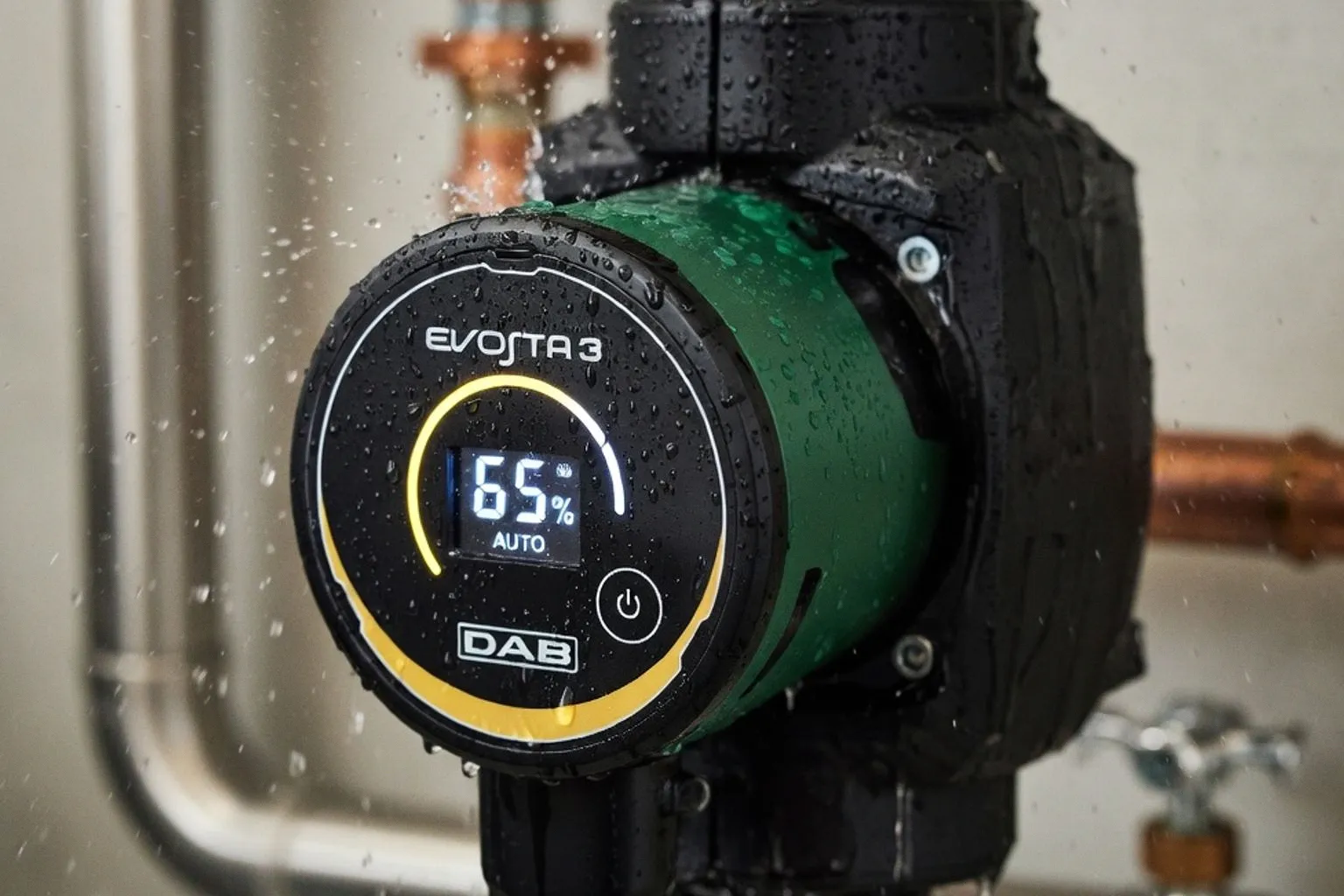
If you've ever crouched behind a boiler in a tight utility cupboard, balancing a flashlight in your teeth while wrestling wires onto a replacement circulator, you know the kind of friction we're talking about. On the ground, in real-world context, most heating engineers aren't battling clever electronics — they're battling cramped spaces and seized legacy pumps. According to Flow Magazine, DAB Pumps has just rolled out the EVOSTA 3, a circulator designed around that reality: electronic control paired with a simpler install path.
What the engineer actually feels on shift
The EVOSTA 3 carries a permanent magnet motor, which means the pump stops locking itself into one fixed-speed rhythm. Think of it the way you'd think about swapping a two-position lamp for a dimmer you don't have to touch — the unit modulates to what the heating loop is asking for. For the worker at the end of a long service day, the practical difference is quieter operation and, as DAB frames it, less wasted energy when the system doesn't need full output. That cuts down on a small but real form of operator fatigue: the background hum and unnecessary heat of an overworked pump running flat out.
The hardware itself has clearly been thought through with the installer in mind. Compact dimensions target those plant-room corners we all know, and the user interface is designed to give you clear access to settings and operating information without flipping through a manual.
Why this matters on a replacement call
Here's an if-then we keep running into: a customer rings with no hot water, the engineer arrives, and the old fixed-speed circulator has given up. If-then — if you need a fast swap-out, then the EVOSTA 3's simplified electrical connection and commissioning workflow is meant to get heating and hot water back without half a day of fiddling. There's also an automatic degassing function, genuinely useful after a system drain-down — the trapped air that causes that kettle-boil noise and poor circulation gets worked out without you bleeding each radiator by hand. For anyone who's spent twenty minutes with a bleed key on a cold Tuesday morning, that tactile difference matters.
What to verify before you spec it in
A few honest notes. The press material tells us the pump can be configured to different performance levels, making it viable both as a replacement and for new installations — but we'd want to confirm the head and flow curves against your specific system before committing. The electronic side also means your maintenance team should be comfortable with the interface and any commissioning menus, since this isn't quite the wire-it-up-and-forget-it world of older fixed-speed units.
We're watching how the EVOSTA 3 holds up over the coming months. On the ground, what matters isn't the brochure — it's whether the next engineer who installs one walks out the door a little less tired than the one who installed the pump it's replacing.