DomQuartier Salzburg Tickets: Booking Pitfalls to Avoid
The primary failure point when you buy tickets to DomQuartier Salzburg is not the ticket purchase itself.
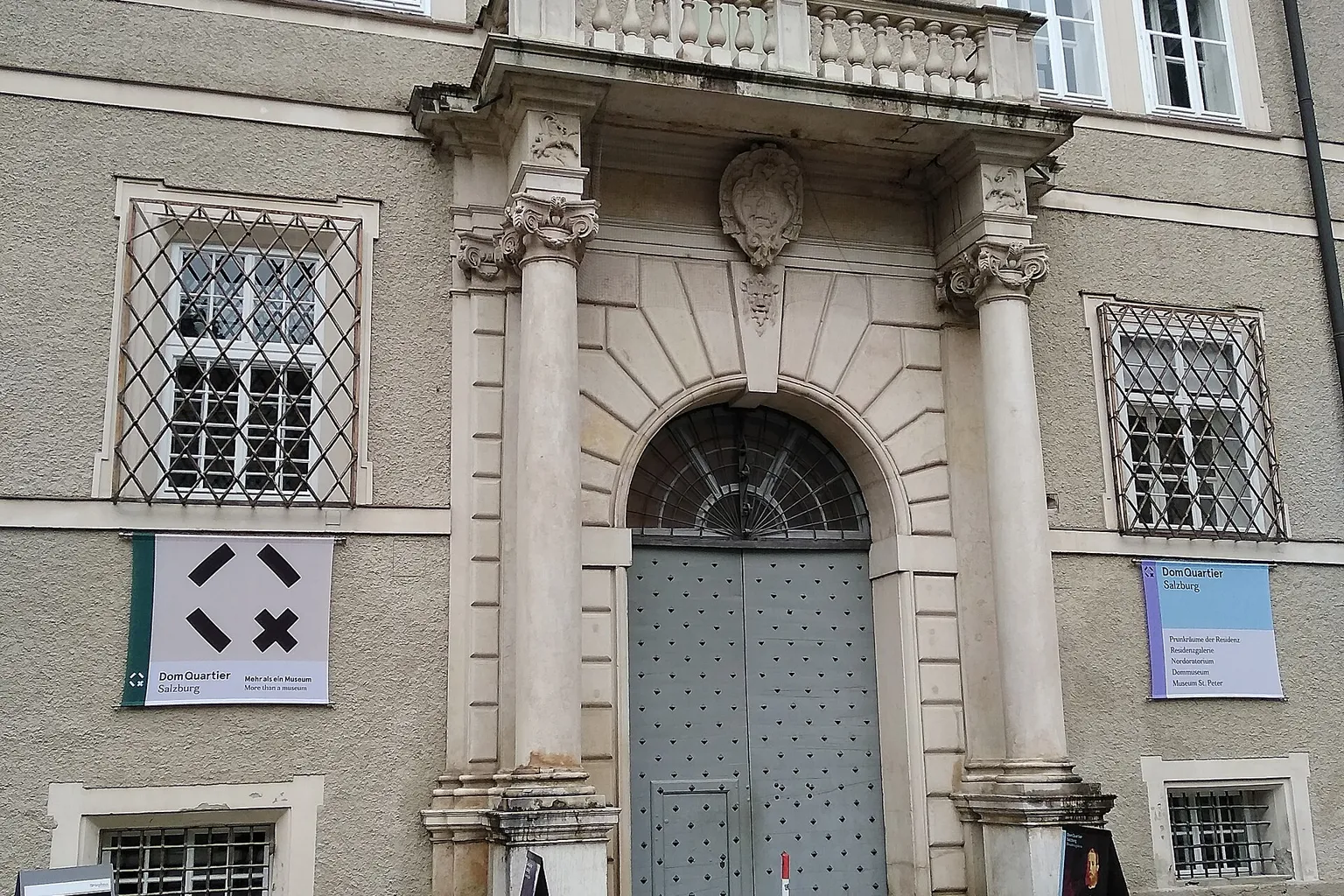
It is a mismatch between the ticket selected, the opening schedule, and the sections available on the day of the visit.
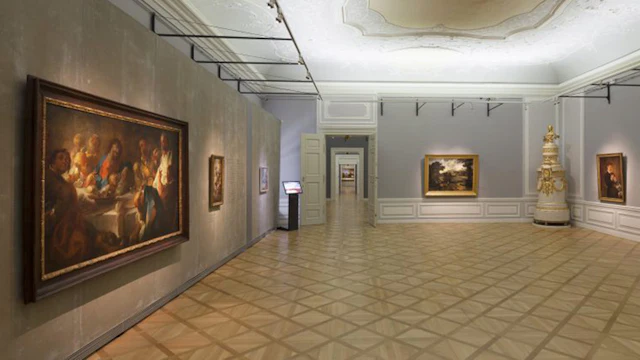
Tickets and prices
Available at short noticePrices recorded on August 15, 2026 — today's fare on the partner page.
- Official ticket · Discountedfrom€12
Official website — salzburg.info
- Time to spend: 2–3 h
- Best time to visit: morning
Prices are a guide only: the final fare and open dates appear on the partner page.
Booking through our partner GetYourGuideDomQuartier is a 1.3 km museum circuit across three levels and five historical institutions. The route is long enough to require planning. The access model is also conditional. Full access may not be available when a section is closed, Tuesday opening changes by season, and late arrivals can lose access to parts of the circuit even when the building itself remains open.
The correct booking decision is therefore operational:
- confirm the date against the seasonal calendar;
- identify whether full or partial access applies;
- account for the Residenzgalerie renovation;
- allow at least 1.5 to 2 hours for the circuit;
- use the Salzburg Card if it already forms part of the trip plan.
Opening hours are a scheduling constraint, not background information
DomQuartier Salzburg opening hours change by season. From September through June, the complex is generally open from 10:00 to 17:00 and closed on Tuesdays. During July and August, it opens daily from 10:00 to 18:00.
That Tuesday exception creates a predictable booking error. Visitors often see a summer itinerary or a general listing and assume that the museum follows the same weekly schedule throughout the year. It does not. A Tuesday visit outside July and August requires a different plan.
The last entry rule introduces a second constraint. Entry ends one hour before closing. This is not the same as having one hour to complete the museum. The full route takes substantially longer. The final 20 minutes before closing are especially unreliable because access to every museum area cannot be guaranteed during that period.
A late arrival at 16:00 on a standard 17:00 closing day is therefore not a viable full-circuit strategy. The ticket may still be usable for entry, but the route throughput will be constrained by the remaining operating window.
Schedule conditions to resolve before booking
| Constraint | Operating effect | Booking response |
|---|---|---|
| Tuesday closure from September through June | No standard visitor access on most Tuesdays | Move the visit to another weekday or weekend |
| Daily opening in July and August | Tuesday access is available during peak summer months | Confirm the exact seasonal calendar before purchase |
| Last entry one hour before closing | Late arrival reduces usable route time | Book a morning or early-afternoon slot in practical terms |
| Final 20 minutes before closure | Full access to all areas is not guaranteed | Do not use the final operating period for the main visit |
| Salzburg Festival dates | Some days have early closures, including a 17:00 close with 16:00 last entry | Check the date-specific schedule before committing to the itinerary |
| December 24 | Closed all day | Remove the date from the shortlist |
The Salzburg Festival creates a separate scheduling layer. On specific festival dates, DomQuartier can close early because of outdoor performances such as Jedermann. A 17:00 closure with 16:00 last entry is materially different from the standard daily schedule. The effect is not limited to the museum visit. It also changes the feasible sequence of other Salzburg activities.
The practical rule is simple: treat the published date as the unit of analysis. Do not rely only on the general opening-hours pattern.
A valid ticket on a closed or shortened day has no operational value. Schedule validation comes before payment.
Full access and partial access are different products
DomQuartier uses more than one access state. When all relevant sections are available, visitors can select the standard full-access route. When certain areas are closed, a partial-access rate applies automatically.
This distinction matters because the ticket is tied to the current configuration of the complex. A partial-access visit is not necessarily a defective version of the museum. It is a different route through a temporarily reduced system. The problem occurs when visitors expect full coverage after purchasing without checking the day’s conditions.
The Residenzgalerie renovation is the main known factor. The section is closed until autumn 2027. Any current plan that assumes access to the Residenzgalerie is structurally wrong. It should not be treated as a minor caveat or an optional room. It is a named institution within the broader museum circuit, and its absence changes the content available to visitors.
Access states at a glance
| Access state | What it means | Main risk |
|---|---|---|
| Full access | The standard museum circuit is available under the current operating conditions | Visitors still need enough time to complete the route |
| Partial access | Some areas are unavailable and the reduced rate applies automatically | Visitors may expect sections that are closed on the selected date |
| Salzburg Card admission | One-time admission to the DomQuartier complex is included | The card still does not override closures or shortened hours |
| Event-related reduced schedule | The complex operates on an earlier closing timetable | A normal afternoon itinerary may no longer fit |
The ticket category should be read as an access description, not only as a price label. It tells you how much of the system is available on that date.
For families, the same logic applies. Child and youth admission categories exist, and family tickets are available. The relevant decision is still route coverage and timing. A lower admission cost does not compensate for arriving too late to use the circuit.
The Residenzgalerie renovation changes the route model
The Residenzgalerie is closed for renovation until autumn 2027. The exact reopening date beyond that target is not fixed in the available information. It should therefore be treated as unavailable until the official schedule states otherwise.
This has three direct consequences.
First, do not buy a ticket based on an old itinerary, cached travel page, or historic description that presents the Residenzgalerie as an active part of the visit. Museum complexes often retain legacy route descriptions across third-party pages. Those descriptions can remain visible after the access state has changed.
Second, do not assume that partial access means the entire DomQuartier experience has lost its value. The route still covers three levels and several historical institutions. The correct question is not whether every named section is open. The relevant question is whether the available circuit matches the time allocated and the purpose of the visit.
Third, compare the current access state with the ticket shown during checkout. If the site applies a partial-access rate, that is the correct signal that the route has changed. Do not attempt to infer coverage from a generic image gallery or an old visitor review.
The renovation does not remove the need for planning
A reduced circuit can still consume significant time. The walkway remains extensive, with 1.3 km across multiple levels. The architecture, state rooms, collections, and transitions between sections create a continuous route rather than a single compact gallery.
Visitors who schedule the museum as a short stop between fixed appointments may create a throughput problem. Every delay at entry, orientation, cloakroom handling, or audio-guide collection reduces the remaining time available for the route. A partial-access visit may be shorter in content but is not automatically a 30-minute activity.
The correct planning model is:
1. Confirm which sections are open.
2. Determine whether the available ticket is full or partial access.
3. Allocate at least 1.5 to 2 hours unless the visit is intentionally selective.
4. Add buffer before the last-entry cutoff.
5. Avoid placing the museum immediately before a non-flexible departure.
This is route management. It is not excessive preparation.
Buying online does not remove date risk
DomQuartier Salzburg online tickets reduce friction at the point of entry, but they do not resolve schedule conflicts. The digital purchase process is useful only after the date, access state, and arrival window are confirmed.
The operational value of online booking is highest when the visit is tied to a larger Salzburg itinerary. A preselected date helps prevent the museum from becoming an unplanned gap filler. It also forces the visitor to confront seasonal opening hours before the day of arrival.
The failure pattern is common:
- a visitor selects a convenient date;
- the general opening hours appear compatible;
- the visitor does not notice a Tuesday closure, festival adjustment, or renovation note;
- the ticket is valid, but the planned experience is unavailable or compressed.
The issue is not the technology. It is the order of operations.
A lower-error booking sequence
1. Start with the calendar.
Check whether the selected date falls in the standard September–June schedule, the July–August daily-opening period, a festival period, or a special closure such as December 24.
2. Check the closing time.
Separate the building’s closing time from the last-entry cutoff. A 17:00 closing time means the final entry is at 16:00, not at 17:00.
3. Review the access notice.
Confirm whether the ticket is full access or partial access. The displayed access state should reflect current closures.
4. Remove the Residenzgalerie from the expected route.
It remains closed for renovation until autumn 2027. Do not build the visit around that section.
5. Select the correct visitor category.
Adult, youth, child, and family categories are available. Children aged 0–6 enter free, while youth admission applies through age 25 under the stated ticket structure.
6. Calculate usable time, not nominal time.
Subtract transport, orientation, entry, and exit from the available day. The route itself needs substantial time.
7. Save the digital ticket in an accessible form.
Digital PDF tickets delivered by email or mobile vouchers are accepted. A printout is not required.
8. Recheck shortly before the visit.
Festival operations and temporary closures can affect the schedule independently of the general calendar.
The eighth step is the one most often omitted. A booking made weeks in advance is not a substitute for a final schedule check.
Online booking removes queue friction. It does not remove operational uncertainty.
The Salzburg Card is efficient when admission is already part of the itinerary
The Salzburg Card includes one-time free admission to the DomQuartier complex. For visitors already using the card across several Salzburg attractions, this can be the cleanest admission path.
The card should not be evaluated in isolation. Its value depends on the overall itinerary and the number of included attractions that will actually be used. If DomQuartier is the only planned paid attraction, the card may not be the most efficient choice. If the day includes several participating venues, the admission benefit can reduce transaction overhead and simplify entry planning.
The card also does not change the museum’s operating constraints. It does not open the complex on a standard Tuesday outside July and August. It does not extend the last-entry window. It does not restore access to the Residenzgalerie during renovation. It is an admission mechanism, not a schedule override.
Salzburg Card decision logic
Use the Salzburg Card as the admission route when:
- the card is already part of the planned Salzburg itinerary;
- several included attractions are scheduled within its validity period;
- one-time DomQuartier admission fits the route without creating a rushed visit;
- the selected date remains compatible with DomQuartier opening hours.
Use a direct ticket when:
- DomQuartier is the main or only planned included attraction;
- the rest of the itinerary does not justify the card;
- the visit needs to be organized independently of the card’s validity period;
- a specific tour or event format is the actual objective.
There are also guided and themed options associated with the complex, including chamber-music experiences in the Residenz. These should be treated as separate itinerary components. A concert or themed event may have its own start time and availability conditions. It should not be assumed to provide the same access logic as a standard museum admission.
The 1.3 km circuit creates a cognitive-load problem
DomQuartier is not a single-room museum. The route spans three levels and five historical institutions. That structure produces two different visitor tasks:
- interpret the content;
- maintain orientation through a long, connected circuit.
The audio guide reduces cognitive load by providing a controlled information layer during movement through the route. Adult audio guides are available in ten languages, with three language options for children, and standard audio-guide access is included with admission.
This matters because a long route creates information latency. Visitors who stop at every object without any selection strategy can exhaust their available time before reaching the later sections. Visitors who move too quickly can complete the distance while retaining little of the institutional context. The useful outcome is not maximum audio consumption. It is stable comprehension across the route.
A practical route allocation
A robust visit plan uses three passes.
Pass one: orientation.
Establish the direction of movement, the number of levels, and the sequence of institutions. Do not begin with a long stop at the first major room. The first minutes should reduce navigation errors.
Pass two: priority content.
Use the audio guide and room information for the sections that match the purpose of the visit. Architecture, ecclesiastical history, court culture, and painting collections impose different attention demands. Treating every stop identically produces unnecessary latency.
Pass three: completion check.
Reserve time for the final sections and the return route. A long museum circuit can create a false sense of progress because the visitor has covered substantial distance without reaching the end of the sequence.
The museum’s recommended minimum visit time of 1.5 to 2 hours is therefore credible as a route requirement. It is not an arbitrary suggestion. The physical length, vertical transitions, and number of institutions all contribute to the total.
Visitors with mobility constraints should also account for the three-level layout and the movement between sections before selecting a tightly timed itinerary. The available route configuration can change with closures, so the current access information remains the controlling source.
Common booking failures and their root causes
The same errors recur because they originate in predictable system assumptions.
Treating a generic opening-hours page as date-specific
A general schedule does not capture every festival closure or special operating day. The result is a valid plan built on an invalid calendar.
Root cause: schedule abstraction is too broad.
Correction: verify the exact date, especially during July and August, the Salzburg Festival period, and the December holiday period.
Assuming Tuesday access year-round
DomQuartier opens daily in July and August. Outside those months, it is closed on Tuesdays for most of the year.
Root cause: seasonal exception is mistaken for a permanent rule.
Correction: map the visit date to the correct seasonal schedule before buying.
Booking late because the museum closes later
The last-entry rule is one hour before closing. The final 20 minutes are not a reliable full-access window.
Root cause: closing time is treated as entry time.
Correction: plan arrival well before the cutoff and allocate the full circuit duration.
Expecting the Residenzgalerie to be open
The renovation runs until autumn 2027.
Root cause: historic listings and current access information are conflated.
Correction: remove the section from the expected route and accept the current full or partial access condition shown for the visit date.
Buying an admission channel without measuring itinerary use
The Salzburg Card can include one-time DomQuartier admission, but the card has value only within the wider attraction plan.
Root cause: the admission benefit is evaluated separately from the itinerary.
Correction: compare total planned card usage rather than treating the museum entry as the sole justification.
Compressing the museum into a short transfer window
The circuit covers 1.3 km across three levels and five institutions.
Root cause: floor area and route complexity are underestimated.
Correction: allocate 1.5 to 2 hours as the baseline, then add buffer for entry and transport.
A reliable booking model for different visitor types
The correct ticket strategy depends on the system around the museum.
| Visitor profile | Preferred approach | Main control point |
|---|---|---|
| First-time Salzburg visitor with several attractions | Consider the Salzburg Card | Confirm that DomQuartier falls within the card’s valid period and operating day |
| Visitor focused primarily on DomQuartier | Use direct admission or the relevant online ticket | Select a date with sufficient route time |
| Family with children | Use the applicable family or child categories and consider the children’s audio-guide options | Avoid a late arrival and plan for slower movement |
| Architecture or history specialist | Select a full-access date where available and use the audio guide selectively | Do not allow early sections to consume the entire route window |
| Festival visitor | Treat the museum as a date-sensitive appointment | Verify early closure times before fixing the day’s sequence |
| Visitor with a short Salzburg stopover | Visit only if at least the minimum practical window is available | Do not schedule arrival near last entry |
This table is not a substitute for the current ticket display. It is a decision framework. The date-specific information controls.
What to confirm immediately before departure
A final review should focus on operational changes rather than repeating the entire booking process.
Check these items:
- the museum is open on the selected weekday;
- July or August seasonal opening applies if relevant;
- the date is not affected by a Salzburg Festival early closure;
- the last-entry time leaves enough capacity for the planned route;
- the Residenzgalerie remains excluded from expectations until the renovation ends;
- the ticket shows the correct access state;
- the Salzburg Card is valid and has not already been used for DomQuartier;
- the digital ticket or mobile voucher is accessible without relying on a weak connection at the entrance;
- the visit is not scheduled immediately before a fixed transport departure or timed performance.
The purpose of this review is error containment. It prevents a small calendar discrepancy from propagating into transport changes, missed reservations, and a shortened museum visit.
Final position
DomQuartier Salzburg is easy to enter and easy to schedule badly. The complexity comes from the interaction of conditions: seasonal Tuesday closures, last entry one hour before closing, festival-related early shutdowns, the Residenzgalerie renovation, and a 1.3 km route that cannot be processed as a quick indoor stop.
Visitors who buy tickets to DomQuartier Salzburg should optimize for usable access time, not merely ticket possession. The Salzburg Card can be efficient when it already fits the broader itinerary. Direct online tickets are practical when the museum is being planned independently. Neither option replaces date validation.
Actionable design heuristics:
- Treat the exact visit date as the primary booking input.
- Separate closing time from last-entry time.
- Assume the Residenzgalerie is unavailable until autumn 2027.
- Read full-access and partial-access conditions as route specifications.
- Allocate 1.5 to 2 hours for the museum circuit before adding transport buffer.
- Use the Salzburg Card only within a wider attraction plan.
- Recheck festival dates and special closures immediately before departure.
- Do not schedule the visit in the final 20 minutes of the operating day.
Practical info
Currency: EUR
Driving: on the right
Emergency number: 112
FAQ
Is DomQuartier Salzburg open on Tuesdays?
Can I visit the Residenzgalerie at DomQuartier?
What is the latest time I can enter DomQuartier?
Does the Salzburg Card cover admission to DomQuartier?
How long should I plan to spend at DomQuartier?
Photo: Maskaravivek / CC BY-SA 3.0 — Wikimedia Commons