European Pump Market Forecast: What $5 Billion in Growth Means for Your Maintenance Strategy
A market research report on the European pump industry from 2026 through 2031 surfaced this week via Yahoo Finance UK, and the headline figures are the sort that quietly show up six months later as…
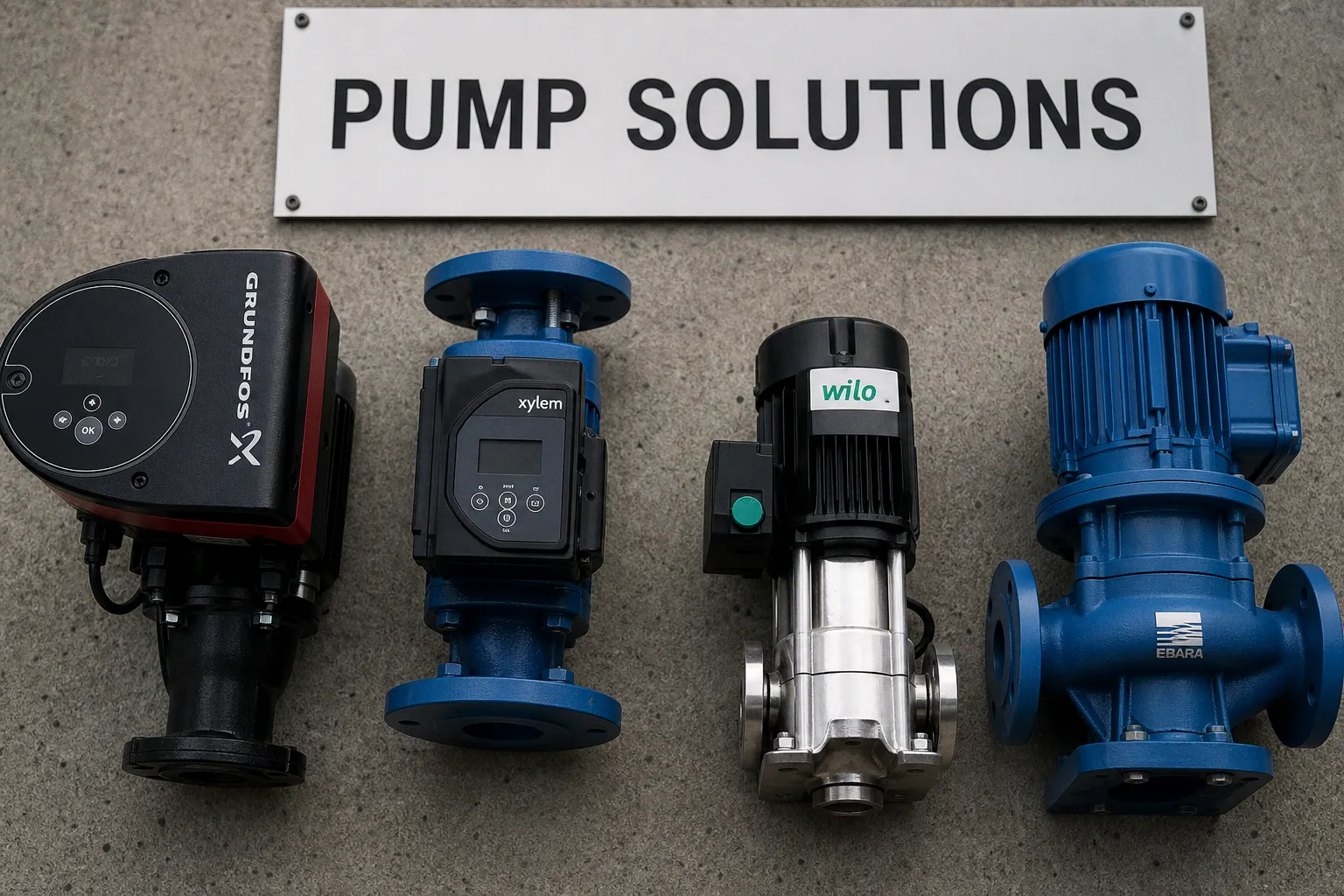
A market research report on the European pump industry from 2026 through 2031 surfaced this week via Yahoo Finance UK, and the headline figures are the sort that quietly show up six months later as longer lead times, thinner local service coverage, and that familiar end-of-shift moment when your operator reaches for a part that used to be on the shelf.
What the source actually tells us
The report, as summarised by Yahoo Finance UK, forecasts the European pump market growing from $17.5B in 2025 to $22.53B by 2031. It also profiles a broad field of suppliers — the headline names the usual anchors (Grundfos, Xylem, Ebara, Wilo, and Flowserve) alongside 55 additional players, putting the total near 60 companies. That's the full set of confirmed details we can pass along; the methodology, segmentation, and assumptions live behind whatever paywall the publisher is running, and we won't pretend to have read them.
Why this lands on the factory floor
Here's the if-then we keep coming back to in this corner of the industry: if a market is forecast to grow by roughly $5B over six years, then competition at the upper tier tightens, mid-tier vendors tend to absorb features that used to live only in the premium catalogues, and the service network either expands with the volume or quietly contracts where margins don't follow. If you're the person who has to keep a line running at 2 a.m., you already know which of those three shifts tends to bite first — it's the last one. A pump you can buy anywhere is useless if the nearest certified service partner is now three hours further down the motorway.
This is where hardware UX meets real-world context. The engineering inside the pump matters, but so does the surrounding ecosystem — distributor density, parts availability, and the tactile familiarity your operator has with a specific brand's controls. That combination is what decides whether a shift ends cleanly or whether someone is wrestling a sealed bearing housing in the small hours.
How to actually use the report
Treat it as a navigation tool, not as a verdict. Three honest checks before you let any forecast drive a procurement decision:
- Match the segmentation to your actual equipment. Centrifugal, positive displacement, dosing, hygienic, magnetic drive — a "European pump market" line item can hide a dozen very different use cases, and the growth rate isn't uniform across them.
- Compare the $17.5B 2025 baseline against your own annual spend or your segment's published shipment data. If the headline number feels off, treat the 2031 figure with the same scepticism.
- Use the company list as a starting point for spec sheets and second-source planning, not as a recommendation. A directory that includes everyone usually recommends no one.
And one last bit of advice, the kind we'd give a junior engineer on a first plant walk: when a forecast tells you the market is growing, ask it where the growth lives — replacement demand, new infrastructure, regulatory-driven upgrades, or a specific end segment like water utilities or chemical processing. The answer changes what you should be buying, and when.