Mastering Electric Linear Actuators for Industrial Motion Control
A new practical guide from EDN walks through the design, operation, and application of electric linear actuators in modern industrial motion control.
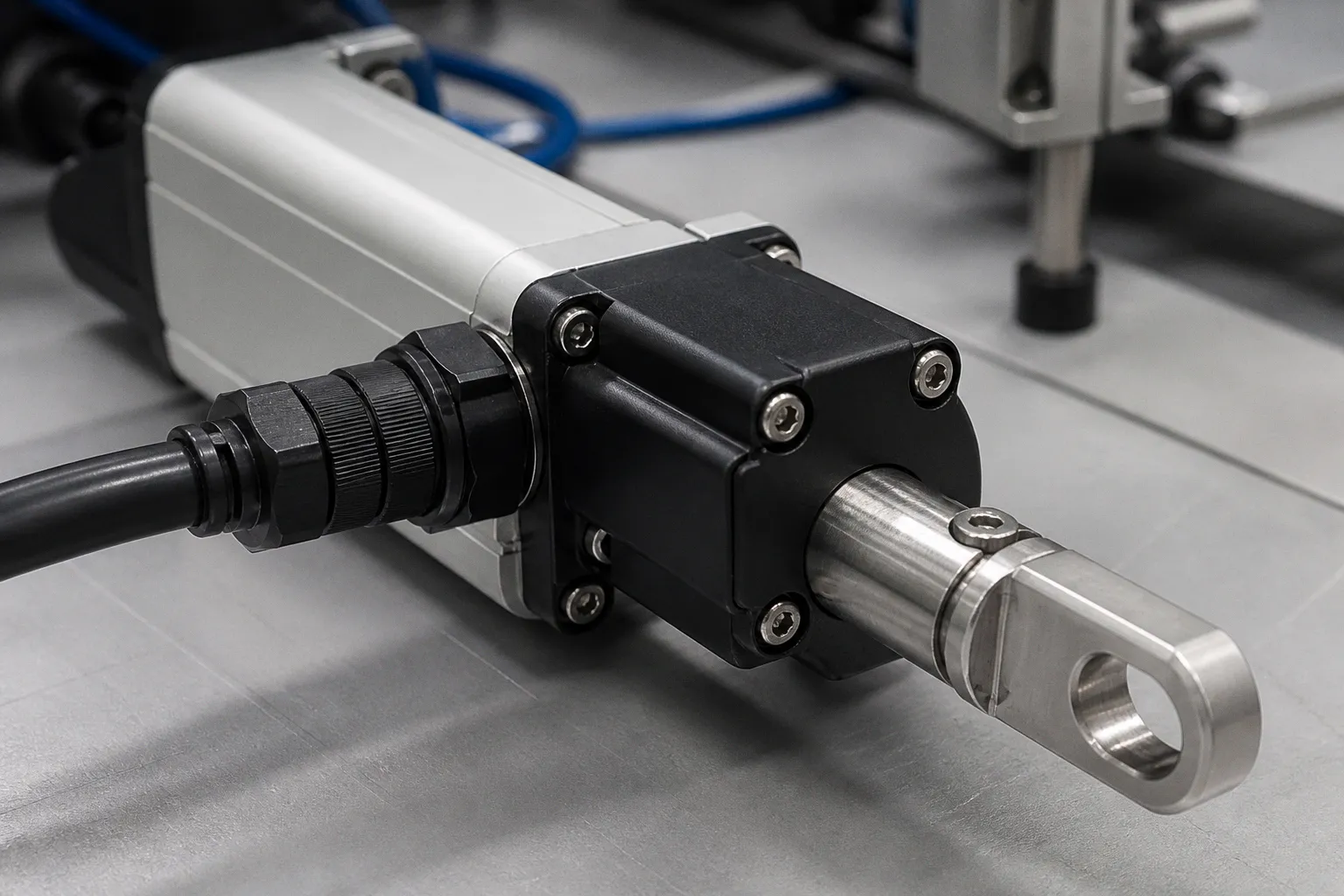
Titled Driving motion: A practical guide to electric linear actuators, it lands at a useful moment — especially if you spec, install, or simply live next to this hardware on a factory floor.
Why this matters to us
We tend to focus on valves and pumps here, but motion is the muscle that actually moves the fluid, opens the line, or positions the load. If you've ever watched a pneumatic actuator cycle ten thousand times in a single shift, you already know the kind of wear — and the noise — that comes with the territory. A piece that treats electric linear actuators as something to reason through, rather than just spec off a datasheet, is worth flagging in that context. It speaks the way we'd want a guide to speak: to the person who has to keep the line running, not just the person who has to approve the PO.
How to read it like a maintenance lead
A practical guide like this works best when you bring a specific actuator to it. Pick one that's already on your line — or one you're about to evaluate — and the abstract becomes concrete almost immediately. A few things worth carrying into that read:
- Frame the duty cycle honestly. Hold-position duty, intermittent duty, and continuous modulation are different conversations. The design choices follow from them, and so does the maintenance rhythm you'll inherit.
- Remember that "the actuator" is no longer just a mechanical island. Modern units arrive with drivers, feedback loops, and a relationship to your control network. When you walk the line, walk the cabinet too — and ask whoever set the parameters what they're meant to do.
- Environment still decides. The application story in the guide is broad on purpose. The right unit for washdown, hazardous, cold, or outdoor service is still a where-it-lives question first — and a what-it-pushes question second.
- Talk to the people who will touch it. A spec that looks clean on paper can quietly fall apart in the hands of the technician who has to service it at height, in gloves, on a Sunday. The guide's framing leaves room for that conversation, which is one of the reasons it's worth the read.
A closing thought
For us, the real test of any guide is whether it leaves the floor worker better equipped to talk to the engineer — or the engineer better equipped to talk to the floor. The EDN piece leans that way. Read it with a real actuator in mind, and it'll do more work than if you read it as background. That's the kind of piece that earns its place next to the maintenance binder, where it can actually shape a decision the next time something on the line needs to move.