Global Pump Market Growth: Why Precision Engineering Matters More Than Ever
According to Arizton Advisory & Intelligence, the global pump market is projected to climb from roughly USD 65 billion in 2025 to USD 88.36 billion by 2031 — a compound annual growth rate of 5.25%.
For those of us who live inside the hardware, that headline isn't abstract: it tells us who we'll be designing for, in what conditions, and with what expectations of the equipment in their hands.
What the Numbers Actually Shift for Us on the Ground
The report attributes the growth to investments in water and wastewater infrastructure, industrial manufacturing, and the steady migration toward energy-efficient pumping solutions. But the force that genuinely reshapes our day-to-day work is the third thread — smart, IoT-enabled systems with predictive maintenance, remote monitoring, and smart diagnostics. If you've ever stood next to a pump operator who has spent a twelve-hour shift chasing a bearing failure, you already understand why "downtime" isn't a line item but a lived sensation: the muscle soreness of a maintenance tech, the audible groan of a motor running hot, the operator fatigue that lingers after an unplanned shutdown. The market isn't only buying more pumps; it's buying fewer of those moments, and the design of the service interface around the pump is now part of that promise.
Where the New Hardware Is Heading
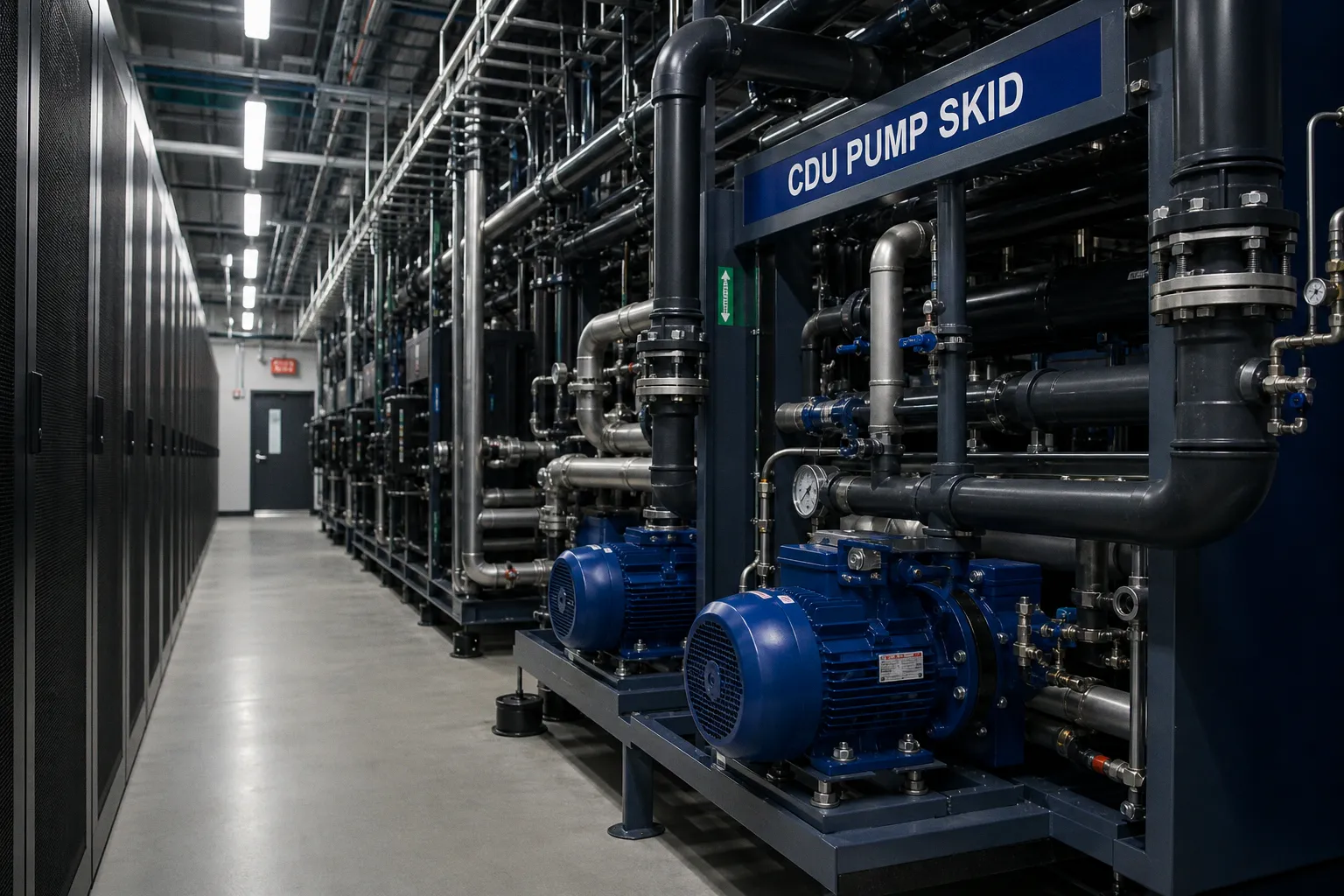
Two emerging frontiers are worth wiring into your next spec review. Semiconductor fabs, data centers, hydrogen production, and battery manufacturing are creating demand for pumps used in precision fluid handling, cooling, and advanced manufacturing — environments where the tolerance for vibration, noise, and inconsistent flow is razor-thin, and where tactile feedback from gauges and controls becomes the operator's primary language with the machine. A separate Research and Markets forecast puts the data center cooling CDU pumps segment alone on a path from USD 340 million in 2026 to USD 1.84 billion by 2032, a 32.7% CAGR, with centrifugal inline pumps leading that sub-market because of their compact footprint and hydraulic efficiency. If-then: if your team is designing around AI-ready facilities, expect more conversations about direct-to-chip cooling interfaces and variable-speed drive integration before the year closes. On the consolidation side, Xylem's agreement to acquire Cornell Pump and Roper Pump from Indicor for USD 1.46 billion is the kind of move that quietly redraws who you'll be calling when a municipal or construction job needs a specialty unit, and APAC's share of more than 40% of global pump revenue in 2025 confirms where the demand gravity is settling.
What to Watch From Your Workbench
Track three threads as the forecast matures: how Wilo's Stratos GIGA2.0-I, Grundfos's next-gen DDA Smart Digital Dosing, and Flowserve's double hermetically sealed sealless magnetic drive pump actually perform in real-world context — not just on a datasheet; whether the CDU pump segment sustains its growth curve into 2027; and how consolidation changes the responsiveness of your local distributor network. The design question underneath all of it is the one we keep coming back to at the bench — does the next generation of equipment actually make the operator's hands lighter, the diagnostics more legible under a hard hat, and the shift a little less tiring by the time the lights come back on?