Finish Thompson ANSI-Compliant Mag-Drive Pumps Simplify Industrial Retrofits
According to Fluid Handling Magazine, that's exactly the scenario Finish Thompson Inc.
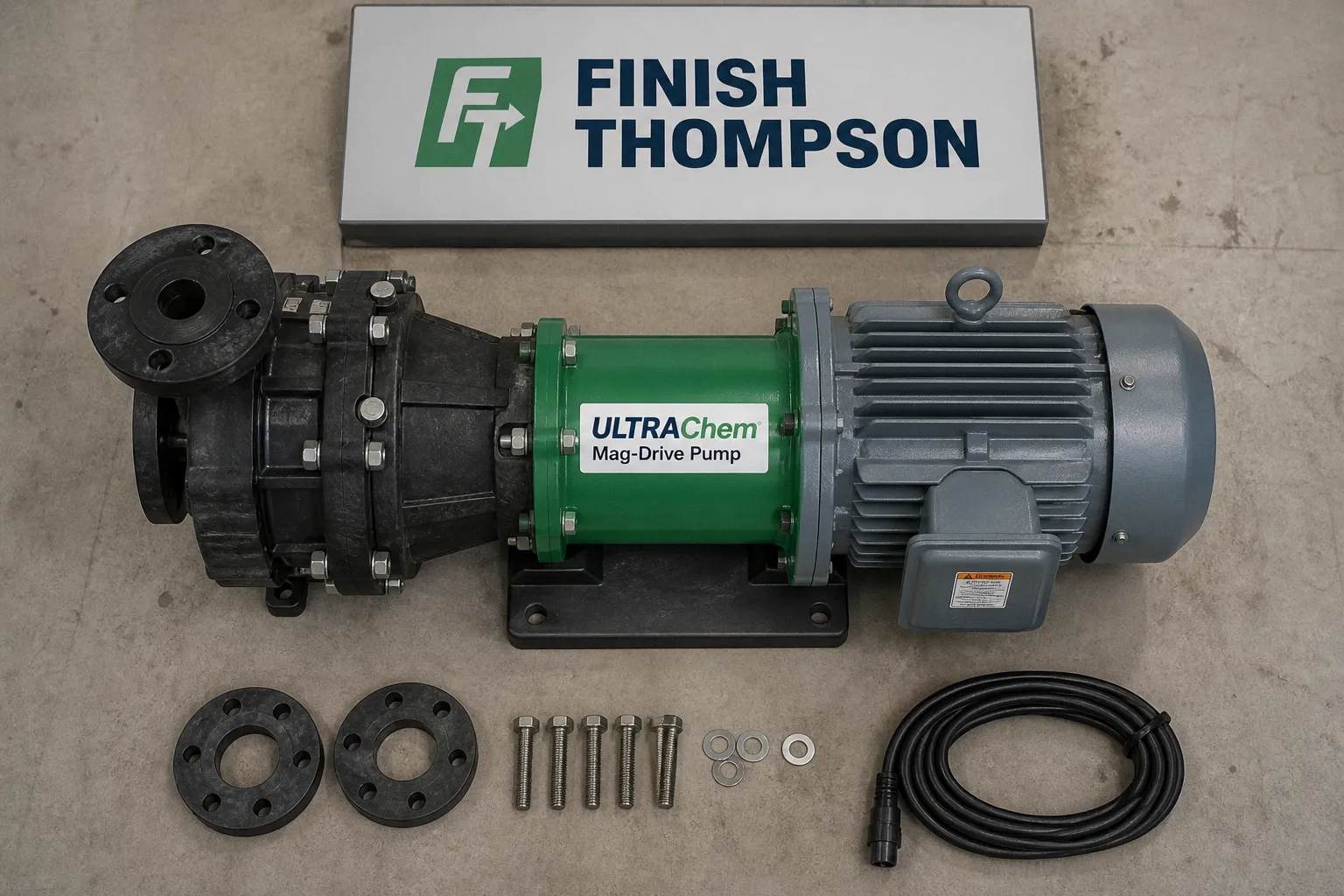
Picture a maintenance tech on third shift, flashlight between their teeth, leaning over an ANSI footprint that's been bolted to the skid for the better part of two decades. They've got the wrong coupling spacer in their truck, the wrong gasket on the bench, and about twenty minutes before the line has to run again. According to Fluid Handling Magazine, that's exactly the scenario Finish Thompson Inc. is leaning into right now, spotlighting its ANSI sealless pump offerings pulled from the ULTRAChem centrifugal mag-drive line. If you spec, install, or swap out process equipment in corrosive service, this is the kind of housekeeping news worth a quiet look before your next shutdown.
The ANSI Dimensional Angle
The spotlight lands on the UCR and UCP series, both engineered to drop into a standard ANSI dimensional envelope. That last phrase matters more than it sounds on the floor: when a replacement pump matches the bolt pattern, the baseplate footprint, and the suction and discharge dimensions of what you're pulling out, you skip the rigging crew and the welder. If-then in plain terms — if your existing skid is an ANSI platform, then a like-for-like mag-drive swap becomes a one-shift job instead of a three-day engineering exercise.
The sealless construction is the real-world context to weigh carefully here. There is no mechanical seal to wear down, no seal flush plan to maintain, no quench pot to babysit. For operators handling aggressive chemistries — the kind that punish a seal face within months — that's a meaningful reduction in the small, repetitive interventions that eat into a shift. We tend to think of "sealless" as a maintenance feature, but on the ground it reads more like a quality-of-life feature for the person standing next to the pump with a wrench.
The Plastic AODD Companion
Alongside the ANSI push, PCI Magazine reports that Finish Thompson has introduced the FTI Air FT30P, a 3-inch plastic air-operated double-diaphragm pump aimed at corrosive and abrasive transfer duty. The headline number is 300 gpm, with maximum air-supply and outlet pressures sitting at 120 psig. That's a serious flow rate for a polymer-bodied AODD, and it positions the FT30P as a utility player rather than a lab tool.
What we'd flag for anyone evaluating it: the air distribution system has been simplified. The stall-resistant air valve drops the separate pilot valves and mechanically operated pilots, which directly reduces the number of wear points inside the spool. Fewer moving parts in the air side means fewer air leaks, fewer "why is this thing pulsing funny" mornings, and a longer interval between teardowns. The wetted path is polypropylene, which is a sensible default for alkalis and strong acids — though you'll still want to match diaphragm, ball, seat, and O-ring materials to your specific chemistry, temperature, and abrasion profile rather than assume stock. Adjustable center porting and 3-inch flanged connections make integration into existing piping more forgiving.
What to Verify Before You Order
Before you spec either of these onto a BOM, walk your plant with the same checklist a good service designer would. On the UCR and UCP, confirm the ANSI dimensional match against your existing baseplate, the motor frame alignment, and whether your current spare seal kit inventory can be retired or repurposed. On the FT30P, confirm your compressed air supply can sustain 120 psig under load, verify the chemical compatibility of the polypropylene against your duty fluid at operating temperature, and map out the suction conditions — AODDs forgive a lot, but they do not forgive a starved inlet.
We talk a lot about "design" as if it lives on a screen, but a pump that drops into an existing footprint, or a valve block with fewer pilot lines, is design in the most grounded sense of the word. It is design that respects the operator's hour, the maintenance tech's back, and the planner's shutdown window. When a manufacturer quietly tightens those seams, we think the work deserves a closer read — not because the brochure is exciting, but because the next time someone is kneeling next to this equipment with a flashlight, the job will be a little easier than it used to be.