Reducing Industrial Downtime with SEEPEX’s Five-Day Pump Delivery Program
EX Australia has compressed progressive cavity pump delivery to five business days through a pre-configured, fully assembled product line, according to Pump Industry Magazine.
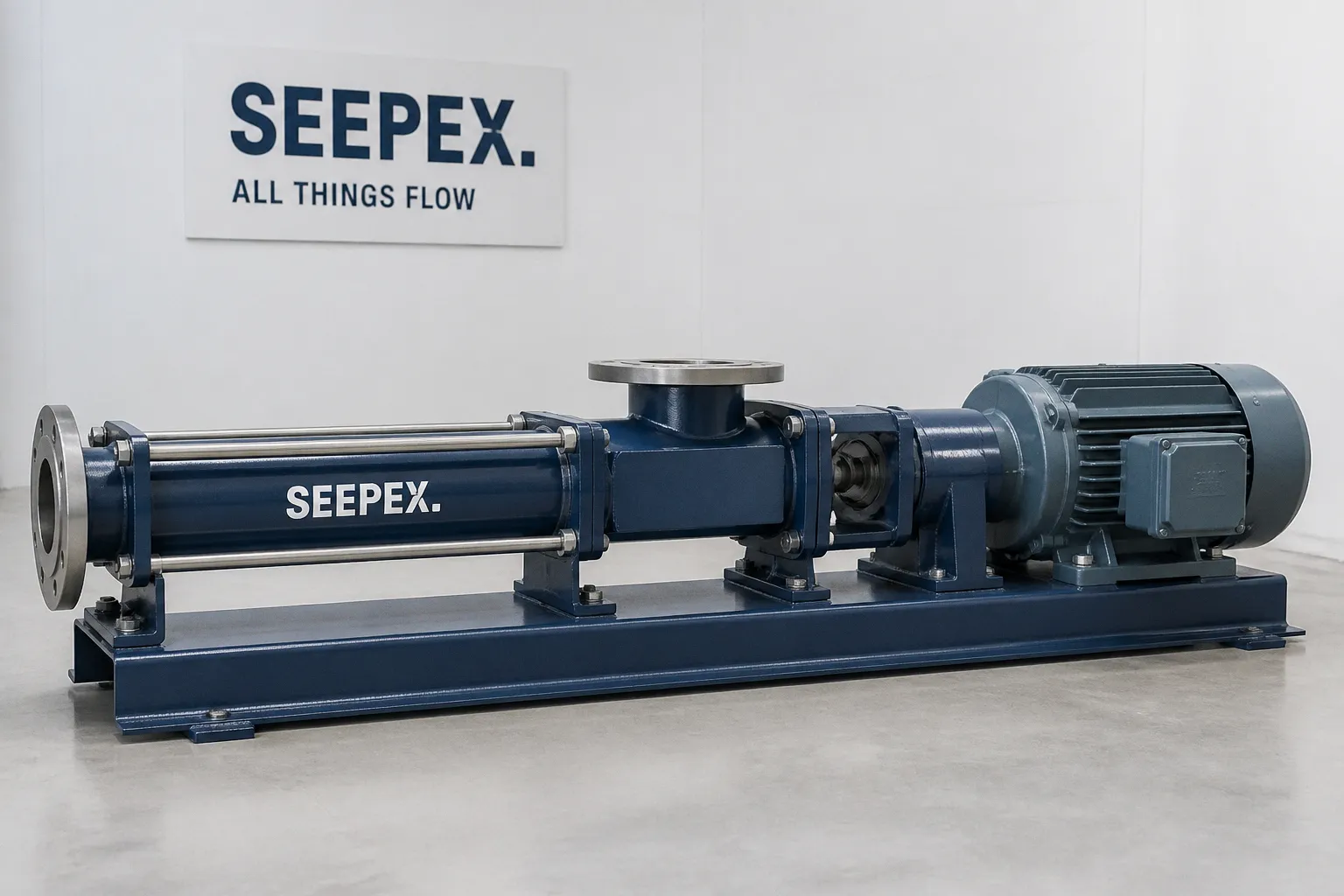
The Fast Track Pump Program targets facilities where unplanned downtime is the binding constraint on throughput. For operations balancing spare-parts inventory against failure exposure, the program reframes procurement lead time as a tunable input rather than a fixed cost.
The variable that actually moves the downtime curve
Pump failure intervals rarely follow a clean distribution. In practice, the dominant driver of lost production hours is not the failure event itself but the interval between detection and a working replacement on the line. SEEPEX's offer collapses that interval from weeks — typical for engineered progressive cavity units — to five business days for stocked configurations. The trade-off is configurational scope: buyers select from pre-engineered variants rather than commissioning a custom build.
The relevant metric for any evaluation is not the headline ship time but the expected downtime reduction at the system level. A facility running critical service with a single installed spare will see a different delta than a plant with redundant pump arrays. Calculate against your actual repair-cycle baseline before assuming the five-day figure translates directly to your operation.
When speed isn't available: the Hanford counter-example
Not every pump problem resolves through fast procurement. At the Hanford Site, the Department of Energy recently extracted a 10-ton, 50-foot legacy mixer pump from Tank SY-101 using a purpose-built hydraulic lift system called Hercules, as reported by Nuclear News. The pump, installed in 1993 to control hydrogen buildup, had to come out before waste retrieval equipment could be installed in the tank. Crews rehearsed the extraction at an off-site mock-up in Richland before attempting the lift inside a radiologically controlled environment.
The contrast is instructive. Hanford's constraint is not lead time but planning horizon and hazard envelope. Where SEEPEX removes friction from the supply side, Hanford illustrates the cost of deferred intervention: the pump had to be freed in a controlled lift, cleaned with high-pressure water jets, and packaged for disposal. The project touched every department in the contractor organization, per Nuclear News.
Heuristics for evaluating the program
- Audit current progressive cavity pump SKUs against the Fast Track catalog. If the majority of your installed base maps to pre-configured variants, the five-day ship time applies to your real spares strategy, not just a marketing footprint.
- Recompute downtime exposure using your actual failure-interval data, not manufacturer brochures. Lead-time gains only compound when failure probability justifies the inventory posture.
- Identify pumps where configurational flexibility delivers genuine engineering value. Route those to custom builds; standardize everything else onto the Fast Track line.
- Track the disposal path for legacy units with the same rigor applied to procurement for new ones. Hanford's hydraulic lift, mock-up rehearsal, and multi-department coordination represent the downstream cost when end-of-life planning is deferred.