Evaluating ISO9001 Compliance for Balanced Mechanical Seals in Multi-Stage Pumps
A recent industry notice from EIN News flags an ISO9001 quality audit for multi-stage pumps, centered on certified balanced-type Grundfos pump mechanical seals produced in China.
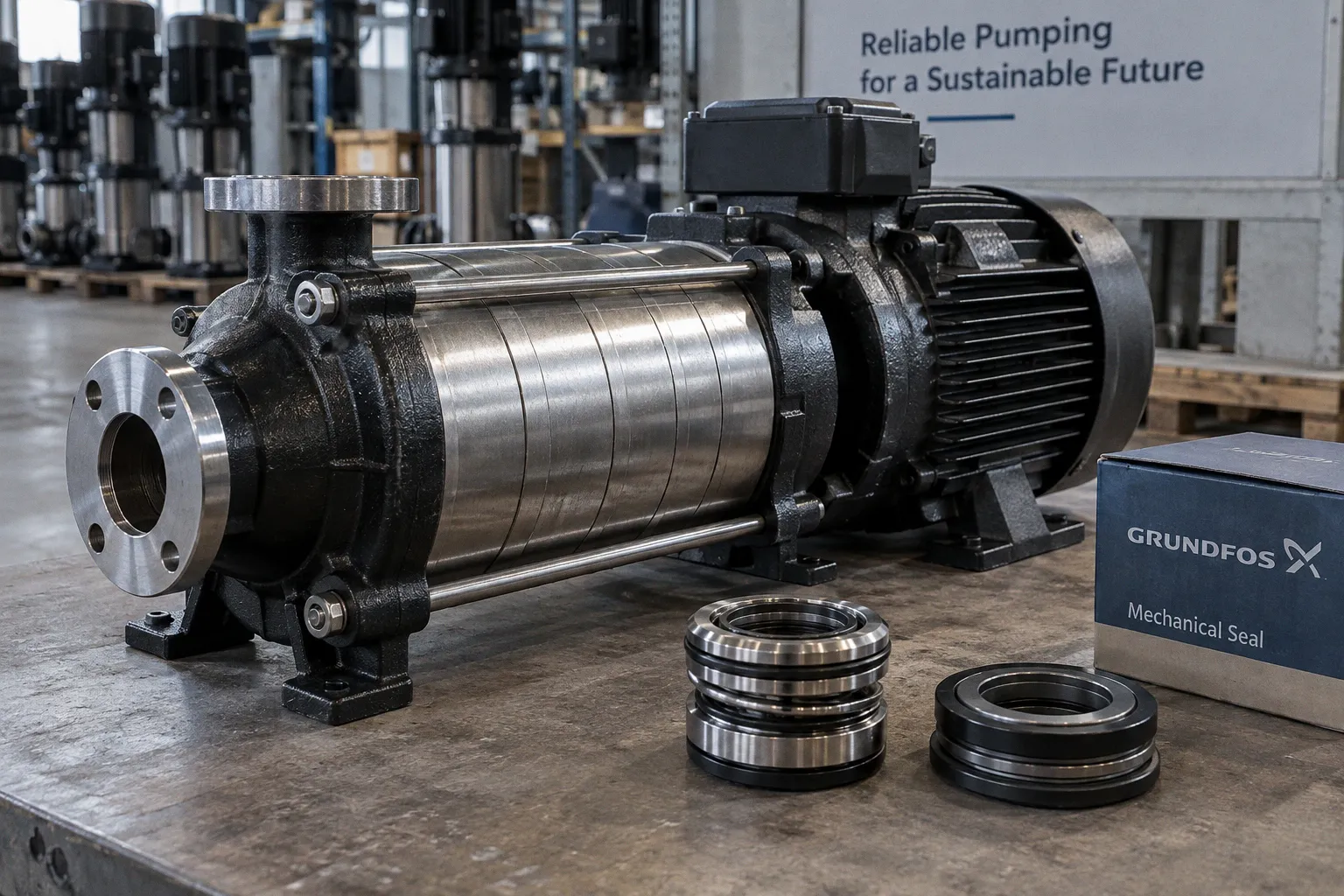
If you're the person who has to keep those pumps alive on a shift — or the one who signs the PO — this is the kind of headline that rewards a slow read, not a fast scroll.
Why a "balanced" seal matters when the pump is already balanced
We talk about balanced seals the way we talk about anything on the shop floor: by feel. On a multi-stage pump, the mechanical seal isn't fighting one pressure curve — it's fighting several stacked on top of each other. An unbalanced design tolerates that for a while, then starts walking itself toward failure as stages wear and face pressures drift.
Think of it like gripping a wrench that's slightly the wrong size: at first you can muscle through, but every quarter turn the load migrates to one corner of your hand. Balanced seals spread that load across the seal face. The audit this headline refers to — the one checking whether those seals actually meet ISO9001 under real multi-stage conditions — is, in plain terms, asking: does the part hold its shape when the pressure isn't friendly? That's the question we want answered before we install it.
What the certification headline should make you check tomorrow
Here's the practical bit, and it's the part we tend to skip because it doesn't feel urgent until it is.
First, pull the seal data sheet and look for a face pressure rating matched to your highest stage, not just your average. The headline says "balanced-type" — that's the family, not a guarantee. On the ground, we've seen plenty of seals technically labeled balanced that were engineered for single-stage service and quietly slipped into a multi-stage spec sheet.
Second, ask for the audit certificate number and the issuing body. ISO9001 is a system certification, not a part-by-part blessing, so the headline is really telling you the manufacturer's quality system has been re-checked. That's worth something — it means the paperwork trail is more likely to survive an incoming-inspection review — but it doesn't replace your own bench test. A two-hour coolant loop test on a spare stage catches more real failures than a binder of certificates ever has.
Third, if you're sourcing from China for an installation outside it, pressure ratings and material callouts sometimes get translated loosely. Don't assume "balanced" maps to the same API or DIN category you're used to. Ask, in writing, which standard the seal face geometry was validated against during the audit.
How to read the news without over-reading it
We should be honest about what this headline is and what it isn't. It's a short notice, not a teardown. It tells us a quality audit happened — that's a useful signal in a market where seal counterfeiting has been a recurring headache for years — but it doesn't tell us the results, the auditor, the scope, or the timeline. Anyone who reads more into a single headline than the headline actually carries is setting themselves up to explain a surprise to a maintenance lead on a Saturday.
So our move is the one we always make when a part-of-the-week story lands: file it under "due diligence triggers," not "decision made." Match the certification claim against your own incoming-inspection checklist, confirm the seal geometry against your duty cycle, and only then let the headline move the needle on your next order. That's the unsexy version of staying ahead — the one that keeps the pump quiet and the shift boring, which, on a factory floor, is exactly the point.