Grundfos Targets China’s AI Infrastructure Boom to Solve Data Center Cooling Challenges
We see it on the ground all the time: a server rack that was perfectly cool last year is now a heat hotspot, pushing cooling systems to their limits and leaving you, the operator, scrambling to manage alarms and prevent thermal throttling.
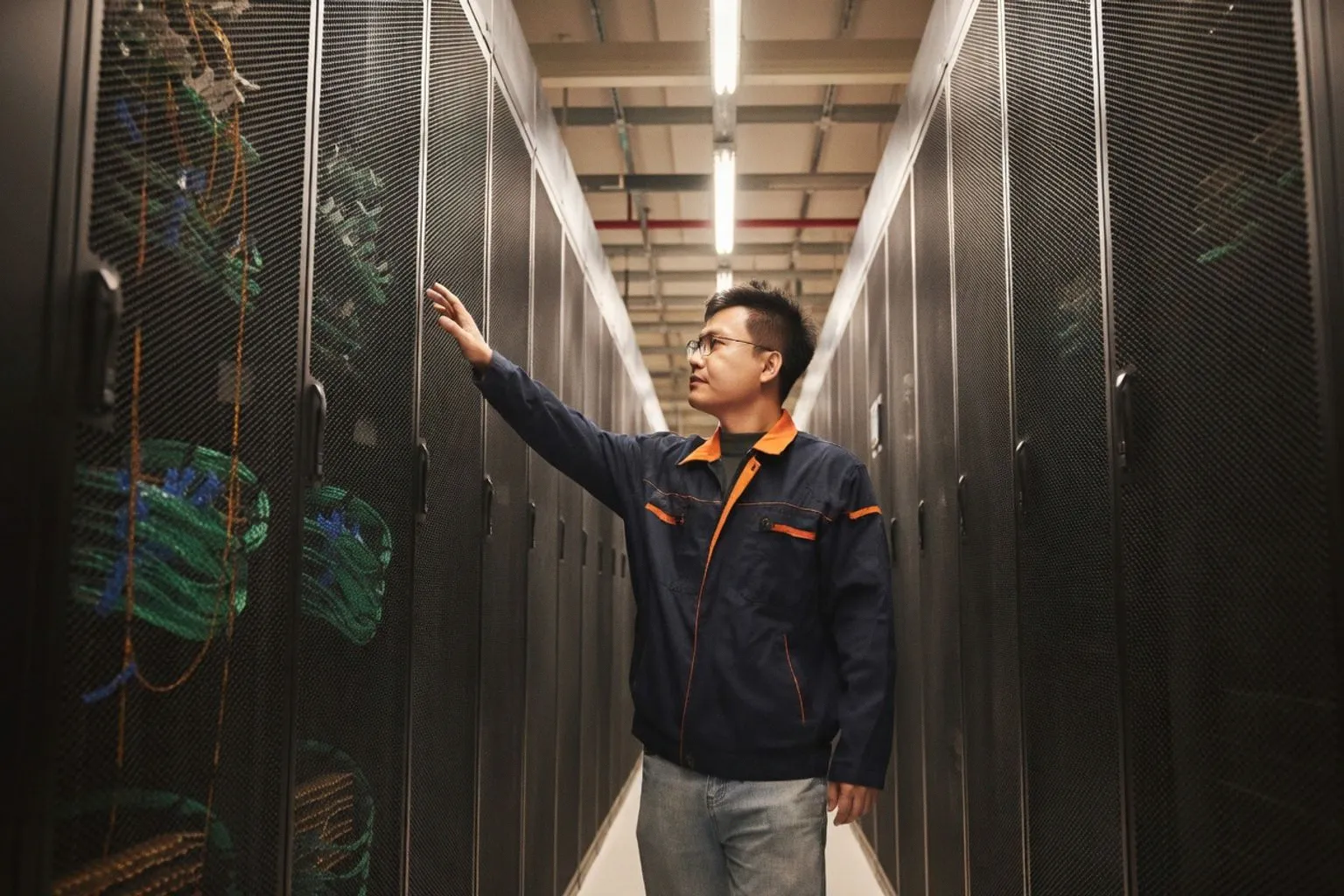
This isn't a hypothetical; it's the daily reality of the AI density dilemma, and it's exactly why Danish pump maker Grundfos is now pinning its future on China. According to a recent report from China Daily, the company sees the nation's explosive growth in intelligent computing—which hit over 2,100 exaflops by mid-2026, a 177% year-on-year jump—as the primary engine for its advanced data center cooling business. This isn't just about selling more pumps; it's a fundamental shift in how we must think about the hardware that keeps the digital world running.
The Density Dilemma: More Than Just Heat
The core issue, as Grundfos leadership describes it, is the "density dilemma." As AI chips consume more power and racks become denser, the amount of heat generated in a small space skyrockets. Conventional air cooling, which many of us have relied on for decades, is increasingly hitting a wall—it simply can't move heat away fast enough. Nearly all electricity a data center consumes ultimately becomes waste heat. This makes the fluid systems—the pumps, pipes, and coolant loops—the new unsung heroes of performance and equipment safety. For us on the service design side, it means rethinking every component not just for its individual function, but for its role in a tightly integrated thermal management system. The operator fatigue from constant monitoring and manual adjustments in an overheating environment is a direct cost of getting this integration wrong.
The Nuance of "Green": Why Liquid Isn't a Magic Bullet
The industry is rightly moving toward liquid cooling for its superior heat transfer. But as a recent white paper from Grundfos and the China Academy of Information and Communications Technology (CAICT) points out, we must be careful not to trade one problem for another. Switching to liquid cooling doesn't automatically reduce your overall energy or water footprint. Its real-world impact depends heavily on your local context: Is your facility using open evaporative cooling, which loses water to the air, or a closed-loop system? What's the local climate and water availability? How do your pumps and cooling equipment respond to fluctuating computing loads? These are the on-the-ground questions we need to ask. This is especially critical in China's western computing hubs, where cooler climates and renewable electricity are advantages, but water scarcity can turn even moderate consumption into a significant local burden. The paper argues we can no longer judge a data center's environmental performance by power usage effectiveness (PUE) alone.
A Path Forward: Smarter Systems, Not Just Harder Hardware
The solution proposed isn't just about better pumps, but smarter system architecture. The white paper outlines a three-layer framework, but the practical takeaway for those of us designing or maintaining these facilities is clear: we need demand-based cooling distribution, intelligent pump controls that adjust in real-time, and integrated monitoring for leaks and heat recovery. It's about building resilience into the plumbing itself. Imagine a system where the pumps can slow down or speed up based on the actual thermal load from a specific row of racks, or where a minor leak is detected and isolated automatically before it becomes a catastrophic failure. This is the future of service design in our field—moving from reactive maintenance to predictive, integrated fluid management. The goal is to improve the worker's daily life by reducing frantic interventions and allowing us to focus on long-term system health and efficiency.
For those of us specifying hardware, this is a clear signal: the next major project won't be just about the compute nodes themselves. It will be about the circulatory system that keeps them alive. When you're evaluating pumps or cooling modules, look for designs that enable this kind of intelligent, responsive control. The density challenge isn't going away; it's only accelerating. Our job is to build the robust, adaptive plumbing that lets the compute power flow without burning out.