How Emerson’s TESCOM RC-X Valve Streamlines Offshore Chemical Injection
If you've ever stood on a platform catwalk at 2 a.m., watching a chemical injection skid struggle to hold its setpoint while the night shift operator radios for a technician, you already understand the problem Emerson is trying to solve.
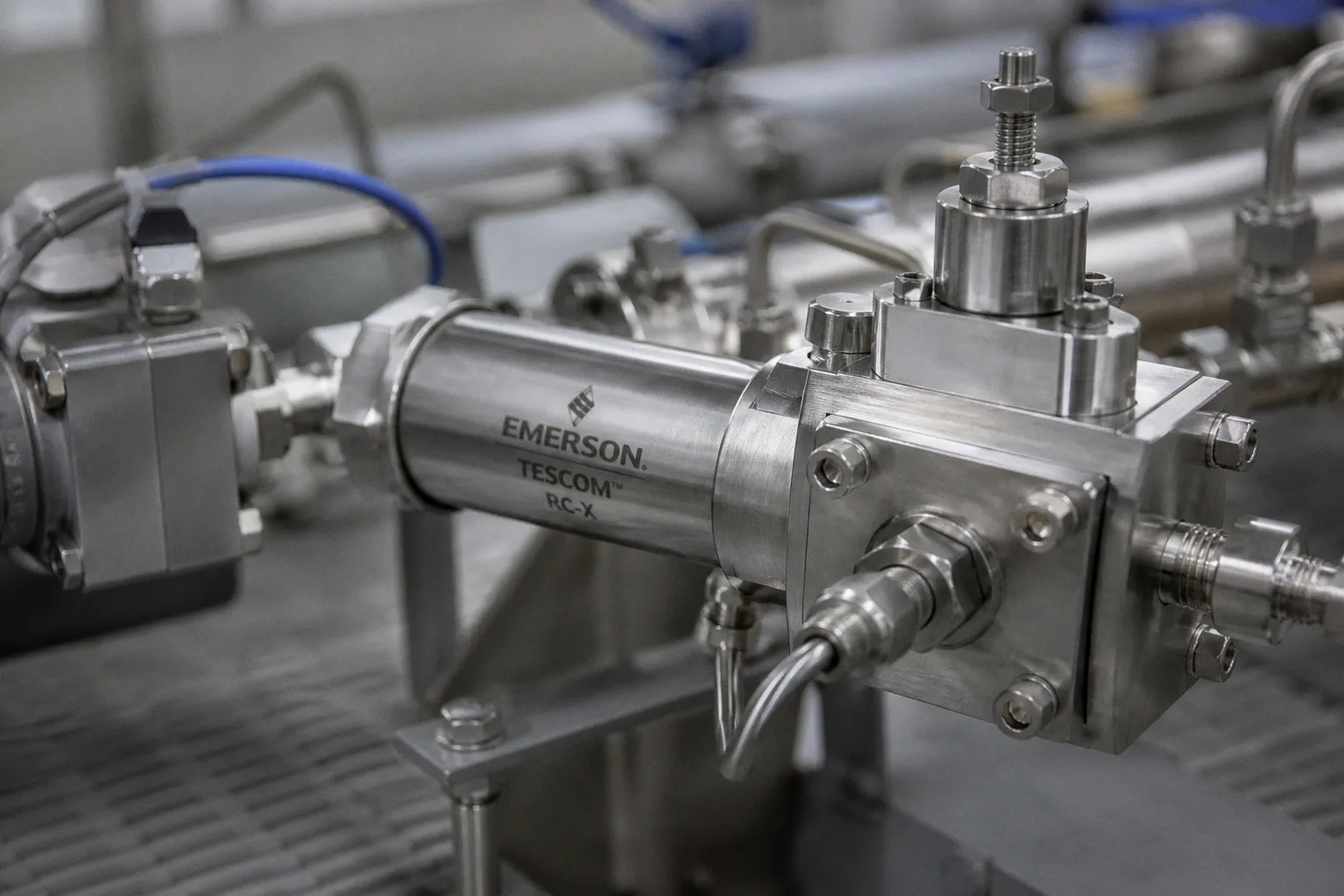
When Fewer Parts Mean Fewer Headaches Offshore
The company has introduced the TESCOM RC-X, a motorized injection rate control valve built specifically for offshore refinery chemical injection — and the pitch is straightforward: fewer moving parts, less mechanical failure, lower maintenance burden. For anyone who manages valve reliability on remote installations, that combination deserves a closer look.
What the RC-X Actually Changes
The core idea behind the TESCOM RC-X is precision and repeatability in chemical dosing — the kind of steady, predictable metering that keeps corrosion inhibitors, demulsifiers, and scale treatments flowing at exactly the rate your process demands. On the ground, that matters because chemical injection is one of those systems you rarely think about until it drifts. An operator notices a pressure anomaly, traces it back to inconsistent dosing, and suddenly you're looking at unplanned intervention on a platform where every technician visit costs real money and real time.
Emerson's approach, based on what's been reported, is to strip the actuation mechanism down. Fewer moving parts means fewer failure points — and if you've ever rebuilt a motorized valve body in a cramped offshore control cabinet, you know exactly how much that simplifies your day. We're not talking about a reinvention of fluid control here; we're talking about a deliberate engineering choice to reduce the mechanical complexity that turns a routine maintenance cycle into a headache.
Why This Matters for Refinery Operations
Think about it this way: if your chemical injection valve fails or drifts out of spec, the downstream consequences don't show up immediately. They show up weeks later — as under-treated piping, accelerated corrosion, or fouled heat exchangers. By that point, you're not fixing a valve; you're fixing a process problem that a more reliable valve could have prevented. That's the real-world context where something like the RC-X earns its place on the bill of materials.
For those of us who spend our days specifying hardware for harsh environments, the takeaway is practical. When you're evaluating motorized control valves for offshore chemical injection duty, ask your vendor about moving-part count, mean time between failures in salt-air conditions, and what the maintenance access looks like when the valve is installed in a crowded skid. Emerson is positioning the RC-X as a direct answer to those questions — fewer parts, simpler service, steadier dosing.
We don't have detailed pricing or field performance data yet, and it's worth waiting for independent validation before committing to a platform-wide changeout. But the design direction — simplicity as a reliability strategy — is one we've seen pay off again and again on the factory floor and offshore alike. If you're planning a valve refresh cycle in the next year, this one belongs on your evaluation shortlist.