Emerson Introduces TESCOM RC-X for Precision Chemical Injection Control
Engineer Live reports that Emerson has launched the TESCOM RC-X motorised injection rate control valve, designed for precise flow control in chemical injection and other high-pressure applications.
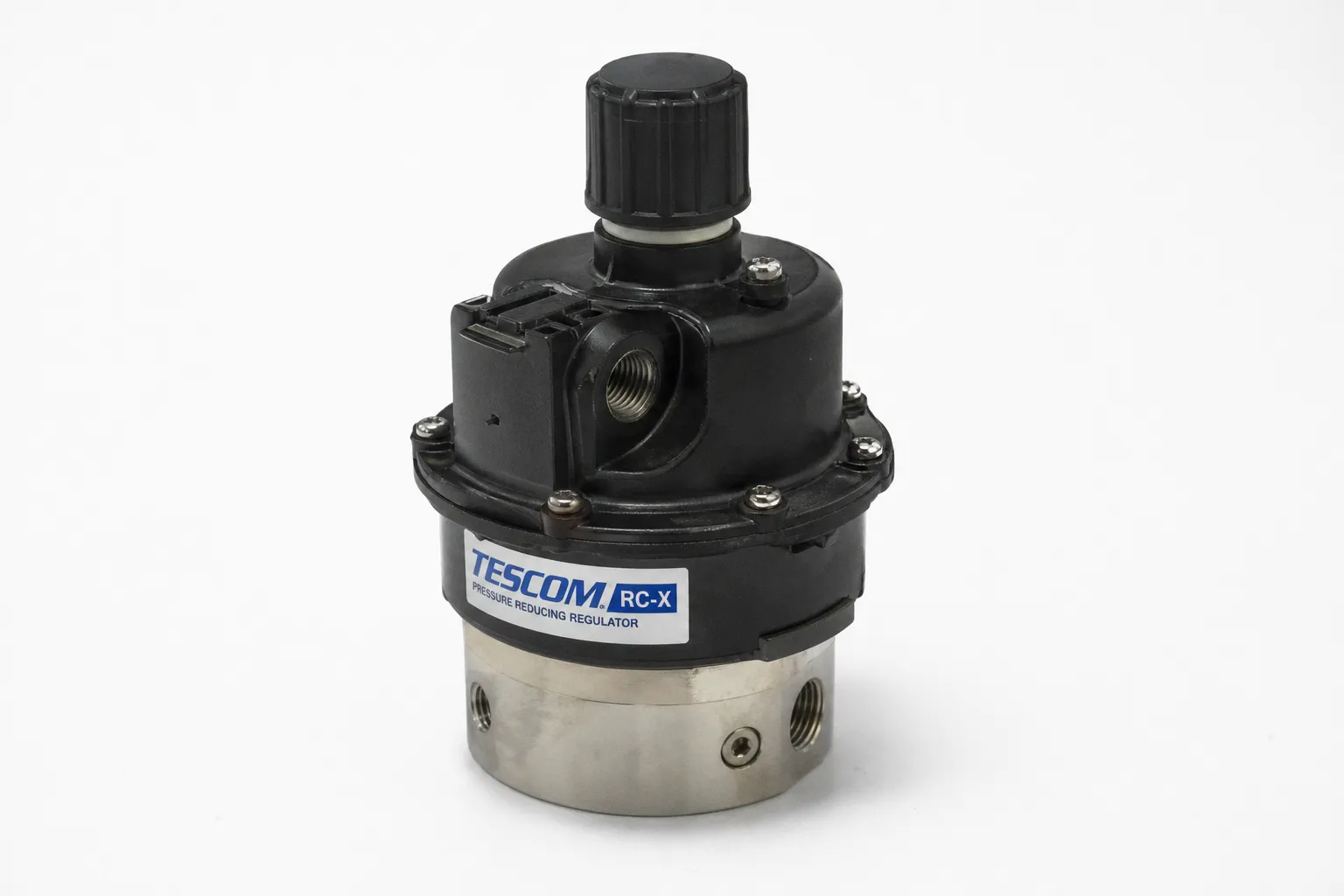
Emerson Launches TESCOM RC-X Motorised Control Valve
For teams working with pumps, valves, and dosing systems, the important point is not simply that another valve has entered the catalogue, but that the device is aimed at one of the most persistent problems on the ground: keeping chemical flow controlled when process conditions leave little room for guesswork. In real-world context, that makes the RC-X a component worth evaluating wherever dosing accuracy and pressure capability sit alongside operator safety and maintenance effort.
The practical problem behind the launch
During a shift, an operator rarely experiences flow control as an abstract specification. You see it when a treatment system is not delivering consistently, when a dosing adjustment takes too long, or when the process demands a response that a manually adjusted valve cannot provide easily. If the chemical injection rate is too high, material may be consumed unnecessarily; if it is too low, the intended treatment may not be achieved. The result is additional attention from the person standing next to the equipment, often under conditions where operator fatigue is already a factor.
The TESCOM RC-X is positioned specifically as a motorised injection rate control valve, with precise flow control as its central purpose. That gives the launch a clear operational angle: the valve is intended to support more controlled dosing in chemical injection systems, including applications where pressure is high. We should be careful, however, not to treat the product announcement as proof that it will solve every dosing problem. The actual benefit will depend on the complete installation, the chemical service, the control strategy, and how well the valve matches the existing equipment.
What to check before specifying it
The first question is whether your application genuinely needs a motorised injection rate control valve, rather than a different form of regulation. If the process requires frequent or fine adjustment, motorisation may be relevant; if the duty is stable and rarely changed, the installation may need a different justification. The point is to begin with the operator’s task and the process requirement, not with the product name.
Next, confirm the pressure conditions and the required flow-control range for the specific line. Emerson’s announcement describes the RC-X as intended for high-pressure applications, but that is not the same as a universal approval for every pressure, temperature, or chemical combination. Ask for the applicable operating limits, compatibility information, control input requirements, and maintenance instructions before placing the valve into a live system.
It is also worth mapping the valve into the existing control architecture. If-then thinking helps here: if the RC-X is expected to respond automatically to a process signal, then the signal path, actuator behaviour, fail position, and local override need to be understood; if the operator will still make frequent adjustments at the equipment, then tactile feedback, access, and visibility remain part of the design decision. A motor does not remove the need for a clear human interaction model.
Why this matters for equipment teams
For a catalogue or replacement decision, the RC-X should be treated as a candidate for a defined duty, not as a drop-in answer by default. Compare it against the current valve arrangement using the measures that matter on the ground: dosing stability, adjustment effort, pressure suitability, integration work, inspection access, and the likely effect on operator workload.
The launch is therefore most relevant to engineers and maintenance teams reviewing chemical injection and high-pressure flow-control points. Before moving forward, ask Emerson or the distributor for the full technical documentation and confirm the product against the actual service conditions. The right valve is the one that gives the operator predictable control at the point of use, with enough feedback and support to make the daily task easier rather than simply adding another powered component to the line.