Kennedy Space Center: pre-visit checklist and entry logistics
You bought the tickets. Good. That is roughly ten percent of the work. The other ninety percent is what the Kennedy Space Center Visitor Complex does not make especially prominent during booking: the…
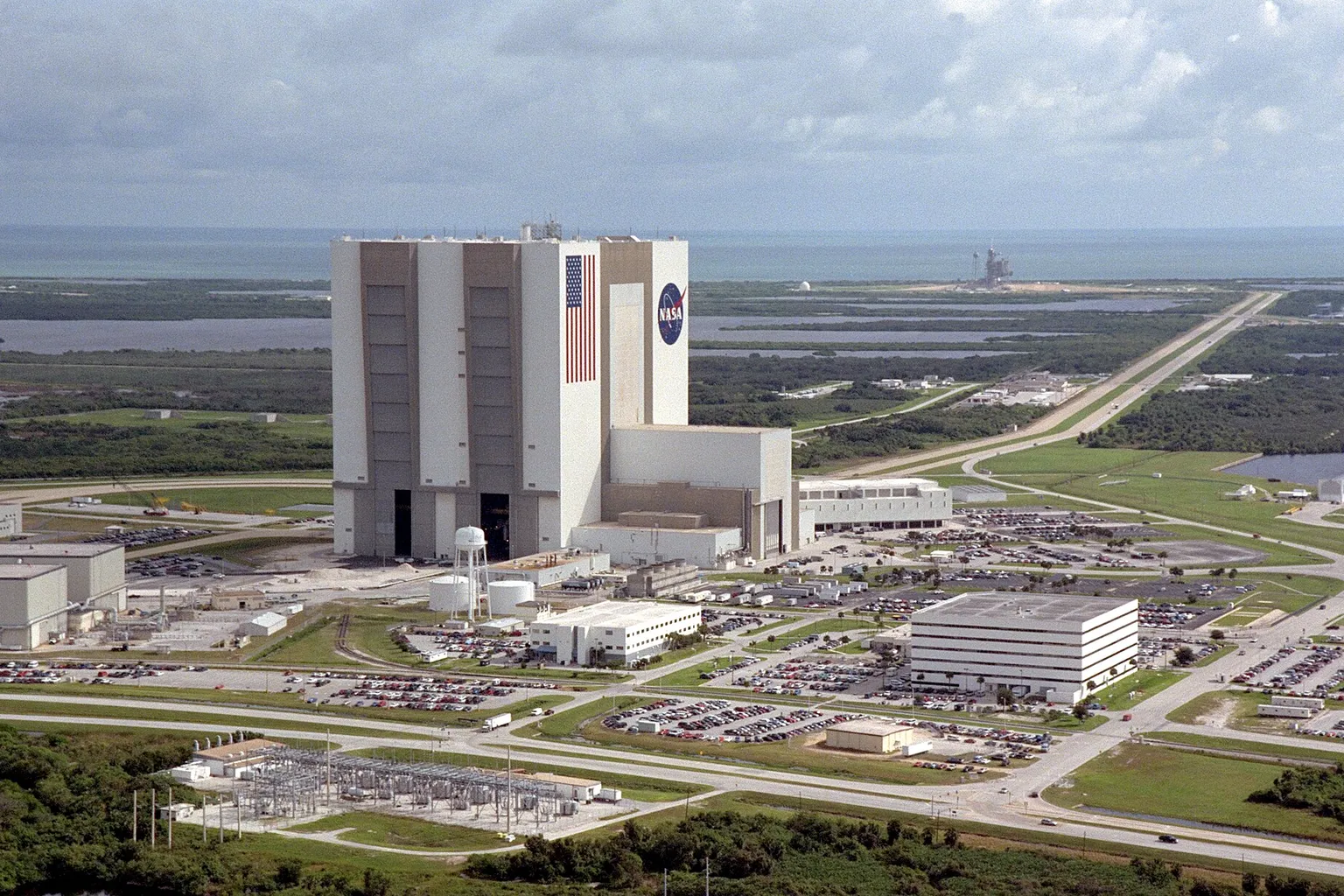
You bought the tickets. Good. That is roughly ten percent of the work. The other ninety percent is what the Kennedy Space Center Visitor Complex does not make especially prominent during booking: the magnetometer queue, the bus tour cutoff, the parking transaction, the rides with hidden height minimums, and the small museum of upgrades that standard admission quietly does not include.
 Merritt Island
Tickets and prices
Kennedy Space Center
Day trip — Available today and tomorrow
fromUSD96.41
Check availabilityOfficial ticket · Two-day adult pass
fromUSD89
Check availabilityBox office and online booking
The recurring mistakes are predictable. Visitors arrive with prohibited items in the car, reach the gate after the last bus has left, or discover that the experience they assumed was part of admission requires a separate reservation. None of those problems is especially complicated. They are simply distributed across different parts of the visitor flow, which means the booking page does not solve the day for you.
This is the pre-visit checklist that belongs next to the ticket confirmation. The booking flow is built to complete a purchase. Your job is to turn that purchase into a workable day.
The ticket is the easy part — digital entry is non-negotiable
If there is one decision that reliably saves time, it is buying online in advance. The Kennedy Space Center Visitor Complex uses a tiered entry process, and the practical difference is whether your ticket is already available as a barcode when you arrive.
With a digital ticket, you can bypass the ticket sales counters and proceed toward the security turnstiles at the main entrance. Without one, you queue at the sales counter first and then join the security line. It is not a dramatic complication, but it is an unnecessary second queue at the exact point in the day when most visitors are trying to get inside and establish their route.
Digital tickets are not a convenience upgrade. They are an admission lane.
That distinction matters because the visitor complex is not a venue with several equally useful gate options. There is effectively one main funnel into the experience, and pre-booked visitors move through it with fewer administrative steps. If you are deciding between buying online and buying at the gate, the online option is the sensible default. Walk-up sales exist for people who did not plan ahead; they are not an advantage for people who deliberately postpone the purchase.
Have the barcode ready before you reach the entrance. A phone with a charged battery is the obvious requirement, but it is worth treating the ticket as a document rather than as something you will retrieve at the last moment. Open it before leaving the car, make sure the brightness is sufficient for scanning, and keep the booking details accessible if your group is carrying several tickets.
Standard admission includes a substantial part of the complex:
- Space Shuttle Atlantis
- Gateway: The Deep Space Launch Complex
- Heroes & Legends
- Universe Theater shows
- IMAX films
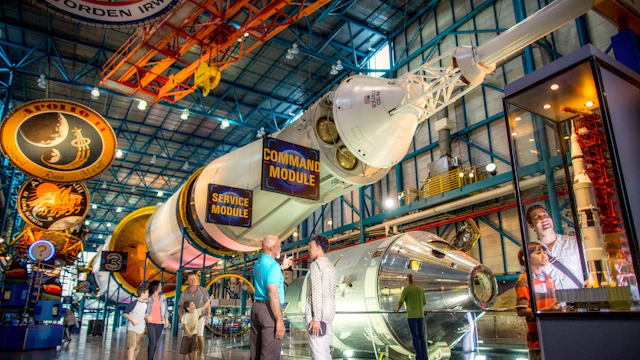
- The official KSC Bus Tour to the Apollo/Saturn V Center
That is a full day of material, not a stripped-down entrance pass. The boundary appears when you begin adding specialized experiences. Standard admission gets you through the main attractions and onto the included bus tour, but it does not automatically convert every advertised activity into part of your ticket.
This is also why the admission product should be read as a route through the complex rather than as a simple permission to enter. The ticket gives you access; it does not decide the order in which you should use that access.
What the magnetometers actually care about
The visitor experience becomes procedural as soon as you reach security. Every guest passes through metal-detecting magnetometer screening, and bags are inspected. There is no general priority route for families, no standard skip-the-line purchase that removes the checkpoint, and no reason to assume that a small prohibited item will be treated as harmless.
The restrictions are operational, not decorative. Items that should stay in the car include:
- Firearms and ammunition, including items carried under a concealed-carry permit and weapons carried by off-duty law enforcement
- Pepper spray
- Knives or blades of any kind
- Glass containers
- Alcohol
- Drones, including unmanned aircraft systems
- Large luggage and oversized hard-sided coolers
The important point is not simply knowing the list. It is understanding what happens when you get the list wrong. There is no convenient bag-check holding area where you can leave a prohibited item and collect it after the visit. If something is not permitted, you will need to take it back to the vehicle. With the parking area potentially a significant walk from the entrance, that turns a small packing error into a real interruption.
The best security strategy is therefore boring: pack lightly, leave questionable items behind, and inspect every bag before driving to the complex. A small personal bag is easier to open, easier to carry through the day, and less likely to contain something that creates a return trip to the parking lot.
The restrictions also explain why arrival time should not be measured only against the posted closing time. A visitor who reaches the complex with an overpacked vehicle, a prohibited item, or a group that is not ready for screening has already used part of the day before seeing an exhibit. Entry logistics are not separate from the itinerary. They are the first part of it.
The security framework is consistent with the setting: the Visitor Complex sits on active NASA property, and the screening rules are not an area for negotiation. The booking process could surface them earlier and more prominently, but the visitor still has to do that preparation independently.
The Apollo/Saturn V bus tour clock is the real schedule
The most consequential constraint in the visitor flow is the bus tour cutoff. The KSC Bus Tour to the Apollo/Saturn V Center is included in standard admission, but it does not operate as an attraction you can postpone indefinitely. It follows a fixed departure window, and the last bus leaves 2.5 hours before the visitor complex closes.
Entry to the visitor complex itself closes 1 hour before closing. That creates the following relationship:
| Window | Cutoff |
|---|---|
| Last entry to visitor complex | 1 hour before closing |
| Last bus tour departure | 2.5 hours before closing |
| Visitor entry remains open after the final bus departure | 90 minutes |
That final ninety-minute period is not a late-arrival buffer for the bus tour. It is simply the period during which visitors may still enter the complex after the final bus has departed. Arriving during it may get you through the gate, but it cannot restore access to a bus departure that has already passed.
Arrive by closing minus 2.5 hours, or do not expect the bus.
This is the number to calculate before leaving the hotel. Start with the day’s posted closing time, subtract two and a half hours, and treat the result as the practical arrival deadline if the Apollo/Saturn V Center is part of your plan. The formal last-entry cutoff is later, but it is not the deadline that matters for the headline attraction.
The distinction is easy to miss because both times concern entry to the same property. They do not provide the same experience:
- Arriving before the bus cutoff preserves access to the bus tour and the Apollo/Saturn V Center.
- Arriving after the bus cutoff may still allow entry to the visitor complex, subject to the posted entry rules.
- Arriving after the final-entry cutoff means the day is no longer available, even if the parking lot is accessible.
Do not build the itinerary around the phrase “we will see the bus tour later.” The bus tour is the fixed element. Exhibits, films, and indoor galleries are easier to fit around it because they remain within the visitor complex’s broader operating window. The tour should be protected first; the flexible attractions can follow.
The bus route is also the point at which the scale of the site becomes clear. The Apollo/Saturn V Center is not simply another room near the entrance. The tour determines when you leave the main complex and when you return to the rest of the visit. That makes the departure time more important than the order of most individual exhibits.
A practical sequence is to enter with enough time to clear security, orient yourself, and reach the bus departure area without treating the entire morning as spare time. Once the bus portion is secure, you can make more informed decisions about Atlantis, Gateway, Heroes & Legends, the theaters, and the remaining exhibits. If you reverse that order and let the first galleries absorb the morning, the missed bus cannot be repaired later.
Check the closing time on the specific day of your visit. Do not use a generic memory of the complex’s hours, and do not assume that a ticket purchased for a date removes the need to check the schedule. The relevant question is not only whether the complex is open. It is whether you can arrive before the last bus leaves.
Parking, pets, and the logistics nobody reads
Parking is a separate transaction from admission. The Visitor Complex charges at the entrance plaza, before you reach the security turnstiles, and the published tiers are:
- Motorcycles: $5
- Standard automobiles: $15
- Oversized vehicles and RVs: $20
Cash and card are accepted. The parking fee is not folded into the admission price, so budget for it as a separate step when you arrive. The booking flow presents parking as a parallel system, which is mildly inconvenient but at least straightforward: the ticket gets you into the complex, while the parking payment handles the vehicle.
The more useful parking decision is not how to pay. It is what stays in the car. Prohibited items, unnecessary luggage, oversized coolers, and anything that will make security screening slower should be dealt with before you walk toward the entrance. Returning to the vehicle is possible, but it is not a graceful part of the itinerary.
Pets are not permitted inside the visitor complex. Service animals are handled under applicable ADA protocols, but a family dog cannot accompany you through the exhibits. The on-site solution is free, air-conditioned pet kennels. No reservation is required, and there is no fee for using them.
That kennel service is one of the more practical details on the property because it addresses the actual problem rather than leaving visitors to improvise. If you are traveling with a pet, account for the drop-off and collection as part of the arrival and departure sequence. Do not leave the decision until the security line.
Accessibility is broad across the complex. The principal visitor areas are largely walkable, most indoor exhibits can be reached without stairs, and buses serving the Apollo/Saturn V Center accommodate standard mobility devices. Those general provisions do not eliminate the value of calling ahead when your group has specific accommodation needs. Questions about mobility devices, transfer requirements, service animals, or the exact handling of a particular need are easier to resolve before the visit than at the entrance.
The same principle applies to the physical scale of the day. The complex combines large exhibit spaces, bus transportation, theaters, and outdoor movement. Even when an attraction is technically accessible, the distance between parts of the visit can affect how comfortable the itinerary feels. Build the schedule around the fixed bus departure and leave enough flexibility for the group’s pace rather than treating every available minute as an opportunity to add another stop.
What your admission does not include
Standard admission is generous, but it has hard edges. The booking process can make additional experiences look like natural extensions of the main ticket, even though they are separate products with their own availability and, in some cases, their own scheduling pressure.
The headline exclusions include:
- Chat With An Astronaut — a small-group session with a flown astronaut; separate ticket
- KSC Explore Tour — a guided tour offering deeper access beyond the standard bus route; separate ticket
- Astronaut Training Experience (ATX) — a multi-hour hands-on training simulation; separate ticket
These are not merely decorative upgrades. They are distinct experiences, and each one changes how much time you need to reserve in the day. Adding one after you have already planned a full route through the standard attractions can create a scheduling conflict. The issue is not only the extra cost. It is that the add-on may become the fixed appointment around which the rest of the visit must be arranged.
The booking flow treats the add-ons as footnotes. They are not footnotes — they are the product.
If one of these experiences is central to the visit, decide that before finalizing the rest of the itinerary. Add it during booking where possible, review the available time, and then protect that appointment in the same way you protect the bus tour. Popular astronaut sessions and specialized tours can sell out, particularly during busy periods, so leaving the decision until arrival is a poor strategy.
Dynamic pricing is another reason to avoid treating add-ons as an afterthought. The total cost can change the character of the day: a standard admission visit, a visit with one scheduled specialist experience, and a visit built around multiple upgrades are not the same product. Decide what you actually want to do before the purchase becomes a stack of individually reasonable additions.
There is also a height restriction that belongs on the pre-visit checklist. The Spaceport KSC ride inside the Gateway complex has a 44-inch minimum height requirement. That is not the sort of rule to discover after waiting with a child who cannot board. Check the heights of everyone in the group before you build the Gateway portion of the route around that ride.
The height requirement is a reminder that family planning at the Visitor Complex is not only about admission categories. A child may have access to the overall complex while being unable to use a particular ride. Separating those two questions prevents a disappointing surprise at the attraction entrance.
A useful way to think about add-ons is to divide the day into three layers:
1. The included core — the main exhibits, shows, films, and standard bus tour covered by admission.
2. The fixed scheduled elements — the bus tour and any separately booked experience with a specific time.
3. The optional remainder — galleries and activities that can be fitted around the fixed elements.
That order is more reliable than trying to visit the complex in the order attractions appear on a sales page. Sales pages are designed to present possibilities. A workable itinerary has to respect timing, movement, screening, and the group’s actual stamina.
Closures worth knowing
Two dates in the calendar matter more than the rest:
- November 26, 2026 — closed for Thanksgiving Day
- December 25, 2026 — closed for Christmas Day
Outside those dates, the complex operates daily, but confirm the posted hours for the day you plan to visit before driving to Merritt Island. The closing time controls the bus deadline, and the bus deadline controls whether the visit includes the Apollo/Saturn V Center.
This check should happen even if the tickets are already purchased. A dated ticket answers the admission question; it does not replace a review of the operating schedule, transportation timing, or any special instructions attached to the visit.
The same calendar check is useful when planning around a wider Florida itinerary. A late start may look harmless when the destination is described as open for the day, but the final bus departure creates an earlier functional deadline. Traffic, parking, security, and walking time all consume the margin before that cutoff. A plan that works on paper at the hotel can become impossible once those steps are included.
The pre-visit sequence that actually works
The simplest way to reduce friction is to handle the decisions in the order the site will impose them:
1. Book the digital admission ticket. Keep the barcode accessible on your phone and confirm the visit date.
2. Check the day’s closing time. Calculate the last bus departure by subtracting 2.5 hours.
3. Decide whether specialized experiences matter. Add Chat With An Astronaut, KSC Explore Tour, or ATX before they become an arrival-day decision.
4. Check height restrictions. The Spaceport KSC ride requires guests to be at least 44 inches tall.
5. Inspect every bag. Remove weapons, blades, pepper spray, glass, alcohol, drones, large luggage, and oversized hard-sided coolers.
6. Plan the vehicle stop. Leave prohibited or unnecessary items in the car, and budget separately for parking.
7. Arrange for pets. Use the free air-conditioned kennels if needed; service-animal questions should be resolved before arrival.
8. Protect the bus window. Treat the last departure as the real arrival deadline, not the later final-entry cutoff.
9. Leave flexible attractions for after the fixed commitments. The included exhibits and films are easier to rearrange than a missed bus or a missed reservation.
None of this is complicated, but each item prevents a different kind of failure. The value of the checklist is that it turns scattered conditions into one sequence. Without that sequence, visitors tend to optimize the wrong thing: they arrive as late as possible because the complex remains open, or they spend the first part of the visit browsing before discovering that the bus tour has its own clock.
The verdict
Stop treating the ticket as the project. The ticket is the entry condition. The project is the day: how you sequence the bus tour, what you leave in the car so security does not send you back, which add-ons you commit to before availability becomes a problem, and what time you actually pull into the parking plaza.
The Kennedy Space Center Visitor Complex is well-run and worth the trip, but it rewards visitors who arrive with a plan. Buy the digital ticket. Check the closing time. Subtract 2.5 hours to find the bus deadline. Check the bag restrictions, the height requirement, the parking arrangement, and the status of any specialized experience you want to book.
The final ninety minutes after the last bus departure are still an entry window, not a second chance at the tour. That distinction is the piece most likely to change the day. Get it right, and most of the avoidable friction disappears before you reach the gate.