New England Aquarium Tickets: A Pre-Booking Checklist
You didn't drive to Central Wharf to study the gate queue. You came for the Giant Ocean Tank, the African penguin colony, Myrtle the green sea turtle, and — if you're being honest — to watch a kid…
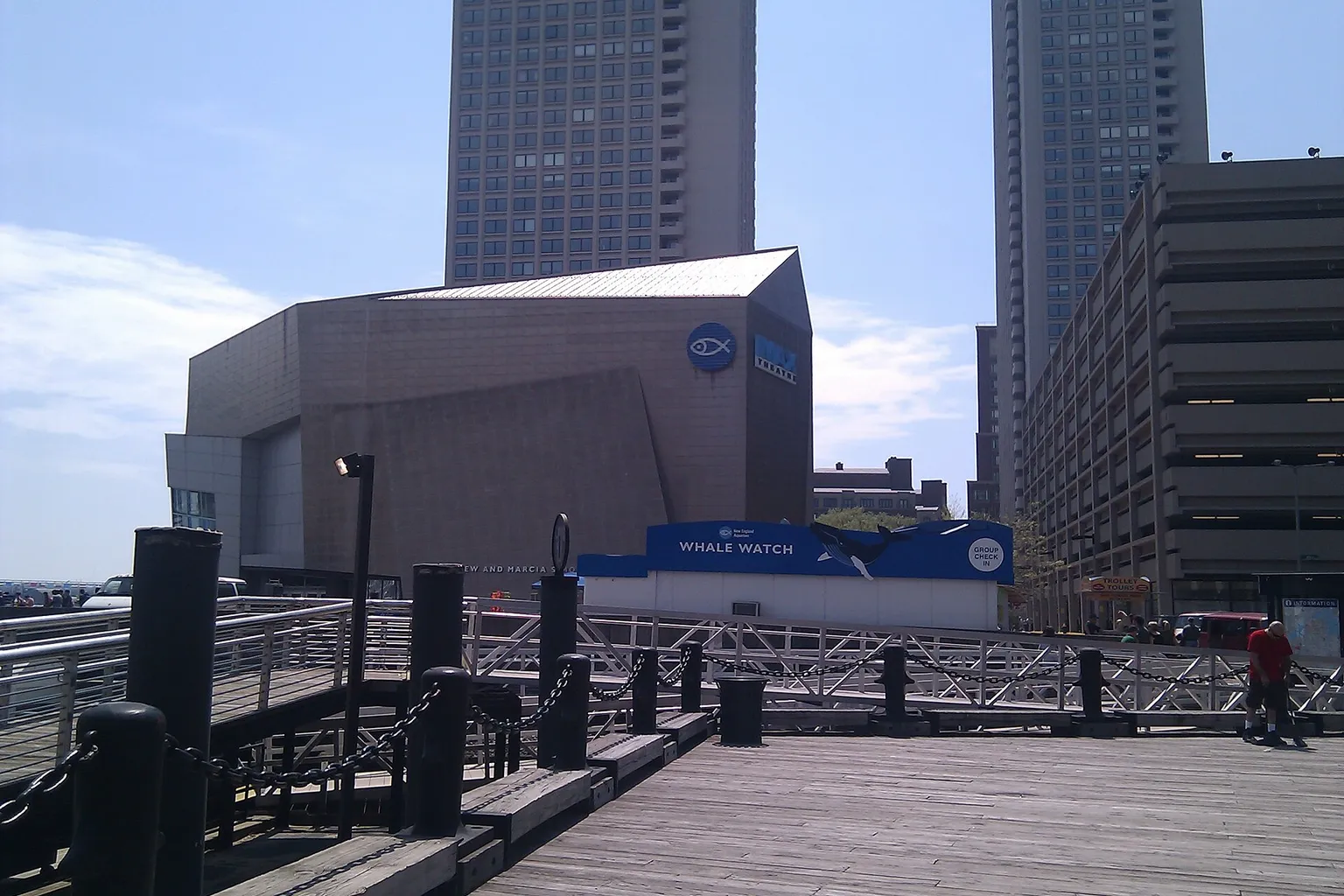
You didn't drive to Central Wharf to study the gate queue. You came for the Giant Ocean Tank, the African penguin colony, Myrtle the green sea turtle, and — if you're being honest — to watch a kid lose their mind the first time a sand tiger shark glides past the acrylic. None of that happens if the box office turns you away at 10:14 on a Saturday because the aquarium has reached capacity.
 Boston
Tickets and prices
New England Aquarium
Combo ticket — Skip-the-line entry & optional film
fromUSD38.31
Check availabilityOfficial ticket — Standard admission and movie bundle
fromUSD44.95
Check availabilityI treat ticket flows the way I treat supply chains: every step that doesn't add value is friction, and friction is the difference between a memorable visit and a frustrated one parked on Atlantic Avenue. New England Aquarium tickets are not complicated, but they do punish casual planning. The important variables are the date, the entry time, the ticket type, the discount rules, and whether you're trying to combine the aquarium with a cruise or another Boston attraction.
This is the checklist I run before clicking checkout. Use it. Skip the noise.
Pre-Booking Is Not Optional on Peak Days
The aquarium uses timed-entry reservations. That word reservation does a lot of work, and many visitors read it as a polite suggestion. On busy dates, it is better understood as your best protection against arriving after the available capacity has been taken.
Peak periods include summer weekends, the days around Memorial Day and Labor Day, school vacation weeks, and holidays that put families in Boston at the same time. A Saturday visit during one of those periods is not the moment to experiment with a same-day walk-up. The box office may have a limited allotment for visitors who have not booked ahead, but the existence of that allotment is not a guarantee that it will still be available when you arrive.
Outside the busiest windows, walk-up admission may be easier. It still costs you time, though, and it leaves the most important part of the day uncertain. You may spend the first stretch of your visit waiting at the counter, only to discover that the next available entry time does not fit your lunch reservation, harbor cruise, or return train.
Walk-up isn't a backup plan. It's a coin flip with your Saturday.
Book the timed entry online when the date matters. Pin the slot to the rest of your day like any other hard appointment. If you are building an itinerary around a Whale Watch, a Boston Duck Tour, a ferry, or a restaurant reservation, treat the aquarium entry time as one fixed point in that schedule rather than something you will solve after breakfast.
There is another reason to book carefully: a ticket for the right day may still be the wrong ticket if the entry window conflicts with the rest of your plans. A morning aquarium reservation followed by a cruise can work well, but only if you allow time to leave the building, cross the waterfront, find the correct boarding location, and absorb the usual Boston transit delays. A tight sequence may look efficient on a screen and feel ridiculous in person.
Before checkout, confirm:
- the visit date and timed-entry window;
- the number of paying adults and children in the party;
- whether anyone qualifies for a resident, accessibility, or other admission category;
- whether a movie or partner attraction is genuinely part of the plan;
- the cancellation, exchange, or rescheduling terms attached to the ticket you are buying.
That last point is not administrative trivia. Weather, illness, traffic, and an overambitious itinerary can all turn a carefully chosen time into an inconvenient one. The current ticket terms and official calendar should be the final authority.
Decoding the Ticket Tiers Without the Marketing Haze
The pricing page can read like a tier list designed by committee. The useful distinction is simpler: decide whether you need basic aquarium admission, an add-on experience, or a separate harbor activity.
| Ticket type | What it generally covers | When it makes sense |
|---|---|---|
| Standard aquarium admission | General aquarium access, including the Giant Ocean Tank and the main exhibit areas | The default choice for a first visit or a return visit focused on the exhibits |
| Aquarium admission with a Simons Theatre movie | Aquarium entry plus a scheduled film at the in-house theater, subject to the available program and showtime | A longer visit, a rainy day, or a group that actually wants a sit-down film |
| Whale Watch option or add-on | A seasonal Boston Harbor whale-watching experience handled under its own schedule and availability | A separate excursion that you are prepared to plan around, not an automatic extension of aquarium admission |
I'm skipping the dollar figures because the live widget wins, and any number printed here will eventually age badly. Check the current New England Aquarium ticket prices at the point of purchase, especially if you are comparing a weekday with a weekend or a standard ticket with a package.
The logic is more durable than the number. A combo only pays off if you would genuinely use the extra component. If nobody in your group wants to watch a film, the movie package is not a bargain; it is an unused line item. If you are traveling with young children, look at the showtime as carefully as the price. A movie can provide a useful reset after the exhibits, but it can also turn into a fixed obligation when the group is tired and ready to leave.
The Whale Watch is a separate planning problem. It may be presented alongside aquarium admission, but the cruise has its own departure time, weather conditions, availability, and boarding requirements. Do not assume that a timed aquarium entry ticket automatically reserves a place on the boat. If the cruise is important to your day, verify the cruise reservation separately and leave a realistic buffer between activities.
This is where many Boston aquarium online tickets comparisons become misleading. Two options can appear adjacent on a booking page without being interchangeable in practice. One may grant entry to the building; another may bundle a theater program; a third may refer to a cruise that begins somewhere else and operates on a completely different schedule.
Resident Discounts Have a Landmine Built In
Residents of Massachusetts, Connecticut, Maine, New Hampshire, Rhode Island, and Vermont may qualify for a resident discount on eligible aquarium admission. The exact amount, eligible products, and proof requirements belong to the current ticket rules, so check them before assuming that the discount applies to every person or every package in your cart.
Bring valid identification if you are claiming the resident rate. A screenshot, an expired document, or a vague explanation that the ID is in the car may not be enough. The practical rule is simple: if the discount depends on residency, have the required proof available before you reach the entrance.
The trap is the blackout calendar. Resident discounts are not necessarily available on every date. Blackout periods commonly include selected summer weekends and holidays within the Memorial Day–Labor Day season, but the calendar and current terms control. The date you choose can matter as much as the state listed on your ID.
A resident discount is not a permanent price category. It is a date-sensitive benefit with rules attached.
Do not read a blackout as a total ban on savings, either. A blackout can remove the New England resident discount while leaving other applicable discounts, membership benefits, free-admission categories, or special offers governed by their own rules. Inside a blackout period, the resident rate may not be available; that does not mean every other admission pathway disappears.
The clean way to handle it is to separate three questions:
1. Do I qualify as a resident?
Check the eligible states and the accepted proof of residency.
2. Is my selected date inside a blackout period?
Compare the date with the aquarium's current resident-discount calendar rather than relying on a remembered rule from a previous visit.
3. Does the discount apply to the exact product in my cart?
Standard admission, combo packages, special events, and partner products may not share the same terms.
If the date is flexible, an off-peak visit may give you access to the resident rate and a less stressful experience at the same time. If the date is fixed, price the visit using the rate actually available for that day. Do not build a budget around a discount that the calendar has already excluded.
Partner Discounts and the Whale Watch Loop
Partner offers can be useful, but they are also where ticket assumptions multiply. A Boston Harbor Whale Watch booking or a Boston Duck Tour confirmation may provide access to a discount on eligible aquarium admission under the current partner terms. These offers are typically tied to proof of the partner purchase and may need to be redeemed at the box office rather than through the standard online checkout.
That distinction matters. A partner confirmation is not automatically a discount code, and a discount available at the counter may not appear as a reduced price in the online cart. Before relying on the offer, check:
- whether the partner ticket must be purchased first;
- whether the aquarium discount is available online, in person, or both;
- which admission category it applies to;
- whether it covers everyone in the party or only the named ticket holder;
- whether the offer has date limits, blackout dates, or expiration rules;
- whether the aquarium admission must be used on the same day as the partner activity.
The discount may apply only to standard aquarium admission and not to a movie package, special event, or the Whale Watch itself. That is not a contradiction; it is simply a narrower offer than the phrase “partner discount” suggests.
Bring the confirmation in a usable form. If the terms require a barcode, booking number, or named reservation, make sure it can be retrieved without a weak cellular signal or a frantic search through email. A paper backup is not glamorous, but neither is standing at the counter with a dead phone while the rest of the party waits.
The timing problem is even more important than the price. A cruise has a departure time. The aquarium has an entry window. A Duck Tour follows its own route and schedule. These are three separate moving parts, not one combined attraction. If you book them all on the same day, avoid treating every minute between reservations as available time. Leave room for boarding procedures, waterfront traffic, food, bathrooms, and the possibility that children will need to stop at every exhibit that was not in your original plan.
Do not assume that a partner booking guarantees same-day aquarium access. Reserve the aquarium entry time if the date is busy, then confirm that the partner offer can be used with that reservation. If the offer requires an in-person transaction, factor the box-office stop into the schedule instead of arriving at the aquarium at the last possible minute.
Free Admission Categories and Accessibility Details
Admission categories for young children and visitors with disabilities deserve more attention than they usually receive. The rules can be easy to miss when the booking page is organized around standard adult tickets and promotional packages.
Children age two and under may be admitted free under the aquarium's current policy. Free does not mean invisible, however. A child who enters the building still matters for the size and composition of your party, so include the child when the reservation system asks for the number of visitors or when staff need to account for your group at entry.
For visitors using wheelchairs or visitors with visual impairments, the aquarium may provide free admission under specified conditions. Confirm the current policy before booking, because eligibility, accompanying-visitor rules, and reservation procedures can be more specific than a short summary suggests. The goal is not to make a family negotiate the rules at the gate after a long trip.
If someone in your party has access needs, use the reservation process to identify the party accurately and contact the aquarium in advance when the online options are unclear. That is particularly useful when you need information about routes, elevators, seating, service animals, sensory considerations, or an accompanying person. Accessibility is not just a question of whether someone can enter; it is also a question of whether the visit can work without avoidable surprises.
For young children, the operational details are equally real. A toddler may be free but still need a stroller plan, a bathroom stop, a quiet break, and a realistic pace. The aquarium is full of visual stimulus. A visit that looks short on the calendar can feel long when the youngest member of the group has reached their limit.
The practical preparation is modest:
- carry the identification or documentation required by the relevant admission rule;
- make sure the reservation reflects the whole party, including visitors who are free;
- check accessibility information before the visit if anyone needs a particular route or accommodation;
- do not confuse a free-admission category with a guaranteed walk-up place on a sold-out date;
- ask the aquarium directly when the ticket page does not answer a specific access question.
The point is not to create paperwork for its own sake. It is to keep a legitimate free or reduced admission category from becoming a last-minute dispute, and to make sure the ticket reservation matches the people who will actually arrive.
Hours, Last Entry, and the Two-to-Three-Hour Reality
Hours change by season, day of the week, special programming, and operational conditions. Standard schedules often place the aquarium in a daytime window, with longer or different hours during busy periods, but the official calendar is the source to check before you leave home. Do not plan from a search snippet or from a visit you made last year.
The final-entry rule deserves its own line in your planning. The last permitted entry is earlier than closing, and the exact cutoff may be listed on the daily schedule or attached to the ticket window. A late-afternoon ticket is not permission to arrive whenever convenient. If your reservation is for a specific time and you miss it, the staff may not be able to place you into another slot, particularly on a full day.
Give yourself more time than the driving estimate suggests. Central Wharf is not a frictionless arrival point. Parking, traffic, transit connections, weather, and the simple process of moving a family through a busy waterfront all take time. If the ticket window begins at a particular hour, aim to be nearby before that window rather than calculating an arrival that depends on every connection working perfectly.
Two to three hours is a useful working estimate for the aquarium, not a mandatory route through every exhibit. The Giant Ocean Tank can absorb a large part of that time if you let the viewing platforms set the pace. The penguin colony tends to hold attention. The Shark and Ray Touch Tank can turn a quick stop into a long negotiation, especially when children are involved. An animal presentation, a theater screening, or a meal extends the block.
Some visitors will move faster; others will want to stay longer. The mistake is not choosing the wrong duration. The mistake is treating the visit as a fixed ninety-minute errand and then stacking another reservation immediately afterward. Build the day around a two-and-a-half-hour aquarium block if you need a planning number, then add transit, food, and recovery time around it.
A simple schedule is usually stronger than an ambitious one:
- arrive near the waterfront with time to spare before the entry window;
- enter the aquarium without putting a second reservation on top of the first few minutes;
- let the main exhibits determine the pace;
- place a cruise or tour after a generous buffer, not directly after the expected exit;
- keep the final part of the day flexible if you are traveling with young children.
Annual closure dates also require care. Thanksgiving and Christmas Day are listed as regular closure dates, but those confirmed closures do not prove that no other closure or schedule change can occur. Severe weather, building operations, special events, or other circumstances may affect opening hours. Snowstorms can disrupt Boston travel and may also affect aquarium operations, even when the date is not a scheduled closure.
Check the official calendar on the day before the visit and again before setting out if the weather is poor. “Open” on a seasonal schedule is not the same as “operating normally under every condition.” If a storm is moving through the region, look for current notices and allow for transportation delays. The aquarium may be open while your planned route to Central Wharf is not functioning normally.
The Closing Verdict
Here's the audit, in plain English. The system is built for visitors who plan, and it becomes expensive in time and patience for visitors who do not. Timed entry reflects capacity. Resident discounts reflect a calendar rather than a permanent entitlement. Partner offers have their own redemption rules. Free-admission categories still need to be handled accurately. Hours and closures belong to the live calendar, not to a sentence copied from an old itinerary.
Read the ticket page as an operating document, not as background decoration. The product name tells you what you are buying. The date tells you which discount rules may apply. The reservation window tells you when to arrive. The fine print tells you whether an apparent bargain works for your actual group.
Do this: book timed entry online for a weekend, holiday, school vacation period, or summer date when the visit matters. Bring valid resident identification if you are claiming the resident rate. Check whether your date is blacked out before you calculate the savings. Confirm the current rules for free admission, accessibility, and accompanying visitors. Reserve the Whale Watch separately if you want it, and leave enough time between the boat and the aquarium to absorb real-world delays.
Don't do that: show up at the gate with a “we'll figure it out” attitude on a busy Saturday. Don't buy the movie combo unless someone in the group actually wants the film. Don't assume a partner confirmation automatically includes aquarium entry. Don't treat the resident blackout as a ban on every possible discount, but don't expect the resident rate to survive a date that excludes it. Don't build an itinerary around the aquarium's posted closing time without checking last entry. And don't assume that a scheduled open day is immune to weather-related changes.
The aquarium is worth the planning. Myrtle is worth the planning. The planning itself is not the memorable part of the visit, but it keeps the memorable part from being replaced by a queue, a missed boarding time, or a parking lot on Atlantic Avenue.
FAQ
Do I need to book tickets in advance for the New England Aquarium?
Are resident discounts available every day?
Does a whale watch ticket include aquarium admission?
Are children under two free to enter?
How much time should I plan to spend at the aquarium?
Photo: Robert Stern from USA / CC BY-SA 2.0 — Wikimedia Commons