Northwest Pump Acquires TechStar CNG to Streamline Alternative Fuel Infrastructure
According to a GlobeNewswire announcement, Northwest Pump & Equipment Co.
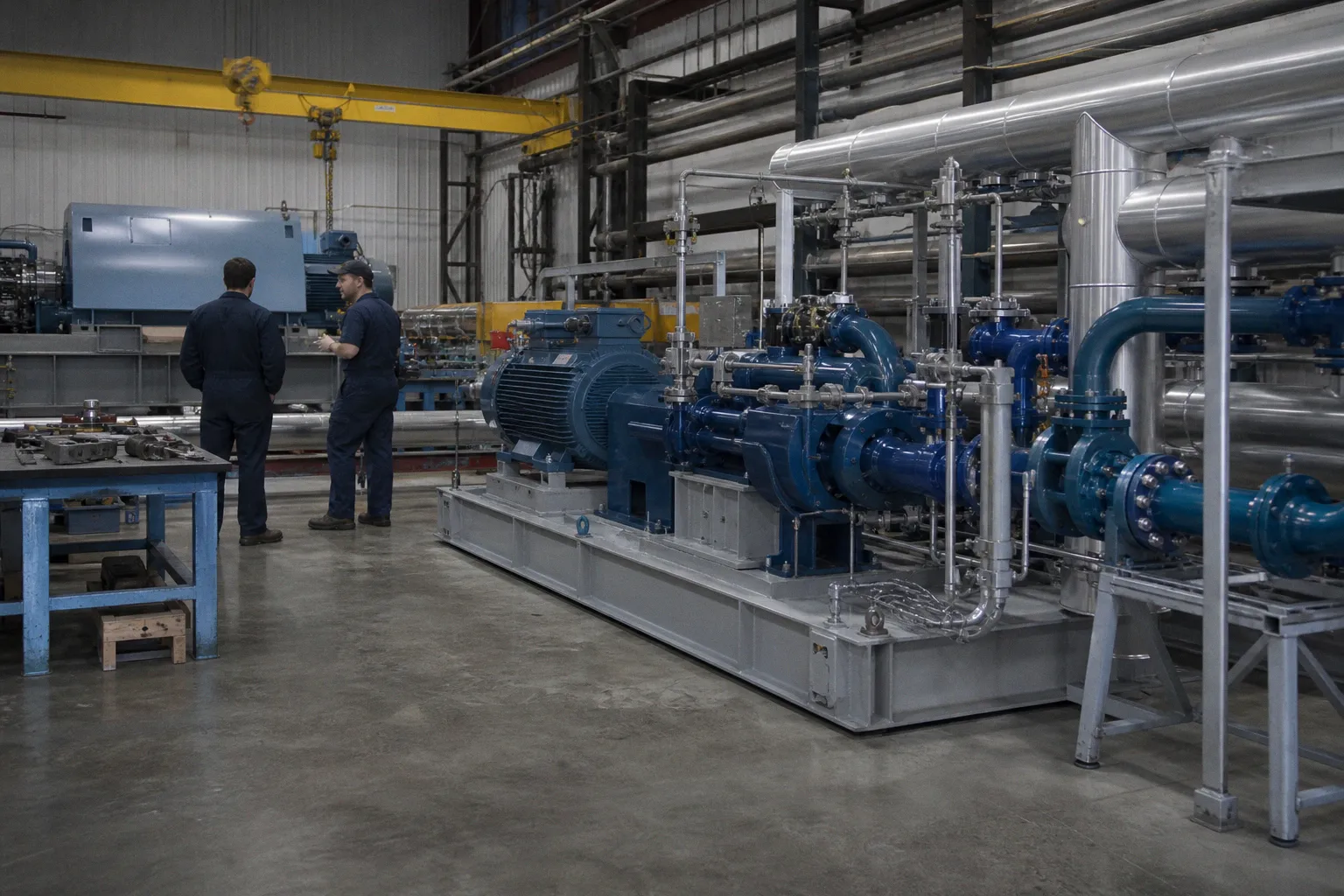
has acquired TechStar CNG Systems, LLC, framing the move as an expansion into renewable natural gas, hydrogen, and alternative fueling solutions. If you've ever watched an operator wrestling with a fueling manifold at the end of a long shift — gloves greasy, gauges flickering between CNG line pressure and the pneumatic bleed — you know exactly why the hardware behind a transfer matters more than the spec sheet on a quote. For anyone who has been piecing together pump skids and CNG packages from separate vendors, the combination is worth a closer look.
What's actually being stitched together
Northwest Pump & Equipment Co. is a name many of you already recognize from the rotating equipment side of the catalog — pumps, fluid handling, the kind of mechanical hardware that lives in a skid room. TechStar CNG Systems, LLC, by contrast, sits on the compression and dispensing side of alternative fuels — the systems that handle CNG at a station or fueling site. Read the two together and the picture is a vendor trying to shorten the physical distance between a gas source and the rest of the mechanical train that moves it. On the ground, that combination has implications for anyone who has historically had to integrate a pump skid with a separately sourced CNG package from a different supplier, and who knows the friction that creates during commissioning.
What to verify before you spec anything
If you're mid-project — or about to be — this is the moment to ask a few grounded questions rather than assume a smooth transition. First, confirm with your Northwest Pump contact whether existing TechStar CNG Systems parts, service contracts, and field support stay in place during integration, or whether you'll be rerouted through a new service channel. Second, clarify whether the combined catalog will be presented as a unified alternative-fueling platform or as two product families sharing a brand — that decision changes how your drawings get titled. Third — and this is the one that usually bites operators at 2 a.m. — ask about documentation: manuals, P&IDs, and the revision history your maintenance team relies on when something won't hold pressure. M&A transitions are exactly when that paper trail quietly renames files without telling you.
What to watch, and what it could mean for the floor
Right now the announcement tells us intent, not cadence. We don't yet know the integration timeline, whether TechStar's manufacturing footprint stays put, or how the renewable natural gas and hydrogen roadmaps will be sequenced against Northwest Pump's existing rotating equipment line. The honest read is this: if the two catalogs are genuinely unified around a single service experience, the operator's daily reality gets simpler — one truck roll, one support number, one set of drawings that agree with each other. If they aren't, you'll feel it as the usual post-acquisition drag: a longer phone tree, a parts list that doesn't quite cross-reference the way it used to. Either way, the practical move for your planning is simple — keep your current RFQs running, but flag the supplier change with your procurement and service leads so that when more details surface, nobody on your floor is surprised by a shifted number on a nameplate.