Branca Tower Tickets: Booking Traps and How to Avoid Them
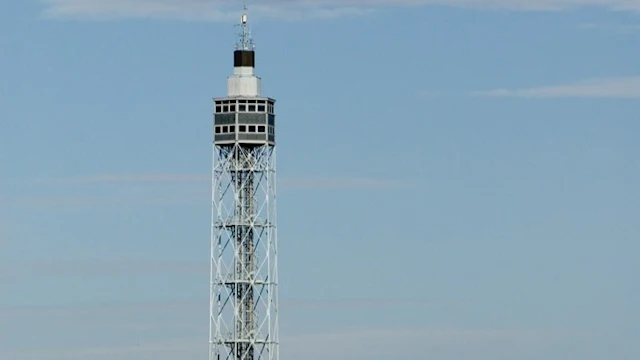
A Torre Branca visit is constrained by a 5-to-7-person elevator capacity and a 5-to-7-minute limit on the observation platform. The tower itself is 108.6 metres high. The operational constraint is not height.
It is throughput.
 Milan
MilanTickets and prices
Branca Tower
Entry ticket · 1-minute elevator ride
from€9
Check availabilityOfficial ticket · Tower visit
from€9
Check availabilityMost booking errors come from treating a ticket voucher as a timed fast-pass. It is neither. Online reservations generally place the visitor into a selected arrival window, but access remains first come, first served. The voucher must also be exchanged for a physical ticket at the on-site ticket office before boarding the elevator.
That changes the route. A visitor who arrives at the wrong gate, assumes priority access, or ignores weather closure rules can lose the useful part of the reservation before reaching the lift.
The ticket is an access credential, not a queue bypass
The main distinction between Torre Branca tickets is not digital versus physical. It is the difference between booking a visit window and securing immediate elevator access.
Online sales platforms may issue a voucher for a selected date or time range. That voucher confirms the booking conditions attached to the product. It does not remove the visitor from the operational queue. The tower handles access in small groups because the elevator and panoramic deck have a strict capacity limit.
At busy times, staff may issue numbered physical tickets. This is a queue-control mechanism. It is not an upgrade or an indication that an online visitor has priority. The number controls the boarding sequence within the site’s live capacity.
The practical sequence is:
1. Book the required visit option or time window.
2. Arrive at the official street entrance.
3. Present the online voucher at the ticket office.
4. Exchange the voucher for the physical admission ticket.
5. Wait for the assigned boarding sequence.
6. Take the elevator to the observation platform.
7. Leave the platform when the short visit window ends.
The exchange step creates additional latency. It is easy to miss when a booking page describes the product as an entrance ticket. Digital confirmation and physical admission are separate stages.
A booked slot defines eligibility. It does not define elevator priority.
This matters most for visitors building a dense Milan itinerary. Torre Branca is located in Parco Sempione, close to the Triennale di Milano and within the wider Cadorna area. A ticket that appears compatible with a museum entry, lunch reservation, or train connection may not be operationally compatible once queue time and voucher exchange are included.
What online booking does and does not provide
| Booking element | What it provides | What it does not provide |
|---|---|---|
| Selected date | A booking associated with a specific visit day | Guaranteed access in every weather condition |
| Selected time window | Eligibility to join the queue during the chosen period | Immediate boarding at that exact time |
| Online voucher | Proof of purchase or reservation | Direct access to the elevator |
| Physical ticket exchange | The admission document required before boarding | A reduction of the live queue |
| Third-party booking | An alternative sales channel and product format | Uniform refund protection during closures |
| Small-group elevator ride | Controlled capacity and panoramic access | Unlimited time on the observation deck |
The correct mental model is a constrained access system. Demand enters a queue. The elevator processes a small batch. The observation deck processes the same batch for a short period. Any assumption that bypasses one of those controls produces a higher error rate at the entrance.
Use Via Camoens 2. Do not route through the park
The official entrance is at Via Camoens 2. The gate is shared with the club JustMe. This is the access point to use for Torre Branca.
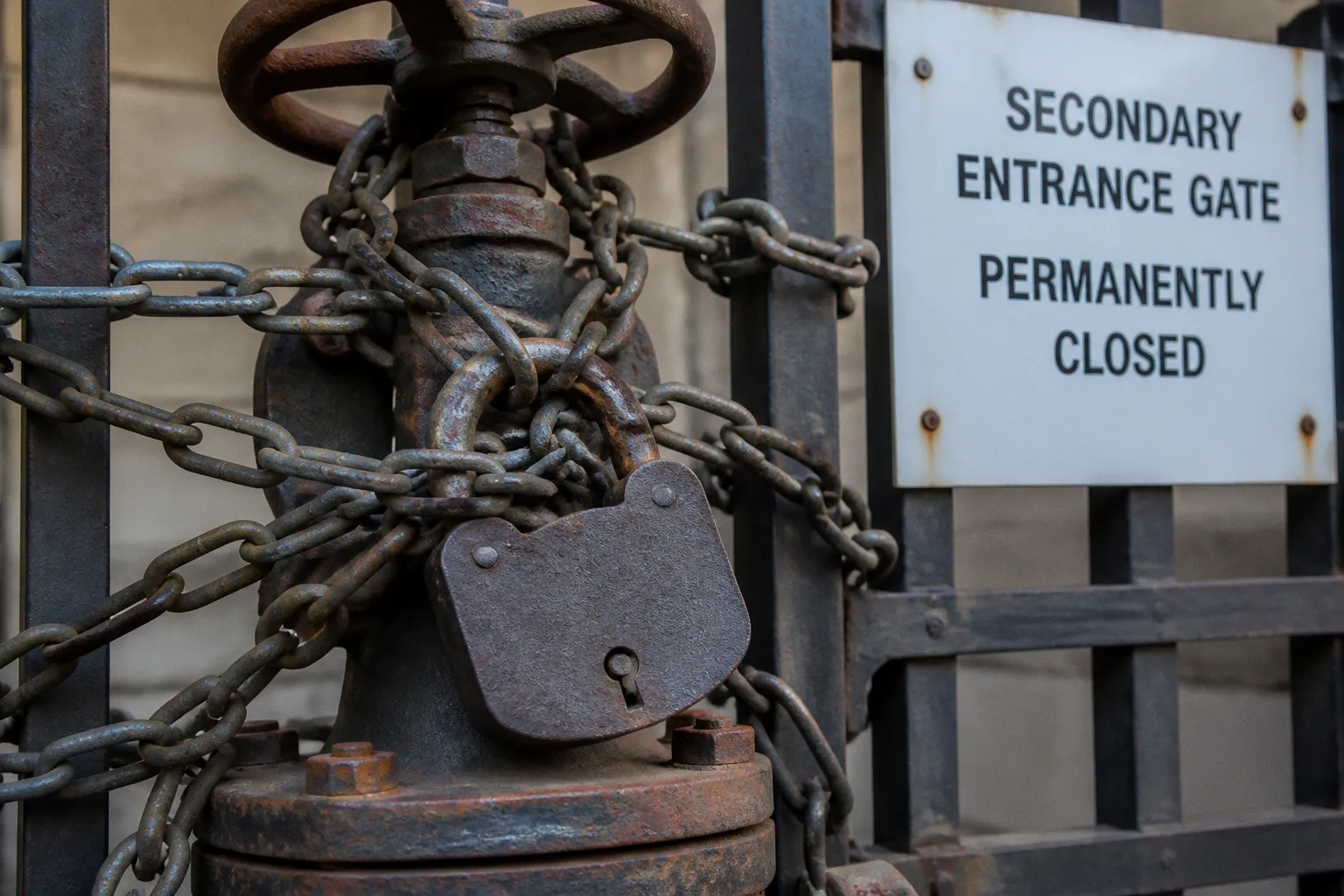
The secondary entrance inside Parco Sempione is permanently closed. A route through the park may look logical on a map because the tower stands inside the park complex. It is not a valid visitor path. The map relationship and the access relationship are different.
This is a common navigation failure. People search for the tower inside the park, reach a closed gate, then add walking time while trying to find the street entrance. The problem is not distance. It is a bad endpoint.
For a lower-error arrival:
- Set Via Camoens 2 as the destination, not only Torre Branca or Parco Sempione.
- Use the street-side entrance associated with JustMe.
- Allow time to identify the ticket office before the boarding process.
- Do not assume the nearest park gate leads to the tower.
- Treat the entrance search as part of the visit, not as a step that ends at the park boundary.
The location is convenient for combining with the Milan skyline area, the Triennale, and other central attractions. That convenience can create a scheduling trap. A visitor may place the tower between two fixed appointments with no buffer for entrance discovery, voucher exchange, and the queue. The tower’s ride is short. The pre-ride process is the variable.
Why the entrance error persists
The tower is visually prominent. Its vertical position suggests a simple destination: walk toward the structure and enter. That logic works for an isolated monument with a single public doorway. It fails here because the tower is embedded in a larger park and event environment.
The entrance is not directly defined by the tower’s footprint. It is defined by the operating address. Navigation should therefore be based on the access node, not the landmark name.
This is the same principle used in industrial wayfinding. A system is only as usable as its active intake point. A visible asset with an inactive gate is not an available route.
Capacity limits change the value of a ticket
The elevator and observation platform handle approximately 5 to 7 visitors per trip. The visit at the top also lasts approximately 5 to 7 minutes. The elevator ascent takes less than one minute.
That ratio is important. Vertical transit is fast. Platform turnover is controlled. Most of the total visit duration is therefore generated at the ground-level queue, not in the elevator.
Visitors often evaluate a ticket by asking how long the ride lasts. That is the wrong operational metric. The relevant metrics are:
- Time from arrival to physical ticket issuance.
- Time from ticket issuance to boarding.
- Number of groups ahead in the queue.
- Whether the selected time window overlaps with a peak demand period.
- Whether weather conditions can suspend operation.
- Buffer remaining before the next fixed appointment.
The ride itself is not the bottleneck. Batch processing is.
A realistic visit model
The sequence has four separate states:
1. Arrival state
The visitor reaches Via Camoens 2 and identifies the correct operating entrance.
2. Validation state
An online voucher is exchanged for a physical ticket at the ticket office.
3. Queue state
The visitor waits for a numbered group or the next available boarding position.
4. Observation state
The group rides the elevator, spends a strictly limited period on the platform, and returns.
A booking only addresses part of the first two states. It does not eliminate queue latency. The capacity limit is structural. No wording on a third-party booking page can change the size of the elevator or the deck.
This is why the phrase fast access should be treated carefully when comparing products. Unless the booking terms explicitly define priority treatment, assume ordinary queue management. The confirmed fact is access under the stated booking conditions. The uncertain part is how much time the queue will consume on the chosen day.
Exact live waiting times vary with demand and are not stable enough to use as a fixed planning value. Summer weekends, public holidays, and clear-weather periods can increase demand. A schedule with no buffer has a high failure rate even when the ticket itself is valid.
At Torre Branca, the ride is measured in minutes. The queue is the planning variable.
Torre Branca opening hours are not a single permanent promise
Search results for Torre Branca opening hours can be useful for initial planning. They should not be treated as a permanent operating specification.
The tower closes automatically in adverse weather, including heavy rain or strong wind. This is a safety constraint. It overrides the normal visit schedule. A valid ticket does not force the attraction to operate when conditions make the elevator or observation platform unsafe.
The operational sequence should therefore include a same-day status check. This is especially important when the tower is one item in a tightly packed itinerary. Weather closure can affect:
- Whether the visit takes place at all.
- Whether an online voucher can be reused.
- Whether a booking platform permits a refund.
- Whether the visitor needs to return on another date.
- Whether the rest of the Milan itinerary has to be reordered.
The refund outcome depends on the sales channel and ticket terms. Some platforms may offer reuse or refund options when a closure occurs. Certain third-party reseller tickets may be non-refundable after weather cancellation. These conditions are not interchangeable.
Weather risk by booking channel
| Condition | Official or flexible booking terms | Third-party reseller terms |
|---|---|---|
| Normal operation | Entry follows the selected booking conditions and queue process | Entry follows the reseller’s product conditions |
| Rain or strong wind | The visit may be suspended or cancelled | The visit may be suspended; refund treatment can be restrictive |
| Closure before arrival | Rebooking or refund may be available under the applicable policy | Reuse or refund depends on the specific reseller |
| Voucher already issued | Still requires physical exchange if the site operates | Still subject to the reseller’s restrictions |
| No-show after a weather change | Outcome depends on the stated terms | Non-refundable treatment may apply |
The correct decision is not simply to buy the cheapest available product. It is to compare price display, cancellation terms, weather handling, and the amount of operational uncertainty the ticket introduces.
Because ticket prices and availability change, use the live booking interface for the current ticket price and available options. The article should provide the decision logic. The widget should provide the current commercial data.
Ticket types and eligibility rules
There are several admission categories. The adult product is the standard route for most visitors. Reduced admission is available for children aged 4 to 6. Children under 3 can enter free. There are also free-entry conditions on Wednesdays for school groups and pensioners over 65.
These rules are not a reason to select a general ticket and resolve eligibility later. They affect the composition of the booking group and the documents or proof that may be requested at the site.
For a group booking, separate the following variables before purchase:
- Number of adults.
- Children aged 4 to 6.
- Children under 3.
- Pensioners over 65 visiting on the applicable Wednesday condition.
- School-group status, if relevant.
- Whether all visitors are covered by the same booking product.
- Whether each online voucher must be exchanged at the ticket office.
Reduced or free admission changes the commercial calculation. It does not change the capacity calculation. A child or eligible free visitor still occupies a place in the elevator and on the platform. The group should therefore be planned as one capacity unit, not as a set of independent ticket transactions.
The physical ticket remains part of the workflow
Online vouchers must be exchanged for physical tickets before boarding. This applies even when the booking confirmation appears complete on a phone.
That creates a simple but non-negotiable dependency:
- A voucher without exchange is not yet a boarding document.
- A booking window without queue time is not an arrival guarantee.
- A free-entry category without the required eligibility basis may not resolve at the ticket office.
- A ticket valid for the date does not override weather closure.
The lowest-error approach is to keep the booking confirmation accessible offline and arrive with enough time for the ticket-office step. Do not plan to appear at the elevator at the start of the slot. Plan to be at Via Camoens 2 before the slot begins.
How to fit Torre Branca into a Milan itinerary
Torre Branca works well as a short observation stop. The ascent is under one minute, and the platform visit is brief. That makes the tower compatible with a broader visit to Parco Sempione or the Triennale di Milano.
The compatibility disappears when the schedule treats the attraction as a zero-variance appointment.
A practical itinerary should distinguish between fixed and variable duration:
| Itinerary component | Duration profile | Planning implication |
|---|---|---|
| Travel to Via Camoens 2 | Variable | Use the entrance address as the destination |
| Finding the correct gate | Variable | Do not rely on a park-side route |
| Voucher exchange | Short but mandatory | Complete it before queue planning |
| Elevator wait | Highly variable | Keep a buffer around the visit |
| Ascent | Under one minute | Not the source of delay |
| Platform visit | Approximately 5–7 minutes | Strictly limited; no extended stay |
| Weather disruption | Potentially total | Check operating status on the day |
The tower should not be scheduled immediately before a train, timed museum admission, or restaurant booking that cannot move. The queue is managed on site, and the live wait is not fixed by the online purchase.
A compact route can include:
1. Arrival at Via Camoens 2.
2. Voucher exchange and queue registration.
3. Torre Branca elevator ride and platform visit.
4. Walk through Parco Sempione.
5. Triennale di Milano or another nearby destination.
The order can be reversed when weather conditions are unstable, but only if the ticket terms permit the required flexibility. A tower visit is more exposed to wind and rain than an indoor museum visit. The itinerary should reflect that difference.
The historical context is useful, but it does not change the operating model
Torre Branca opened in 1933 as Torre Littoria. It was later decommissioned and closed in 1972. After restoration, it reopened in 2002 as Torre Branca.
The historical sequence explains why the tower is a designed observation structure rather than a conventional monument with a broad public interior. It was built as a steel tower with a compact vertical circulation system. Its current visitor experience is still defined by that physical architecture.
The structure is 108.6 metres tall. The platform provides a panoramic view across Milan, including the city skyline around Parco Sempione. The view is the output. The access system is the constraint.
This distinction prevents a common category error. Torre Branca is not a museum where visitors can circulate freely for an hour. It is a controlled elevator experience with limited platform occupancy. The correct expectation is a short, managed observation visit.
A low-error booking procedure
The process can be reduced to a small set of decisions. The point is not to make the purchase complex. It is to remove predictable failure points.
1. Select the date only after checking schedule and weather exposure.
Normal opening hours do not protect a visit from heavy rain or strong wind.
2. Compare the product terms, not only the displayed price.
Look for queue treatment, voucher exchange requirements, cancellation conditions, and weather policy.
3. Confirm the entrance address.
Use Via Camoens 2. Do not route to the permanently closed park-side gate.
4. Classify every visitor correctly.
Separate adult, child, free-under-3, Wednesday pensioner, and school-group eligibility before completing the booking.
5. Treat the selected time as a queue-entry window.
It is not a guaranteed elevator departure time unless the product explicitly states otherwise.
6. Arrive before the time window starts.
The voucher still has to be exchanged for a physical ticket.
7. Reserve schedule buffer after arrival.
The elevator holds only a small group, and numbered tickets may be used during busy periods.
8. Check the same-day operating status.
Weather closure can invalidate the practical value of an otherwise valid booking.
9. Keep the confirmation and policy details available.
If the tower closes, the refund or reuse outcome depends on the booking channel.
10. Do not extend the platform visit.
The observation period is strictly limited to approximately 5 to 7 minutes.
The key performance objective is not maximum booking sophistication. It is lower error rate at the site. Correct address, correct category, correct queue assumption, and correct weather policy eliminate most avoidable failures.
Final position
To buy tickets for Branca Tower without unnecessary friction, treat the attraction as a capacity-managed system. The tower is high, but the ride is short. The operating variables are elsewhere: entrance accuracy, voucher conversion, batch size, queue latency, and weather dependency.
Book the product that matches the group and provides acceptable cancellation conditions. Use Via Camoens 2. Arrive early enough to exchange the voucher. Assume the selected slot controls queue eligibility rather than priority boarding. Keep the itinerary flexible around the tower.
Actionable design heuristics:
- Optimize for queue latency, not elevator duration.
- Use the operating entrance, not the landmark’s visual location.
- Separate digital reservation from physical admission.
- Treat weather closure as a hard system interrupt.
- Compare refund logic before comparing ticket channels.
- Model each visitor as a capacity unit.
- Keep fixed appointments outside the tower’s variable queue window.
- Use the live booking widget for current availability and price.
Practical info
Currency: EUR
Driving: on the right
Emergency number: 112