The Menopause Supplement Market is Over-Engineered Noise
The supplement industry treats menopause like a design flaw to be patched with overpriced, over-engineered capsules. I audit the taxonomy of these formulas so you can cut through the marketing noise and find what actually works.

The supplement industry treats menopause like a critical system failure, deploying a barrage of over-engineered capsules to patch a natural biological transition. You do not need a twelve-step protocol to navigate aging. When you look at the taxonomy of the average menopause supplement, it is pure bloat—a chaotic supply chain of proprietary blends, redundant vitamins, and marketing noise designed to extract maximum margin from a captive demographic.
At a glance
- NATURELO One Daily For Women 50+, 60 Capsules — This is the pragmatic, low-friction baseline for someone who just wants a clean daily vitamin without the bloated price tag.
- New Chapter 55+ Every Woman's One Daily, 72 Tablets — This is for the buyer who wants a fermented, whole-food approach and is willing to pay a premium for high-end curation.
- Super Nutrition SimplyOne 50+ Women Multivitamin, 90 Chewables — This is for the user who refuses to swallow capsules and wants a budget-friendly chewable with built-in herbal extras.
Our picks: 50+ Women's Daily Multis
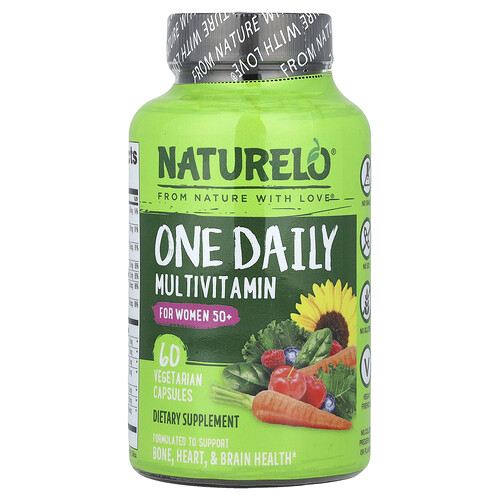
This is the pragmatic, low-friction baseline for someone who just wants a clean daily vitamin without the bloated price tag.
Pros
- Streamlined one-a-day format reduces daily friction
- Highly validated with a 4.8 rating across 4620 reviews
- Cost-effective architecture for long-term use
Cons: Lacks specialized herbal support if you are actively seeking that · Capsule size can still be an issue for some users
What to watch: Always check the label for specific B-vitamin ratios to ensure they align with your doctor's recommendations for your specific deficits.
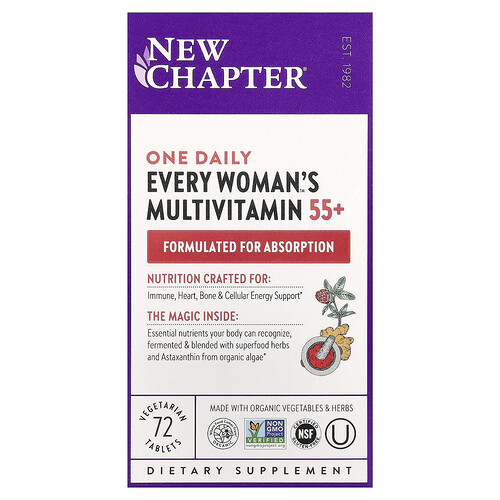
This is for the buyer who wants a fermented, whole-food approach and is willing to pay a premium for high-end curation.
Pros
- No iron, matching post-menopausal requirements
- Formulated for easy digestion on an empty stomach
- High rating of 4.8 from 879 users
Cons: Massive price markup compared to synthetic baselines · Includes herbal blends that introduce unnecessary variables
What to watch: You are paying a steep premium for the whole-food processing, and the herbal additions mean you cannot easily isolate what might cause an upset stomach.
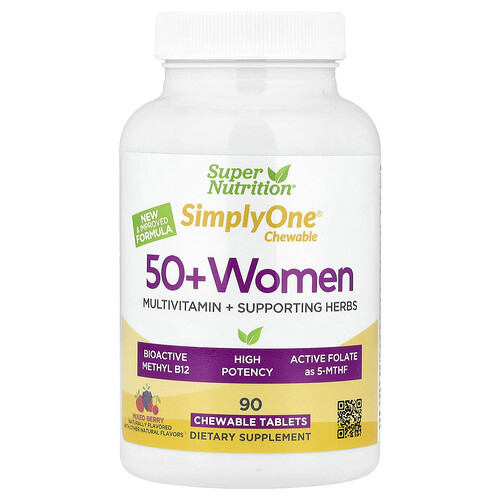
This is for the user who refuses to swallow capsules and wants a budget-friendly chewable with built-in herbal extras.
Pros
- Chewable format eliminates the friction of swallowing large pills
- Extremely low cost per dose
- Includes a supporting herbal blend
Cons: Herbal additions obscure the primary vitamin baseline · Chewables often contain unnecessary binders or flavors
What to watch: The inclusion of supporting herbs in a chewable format means you must monitor for any mild allergic reactions or digestive pushback.
I audit systems for a living, and the architecture of the wellness market is fundamentally broken. Brands slap a pink label and a "50+" badge on a standard multivitamin, double the price, and call it a breakthrough. The friction this creates for the consumer is staggering. You are left parsing ingredient lists that read like a poorly coded database, trying to figure out if you are buying a legitimate nutritional baseline or just expensive herbal dust.
Instead of falling for the hype, we need to strip these products down to their bare components. By analyzing the public data—price points, standardized dosages, and aggregate feedback—I can map out exactly where these formulas succeed and where they fail. This is not about finding a magic cure; a food supplement is not a medicine, and any brand claiming otherwise is lying to you. This is about pragmatic selection.
Why are most menopause supplements structurally flawed?
Most of these formulas suffer from chronic feature creep, cramming trace amounts of fifty different ingredients into one pill instead of delivering effective doses of the few things that actually matter. It is bad design, plain and simple.
When you deconstruct the typical 50+ multivitamin, the flaws become obvious. Brands refuse to make hard choices, opting instead for a shotgun approach.
They prioritize label appeal over utility. Seeing twenty rare herbs on a bottle looks impressive until you realize the doses are mathematically irrelevant.
They ignore the user experience. Expecting someone to swallow four horse-sized tablets a day introduces massive friction into a daily routine. Compliance drops to zero when the process is painful.
They obscure the actual active components. Proprietary blends are the ultimate black box, hiding cheap fillers behind a trademarked name.
Do you actually need a dedicated "55+" formula?
Age-gated supplements are mostly a marketing taxonomy designed to segment the market, though they do correctly reduce iron and adjust calcium ratios for post-menopausal needs. You do not strictly need a "55+" label if your standard multivitamin already matches those specific macro-adjustments.
The distinction between a 50+ and a 55+ formula is usually statistical noise. The supply chain for these raw ingredients is identical. What you are paying for is the curation. A well-designed older adult formula removes the iron—since post-menopausal women no longer lose it monthly—and bumps up the D3 and B-vitamins. If a standard adult multi does that, it works just as well. Do not get trapped by the demographic badging; look at the actual payload.
How do herbal additions impact the baseline multivitamin?
Herbal additions introduce unnecessary variables into a stable system, increasing the risk of interactions without guaranteeing any measurable benefit. If you want herbal support, you should source it separately rather than buying a compromised hybrid product.
Products that mix baseline vitamins with "supporting herbs" like Dong Quai or Black Cohosh are trying to be two things at once and usually fail at both. It is the equivalent of hardcoding a temporary fix into a permanent software update. You lose the ability to isolate variables. If the herb causes a reaction, you have to throw out the entire multivitamin. Furthermore, herbs require specific standardizations to be effective, which are rarely achieved in a crowded multi-pill.
What is the most pragmatic approach to choosing a daily pill?
The most pragmatic approach is to buy a streamlined, single-capsule formula that covers your baseline nutritional deficits and leaves the symptom management to your doctor. Do this: pick a formula with transparent dosing, zero proprietary blends, and an iron-free profile. Do not do this: overpay for a "whole-food" label that requires you to swallow three tablets a day for the exact same chemical yield.
This article is not medical advice. Food supplements replace neither a balanced diet nor treatment — if you have symptoms, your doctor decides.
Ad · affiliate links · If you buy through these links, we earn a commission.