Modernizing Municipal Infrastructure: The Foss 2 and Sabattus Pump Station Upgrades
Lewiston, Maine has put out a solicitation to replace and upgrade two of its workhorse pump stations — Foss 2 and Sabattus — with new submersible pumps and a precast check valve vault.
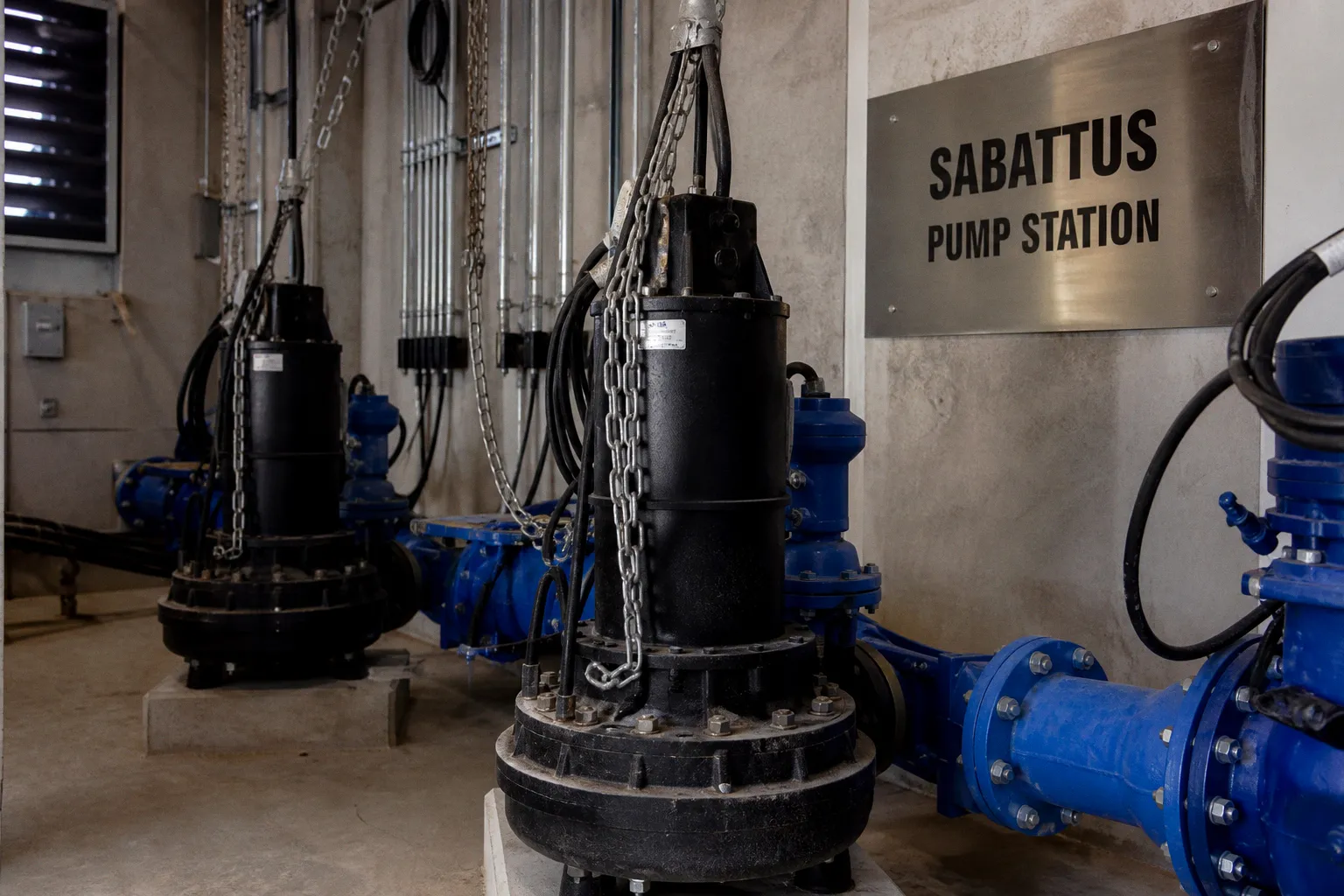
We want to walk through what that actually means on the ground, because if you've ever stood next to an aging station during a storm event, you know the difference between a pump that just runs and a pump that runs cleanly when the water is full of debris and the operators are running on fumes.
What the upgrade changes for the people in the wet well
Let's imagine the scene: a crew climbs down to inspect a seal that's been weeping for weeks. With an older configuration and a cast-in-place valve vault, that's a cramped, awkward position with limited clearance, and every access point has to be chipped open or carefully scheduled for shutdown. If you replace that vault with a precast unit, then the next time your team needs to get in for a check-valve inspection, you're lifting a modular lid rather than breaking concrete at 2 a.m. during a high-flow event. That's a real difference in operator fatigue, and in how fast the station can be returned to service when the catchment is already stressed.
The Lewiston scope is part of a broader pattern. Across the industry this month, major pump station work is moving forward in places that don't share a climate but share the same engineering headaches. The NSW Government has appointed Eire Constructions to upgrade the Browns Creek Pump Station near Lismore, where the existing station will stay live while a new set of submersible pumps is built beside it, complete with mechanical trash screens and remote-monitoring fibre. Jacobs has secured a joint venture contract on the $750 million Utah Lake System water project, which also includes a new pump station. In Mexico, Conagua has awarded the Rosarito desalination plant contract to the Cox Energy–Cox Water consortium, and that package carries its own pumping station along the discharge side. Different waters, same conversation about intake protection, redundancy, and how crews will actually live with the equipment.
What to watch on your own station
If you're specifying, operating, or maintaining equipment in this space, here's what we'd flag from the Lewiston solicitation and what its peers are confirming:
- Submersible pump selections are increasingly bundled with mechanical trash screens (as at Browns Creek) and remote-monitoring fibre — so when you size your next pump, treat the intake screening and the SCADA layer as part of the same conversation, not separate line items on a bid form.
- Precast valve vaults and modular check-valve assemblies shorten confined-space entry time. If your maintenance plan still assumes cast-in-place access, it's worth revisiting before the next scheduled shutdown.
- Phasing matters more than people like to admit. The Browns Creek team is explicitly keeping the existing station operational throughout construction — that's a constraint Lewiston's engineers will be working around too, especially through wet seasons, and it tends to favour designs that bolt together rather than pour.
None of this is glamorous, and that's the point. The workers who actually descend into these vaults don't care about ribbon-cuttings; they care about whether the lid comes off cleanly, whether the check valve seats without a fight, and whether the alarm wakes someone who can actually respond. When we get the design right at the solicitation stage, that quiet Tuesday in October gets a little less punishing — and that's the whole job.