York Sewer District Reaches Key Milestone in Pump Station Infrastructure Upgrade
According to the York Sewer District, the Donica Road sewer project has reached a major mechanical milestone: crews installed the new pump station valve vault, piping, isolation valves, and flow meter.
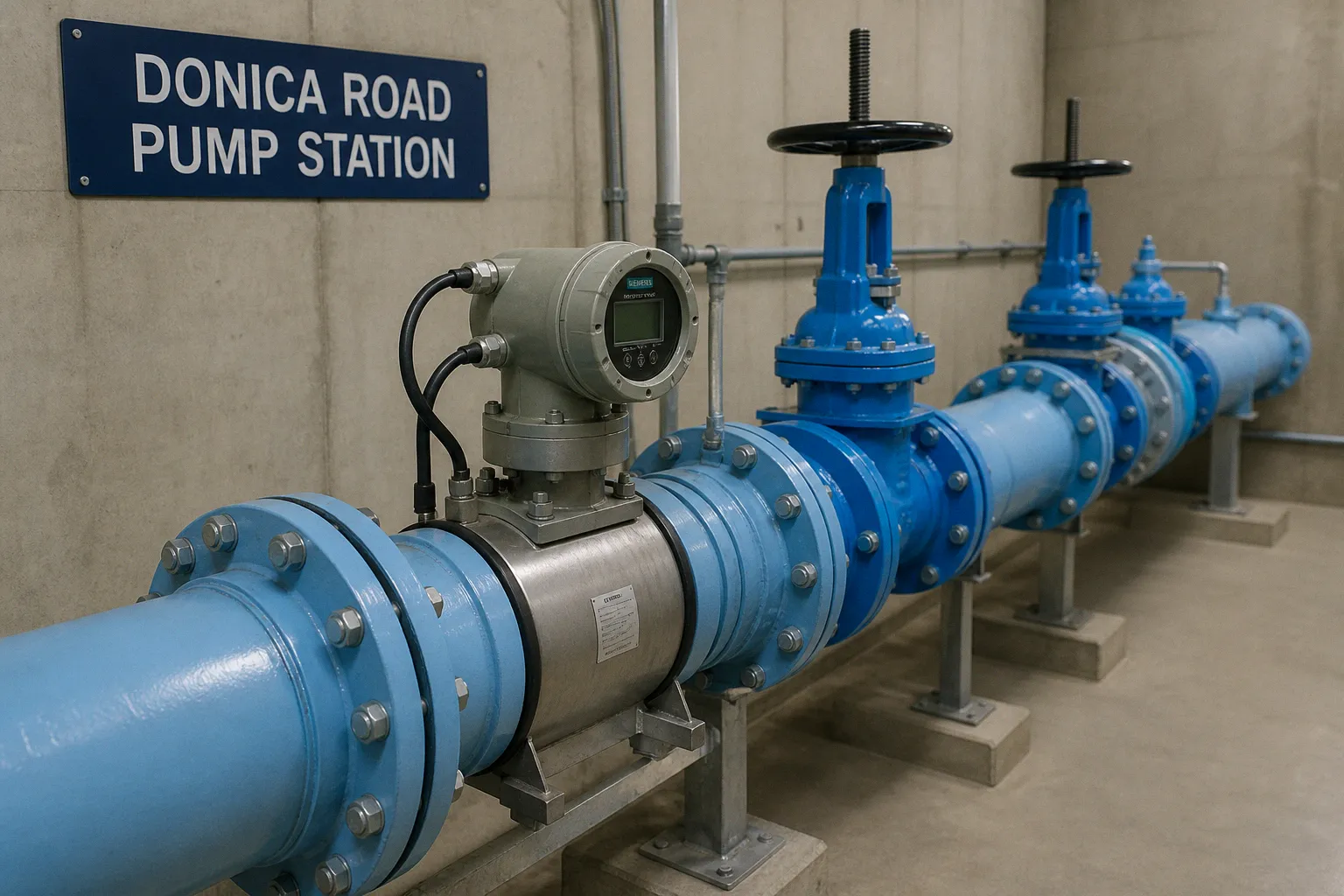
Together, this equipment is intended to control and monitor flow once the station is complete. For anyone responsible for pump-station hardware, the important point is not simply that the components are now in place, but that the project is moving from buried construction toward a system that can be controlled, observed, and eventually tested on the ground.
The mechanical layer is coming together
On a factory floor, the difference between a system that merely exists and one that can be managed is often found in the details you can reach, isolate, and verify during a shift. The same principle applies here. The valve vault brings the station’s piping and isolation valves into a defined mechanical arrangement, while the flow meter provides the means to monitor movement through the system.
The district’s update describes this as a significant installation milestone, but it does not indicate that the new sewer system is already in service. Work remains before testing and eventual startup. That distinction matters: equipment installation is a visible step forward, while commissioning is the point at which the assembled system must demonstrate that its control and monitoring functions work together.
The project also includes connections for the new 4-inch force main and a future 6-inch force main at the valve vault inside the wet well, according to the district’s project summary. Those connections show how the vault is being used as a central point for the station’s force-main arrangement, although the available information does not provide operating data or performance results.
What to check when reviewing similar equipment
If you are assessing a comparable pump-station installation, start with the physical route rather than the equipment list. Can the valve vault, piping, isolation valves, and flow meter be understood as one serviceable system? If flow needs to be isolated, the relevant valve arrangement should be identifiable on the ground. If flow needs to be monitored, the meter should sit within a configuration that supports meaningful observation once the station is operating.
That is where real-world context becomes more useful than a polished project photograph. A completed vault is not only an underground structure; it is part of the daily work environment for the people who will inspect and maintain the station. Clear access, understandable valve positioning, and reliable feedback from the monitoring equipment can reduce hesitation during a fault or maintenance task. They also help limit the small points of friction that accumulate into operator fatigue over a long shift.
The district’s update says work will continue on assembling the pump-station equipment, with electrical work beginning as the project moves toward testing and startup. Until those stages are complete, there is no basis in the available information to judge the station’s flow performance, control response, or long-term maintainability.
Why the milestone matters
For the York Sewer District, the installation marks a transition from major underground mechanical construction to the preparation of an operable pump station. For equipment teams and designers, it is a useful reminder that valves and monitoring hardware should be considered together: isolation supports control of the system, while flow measurement provides visibility into what the system is doing.
That combination is what turns a buried network into something people can manage with confidence. When you are standing beside the equipment during a demanding shift, tactile feedback from the valves and clear information from the flow meter are not abstract design benefits. They are the practical signals that help a worker understand the condition of the system, choose the next action, and get through the task with less uncertainty.