Optimizing Hydraulic Performance with HAWE’s Adjustable Two-Stage Pump Design
According to HAWE Hydraulik, its new two-stage pump design addresses that friction point by integrating multiple double-pump elements, or DMPE, into a Type R radial piston pump.
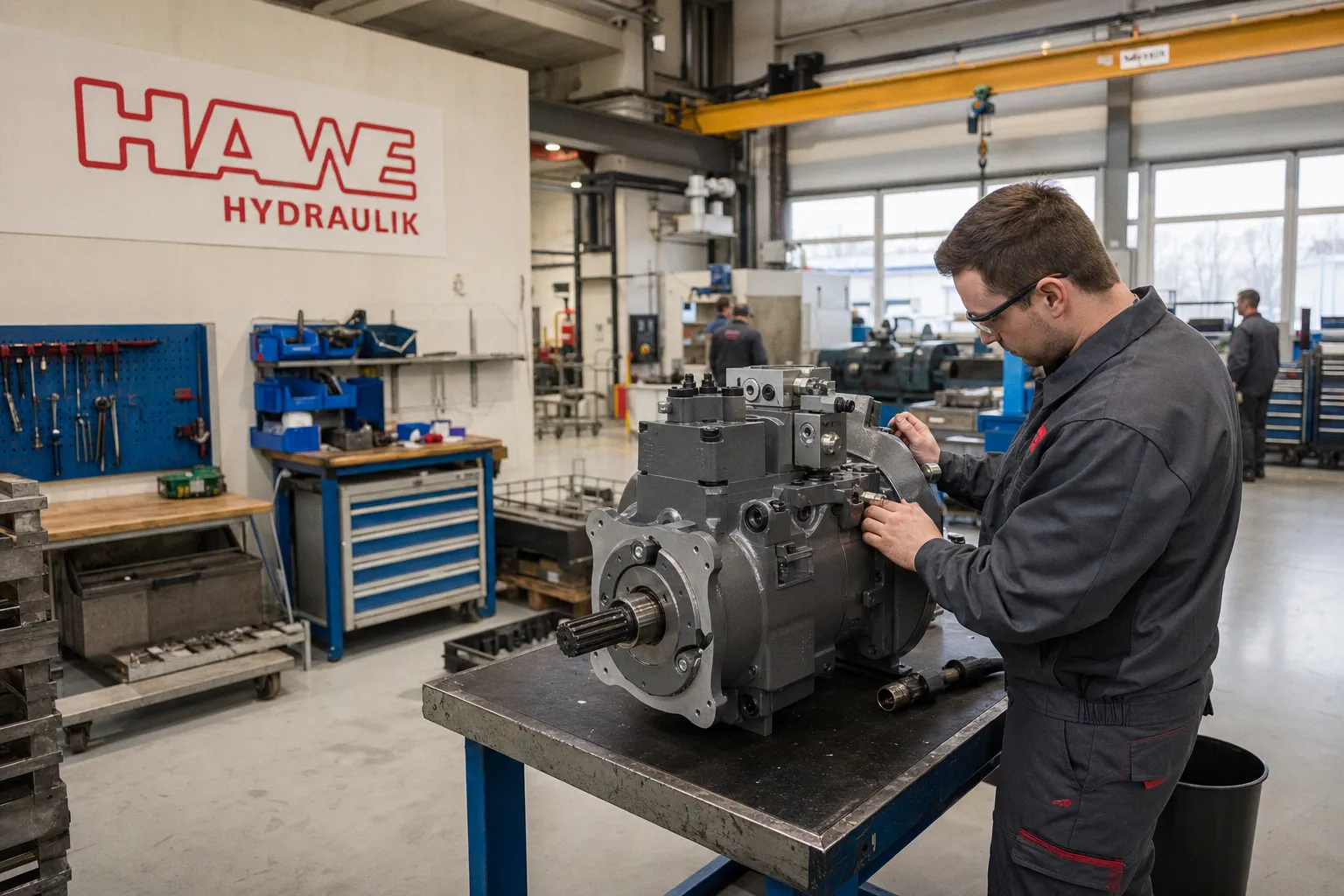
During a long shift, a hydraulic system can feel less like a single machine and more like a series of compromises: one pressure level is efficient for part of the cycle, another is needed for the harder movement, and the transition between them may leave little room for adjustment. According to HAWE Hydraulik, its new two-stage pump design addresses that friction point by integrating multiple double-pump elements, or DMPE, into a Type R radial piston pump. The important change is not simply adding another stage, but replacing conventional fixed switching points with pressure stages that can be finely adjusted.
A more adaptable pressure strategy
In real-world equipment, fixed switching points can make a system behave predictably, but not necessarily optimally across every operating condition. If the pressure change is set too early, the pump may move into a different operating mode before the work cycle truly requires it; if it is set too late, the system may not adapt as efficiently to the task in front of it.
HAWE’s design is intended to give the pressure transition more flexibility. The company says that multiple DMPE elements are integrated into its Type R radial piston pump, creating a two-stage arrangement with finely adjustable pressure stages rather than conventional fixed switching points.
That distinction matters on the ground because adaptability is often a hardware issue before it becomes a controls issue. When we stand next to the machine, watching an operator repeat the same movement hundreds of times, the question is not whether a specification sounds advanced. It is whether the pump can better match its behavior to the changing demands of the work cycle, without forcing the rest of the system into a one-size-fits-all setting.
What equipment teams should verify
The available announcement does not provide performance figures, application examples, or adjustment ranges, so we should treat the efficiency benefit as HAWE’s stated design objective rather than as a quantified result. For anyone evaluating the pump, the next practical step is to ask how the adjustable pressure stages are configured in the intended machine and which parts of the cycle they are meant to support.
A useful review begins with the existing operating pattern:
- Where does the current system rely on a fixed pressure transition?
- Which movements require higher pressure, and which can run at a lower level?
- Would a more finely adjustable transition reduce unnecessary pump effort during repeated cycles?
- How would the new arrangement interact with the machine’s existing hydraulic architecture?
These are not abstract design questions. They connect directly to operator fatigue and tactile feedback. If a machine responds more consistently as the load changes, the person at the controls may spend less time compensating for behavior that the hydraulic system could handle more intelligently. That outcome still needs to be demonstrated in the specific application, but it is the practical reason to examine the architecture rather than focus only on the component name.
Why the Type R integration is worth watching
The announcement positions the development as an adaptation of the Type R radial piston pump, using several DMPE elements to create the two-stage configuration. For catalog and equipment teams, that makes the integration detail especially relevant: the value of the concept will depend not only on the adjustable pressure stages, but also on how easily the pump can be specified and incorporated into a complete machine.
We should therefore watch for further information on application fit, commissioning, control requirements, and measured efficiency. Until those details are available, the clearest takeaway is narrower but still useful: HAWE is moving away from rigid pressure switching in this pump concept and toward a more adjustable two-stage approach.
That is the kind of change that can improve daily work when it is matched carefully to the machine’s real cycle. If the pressure stages reflect what the operator actually encounters on the factory floor, the pump becomes more than a source of hydraulic power; it becomes a quieter, more responsive part of the working environment.