The Best Probiotics for Gut Health in 2026: A Structured Shortlist
Most probiotic buying decisions fail at the comparison stage. This shortlist separates dose, delivery format, price tier, additives, and disclosed label data so each position has a defined use case.

A probiotic label can expose a dose but conceal the variables that determine whether comparison is possible. Strain identity, CFU measurement point, storage conditions, prebiotic content, and added ingredients are often not visible in a short product title. That creates avoidable cognitive load and increases selection error.
At a glance
| Product | Price | Rating | Best for |
|---|---|---|---|
| California Gold Nutrition LactoBif® 30 Billion, 60 Capsules | €22.34 | ★ 4.7/5 · 168,125 reviews | For buyers who want a clearly disclosed mid-range dose in a plant-based capsule format. |
| Enzymedica Digest Basic® + Probiotics, 90 Capsules | €21.73 | ★ 4.8/5 · 12,444 reviews | For buyers prioritizing a larger capsule count and a digestive-positioned combination formula. |
| Nature's Way Fortify® Women's Daily, 30 Billion, 30 Capsules | €21.91 | ★ 4.7/5 · 915 reviews | For women seeking a women's formula with both prebiotics and probiotics in a delayed-release capsule. |
| Sunbiotics Friendlyrier Flora, Women's Blend, 56 g Powder | €23.90 | ★ 4.5/5 · 74 reviews | For users who prefer a powder and specifically want a women's prebiotic-plus-probiotic blend. |
| Jarrow Formulas Jarro-Dophilus® EPS, 25 Billion, 60 Capsules | €76.23 | ★ 4.7/5 · 1,728 reviews | For buyers willing to pay a premium for a 25-billion plant-based capsule product. |
| Nature's Way Acidophilus Probiotic Pearls®, 1 Billion, 30 Softgels | €13.84 | ★ 4.6/5 · 972 reviews | For buyers seeking the lowest disclosed dose and a small, low-commitment softgel pack. |
| Renew Life Ultimate Flora™, 90 Delayed-Release Capsules | €99.01 | ★ 4.6/5 · 1,070 reviews | For buyers prioritizing a 90-count vegan capsule pack with both prebiotic and delayed-release features. |
| Culturelle 3-in-1 Complete Probiotic, 30 Capsules | €32.80 | ★ 4.6/5 · 146 reviews | For buyers intentionally seeking a probiotic product that also includes omega-3 fatty acids. |
Our picks: Probiotics for Gut Health
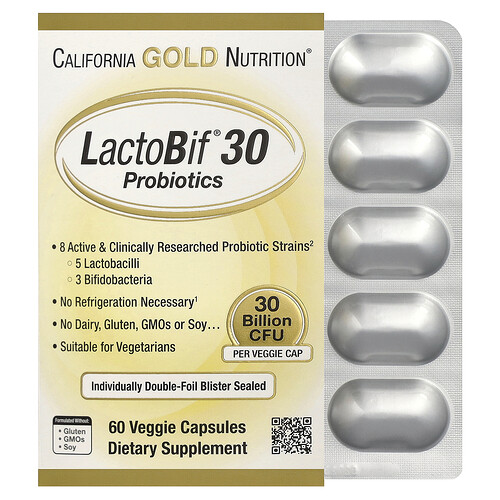
For buyers who want a clearly disclosed mid-range dose in a plant-based capsule format.
Pros
- 30 billion CFU listed
- 60 plant-based capsules
- 4.7/5 from 168,125 reviews
Cons: Strain details are not disclosed in the supplied data · No prebiotic or delayed-release feature is stated
What to watch: Check the full label for strain names, storage instructions, and whether the CFU count is guaranteed through expiry.
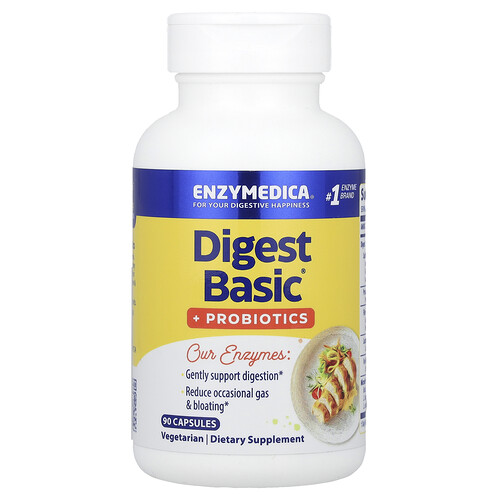
For buyers prioritizing a larger capsule count and a digestive-positioned combination formula.
Pros
- 90 capsules
- Digestive positioning is stated
- 4.8/5 from 12,444 reviews
Cons: CFU count is not disclosed in the supplied data · The complete ingredient profile is not provided
What to watch: Verify the probiotic dose, active ingredients, serving size, and any allergen information before purchase.
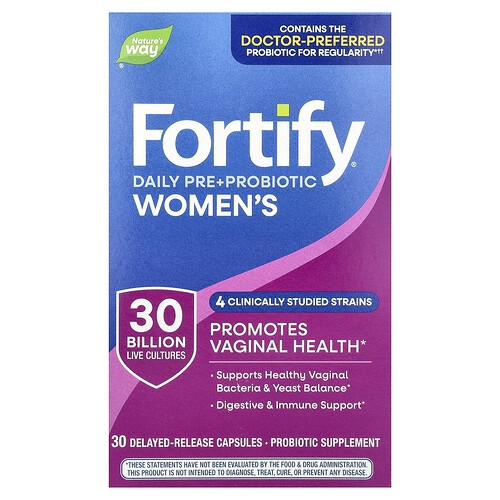
For women seeking a women's formula with both prebiotics and probiotics in a delayed-release capsule.
Pros
- 30 billion CFU listed
- Prebiotic and probiotic formula
- Delayed-release capsules
Cons: Only 30 capsules · Prebiotic ingredients and strain list are not disclosed in the supplied data
What to watch: Check the complete women's formula label, including prebiotic sources, allergens, and delayed-release directions.

For users who prefer a powder and specifically want a women's prebiotic-plus-probiotic blend.
Pros
- Powder dose form
- Women's blend
- Prebiotic and probiotic positioning
Cons: CFU amount is not disclosed in the supplied data · 4.5/5 from 74 reviews
What to watch: Confirm the serving measure, mixing instructions, storage requirements, and full prebiotic ingredient list.
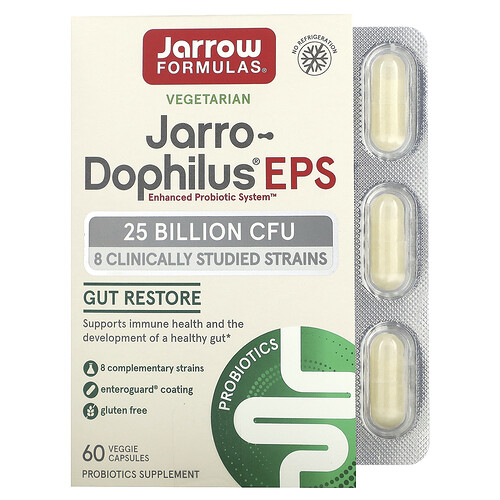
For buyers willing to pay a premium for a 25-billion plant-based capsule product.
Pros
- 25 billion CFU listed
- 60 plant-based capsules
- 4.7/5 rating
Cons: Highest listed price among the selected capsule options · Prebiotic and delayed-release features are not stated
What to watch: Check what EPS means on the current label, plus storage requirements and the named strains.
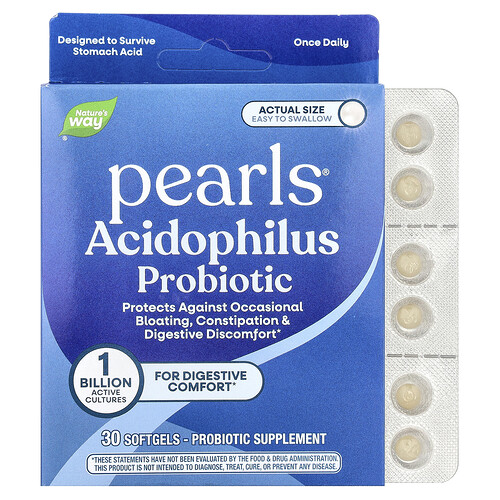
For buyers seeking the lowest disclosed dose and a small, low-commitment softgel pack.
Pros
- 1 billion CFU listed
- 30 softgels
- Lowest listed price among the selected products
Cons: Lower disclosed dose than the other selected CFU-labeled products · Softgel format is not a plant-based capsule
What to watch: Check the softgel ingredients, strain identity, storage instructions, and whether the low listed dose fits your purchasing criteria.

For buyers prioritizing a 90-count vegan capsule pack with both prebiotic and delayed-release features.
Pros
- 90 vegan capsules
- Prebiotic and probiotic formula
- Delayed-release capsule format
Cons: Highest listed price in the supplied catalog · CFU amount is not disclosed in the supplied data
What to watch: Verify the probiotic dose, prebiotic ingredients, serving schedule, and storage requirements on the current label.

For buyers intentionally seeking a probiotic product that also includes omega-3 fatty acids.
Pros
- Once-daily positioning
- Omega-3 included
- 3-in-1 formula
Cons: Probiotic dose is not disclosed in the supplied data · Additional ingredients increase label-screening requirements
What to watch: Check the omega-3 source and medication or allergy considerations with a pharmacist or doctor.
This ranking uses only the supplied catalog data. The primary filters were disclosed dose, capsule or powder format, count, inclusion of prebiotics or additional ingredients, intended audience, listed price tier, rating volume, and obvious gaps in the product description. A high rating is treated as a demand signal, not as proof of medical effectiveness.
The products below are supplements. They are not medicines and do not establish a diagnosis or guarantee a digestive outcome. Medical questions, persistent symptoms, pregnancy-related decisions, and medication interactions require a doctor or pharmacist.
How should you compare probiotics for gut health?
Compare the variables that are actually disclosed, then penalize missing data. A large CFU number is not a complete quality metric if the label does not also identify strains, serving instructions, storage requirements, and whether the count is guaranteed at manufacture or expiry.
Dose is the first visible throughput metric, but it is not a clinical endpoint. The catalog spans products with 1 billion, 15 billion, 25 billion, 30 billion, 50 billion, 60 billion, and 100 billion listed units, while several products do not disclose a count in the supplied data. These figures create a comparison range. They do not establish that a higher number is better for a particular person.
Count and price define operating cost. A 90-capsule pack may reduce replenishment frequency, but the source data does not disclose serving frequency for every product. Do not convert pack size into a daily cost unless the label states one capsule per day or provides another clear serving schedule.
Is a higher probiotic dose better for gut health?
No. A higher listed CFU count is only a higher disclosed dose, not a guarantee of superior performance. The relevant strain mix, viability at the stated expiry, serving size, and individual suitability remain unresolved when the label data is incomplete.
The 100-billion option belongs in a high-dose comparison tier. The 1-billion option belongs in a low-dose entry tier. Neither position should be interpreted as a medical recommendation. The practical distinction is dose visibility and price exposure, not proven outcome superiority.
Ratings also require normalization. A 4.7/5 rating from 168,125 reviews provides a larger public feedback sample than a 4.8/5 rating from 319 reviews. That does not make the first product clinically better. It makes the market signal more statistically substantial at a basic review-count level.
Which probiotic format creates the least friction?
Capsules usually impose the lowest preparation overhead, while powder can suit users who do not want another capsule but introduces mixing and measurement requirements. Delayed-release capsules add a delivery feature, but the supplied data does not explain the mechanism or verify its performance.
Dose form affects adherence and error rate. A softgel is not interchangeable with a plant-based capsule for users managing dietary constraints. A powder also requires label checks for serving size, mixing instructions, storage, and any undisclosed carrier ingredients. The source data identifies one powder as a 56 g women's prebiotic and probiotic blend but does not disclose its CFU amount.
Delayed release appears in several products. Treat this as a packaging or delivery distinction, not as proof of improved gut health. The source does not provide release testing, strain survival data, or instructions beyond the product title.
Should you choose a probiotic with prebiotics or extra ingredients?
Choose a combined formula only when the additional component is intentional and the label is sufficiently transparent. Prebiotics and omega-3 ingredients change the product specification; they are not neutral details.
A prebiotic-plus-probiotic product may be relevant to a buyer specifically seeking both categories, but the supplied catalog does not disclose the prebiotic ingredient, amount, or tolerance profile. The same limitation applies to a three-in-one product that includes omega-3 fatty acids. Users avoiding fish-derived ingredients, managing allergies, or taking medicines that require omega-3 review should check the full label and ask a clinician or pharmacist.
Combination formulas increase decision complexity. They can reduce the need to buy separate products, but they also increase the number of ingredients that must be screened. For a controlled elimination process, a simpler formula may produce a lower attribution error if symptoms change.
What should you check before buying a probiotic?
Check the full label for strain names, CFU guarantee, serving size, storage requirements, allergens, capsule material, prebiotic identity, and additional active ingredients. If any of these are absent, classify the product as data-limited rather than filling the gap with assumptions.
The catalog confirms some useful attributes: plant-based or vegan capsules, delayed-release capsules, softgels, powder, women's positioning, capsule count, and listed CFU count. It does not confirm strain composition, expiry-date viability, manufacturing standards, allergen status, or clinical evidence for the individual products. Those omissions matter.
Check whether the product matches the constraint before optimizing price. A lower listed price has no operational value if the format is incompatible, the ingredient profile conflicts with a dietary requirement, or the dose cannot be interpreted from the label. Also check whether the product is intended for the user category stated on the packaging. Women's positioning is a product attribute, not a diagnosis or a universal suitability rule.
Who should skip a probiotic shortlist and seek medical advice first?
People with persistent or severe symptoms, suspected infection, significant immune compromise, pregnancy-related concerns, or complex medication use should obtain medical advice before selecting a supplement. Product ratings and CFU counts cannot resolve those risk questions.
A supplement also should not replace diagnosis, prescribed treatment, hydration, dietary management, or testing when those are medically indicated. Stop treating a shopping comparison as a clinical decision once the issue exceeds routine product selection.
The actionable design heuristics are simple:
- Rank disclosed constraints before headline dose.
- Treat CFU as a specification, not an outcome metric.
- Penalize missing strain, storage, and expiry information.
- Separate capsule, softgel, delayed-release, and powder workflows.
- Screen prebiotics and additional oils as active design variables.
- Use review volume to assess market signal, not medical validity.
- Confirm serving instructions before calculating value.
- Escalate persistent symptoms and medication questions to a doctor or pharmacist.
This article is not medical advice. Food supplements replace neither a balanced diet nor treatment — if you have symptoms, your doctor decides.
Ad · affiliate links · If you buy through these links, we earn a commission.