Rubber vs Metal Slurry Pumps: Evaluating Fine-Particle Wear and Materials
According to International Mining, Weir Global Product Manager Asad Mohammed sees a clear shift in centrifugal slurry-pump selection for fine-particle duties: rubber-lined pumps are increasingly…
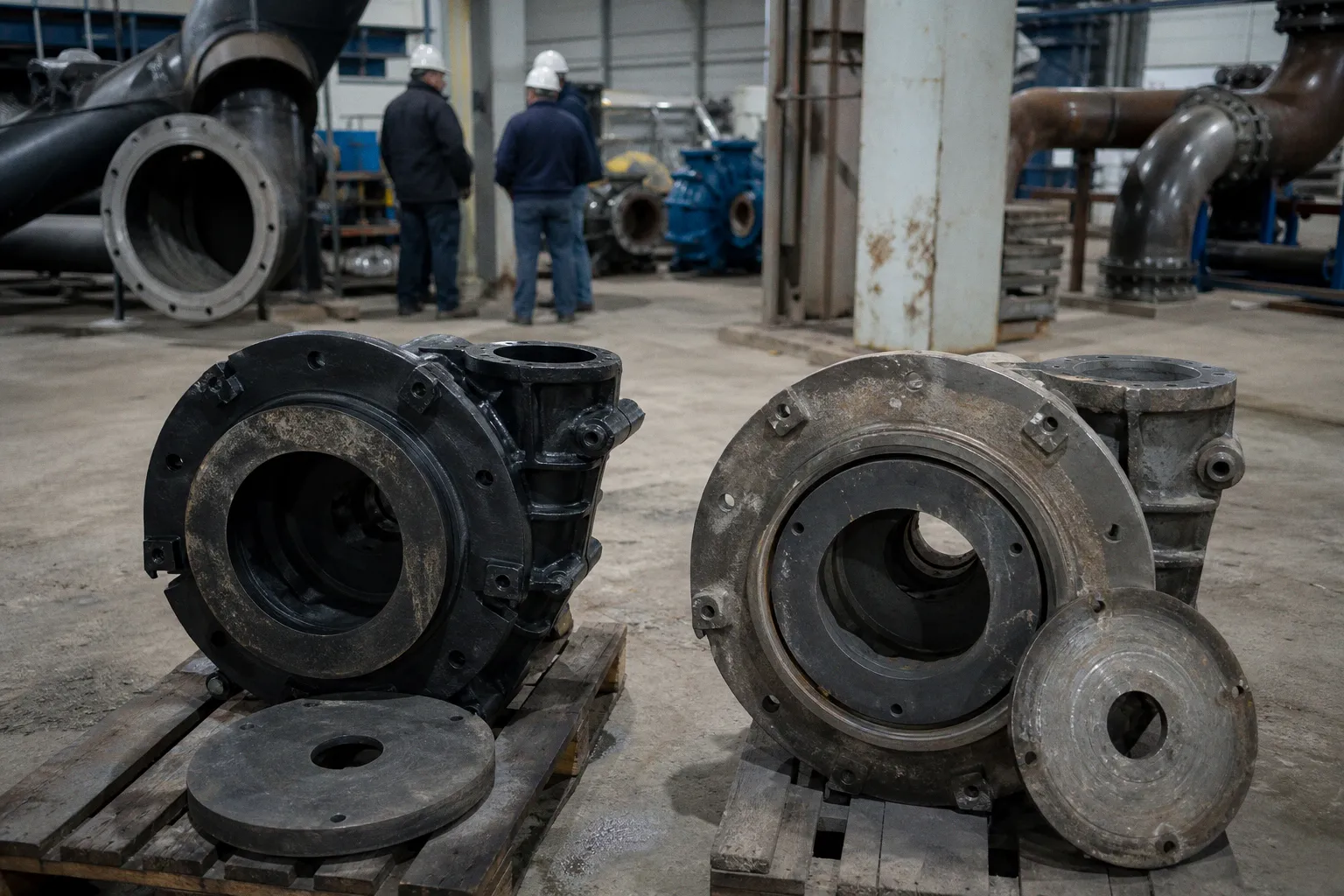
According to International Mining, Weir Global Product Manager Asad Mohammed sees a clear shift in centrifugal slurry-pump selection for fine-particle duties: rubber-lined pumps are increasingly outperforming metal-lined alternatives, with lower weight and wear resistance at the centre of the discussion. On the ground, this is the kind of change that can look minor on a specification sheet yet reshape the daily experience of the team expected to keep a slurry line moving.
For those of us working around pumps rather than around presentations, the useful point is not that one lining is universally “better.” It is that fine-particle service deserves a fresh look before we simply repeat the last material choice.
Fine particles make lining choice a practical design decision
A slurry pump is rarely judged in isolation. The operator feels its consequences through the weight and handling of components, through the rhythm of inspections, and through the uncertainty that arrives when wear becomes visible at an inconvenient moment.
Mohammed’s observation puts rubber linings in focus where fine particles are involved. The stated advantages are lower weight and wear resistance. If a pump is being selected or renewed for this type of duty, then the question is not merely whether a rubber-lined option exists in the catalogue; it is whether the actual particle profile and operating conditions match the application being discussed.
That distinction matters. “Fine particle” is a working description, but a purchase decision still needs the site team, maintenance team and equipment supplier to be looking at the same duty. Otherwise, we risk choosing a familiar material by habit while the real-world context has moved on.
What to bring into the next pump review
This is a useful moment to walk the line with a short, disciplined brief rather than a broad wish list. Start with the centrifugal slurry pumps currently handling fine material and identify where lining choice is already a source of attention for the people closest to the equipment.
Then bring a simple if-then frame to the discussion. If the duty is genuinely a fine-particle application, then ask the supplier to explain the rubber-lined alternative alongside the metal-lined one, specifically in terms of weight and wear resistance. If the application falls outside that description, then do not assume the reported trend automatically applies.
It also helps to make the conversation tactile and operational. Can the team describe where component weight affects handling? Are wear observations being captured in a way that helps compare lining options over time? These are not abstract design questions. They are the details that determine whether a selection feels sensible at commissioning and remains workable during a shift.
The signal for slurry-pump teams
The wider message from Weir’s product-management perspective is that material selection remains active engineering work, not a settled background decision. Even before turning to bigger themes such as automation, the lining itself can be a meaningful place to revisit assumptions.
For a plant team, the next step is modest but valuable: check whether your fine-particle duties are being treated as their own selection category, and make lower component weight and wear resistance explicit points of comparison. When the choice reflects what operators and maintainers encounter every day, the equipment has a better chance of fitting the work—not asking the work to fit the equipment.